Artist

Ike Jünger: Jewelry

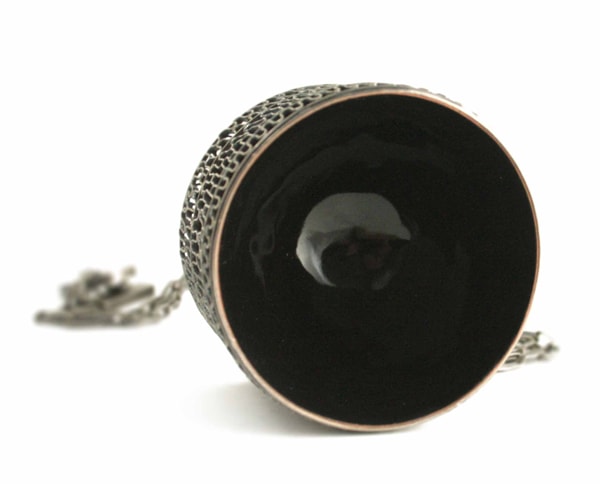
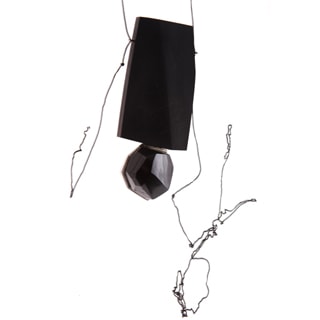
Ike JüngerIke Jünger, the well-known German jeweler from Munich, is currently having an exhibition at Galerie Rosemarie Jäger, where she is showcasing pieces from the past five years. She is known for her subtle enamel work. Her technique conveys both color and texture with beauty and unusual sensitivity. We took this opportunity to talk to Ike about her work, influences, and family legacy. 

Bonnie Levine: Can you tell us about the work you’re currently presenting at Galerie Rosemarie Jäger? How does it develop your work from the past?

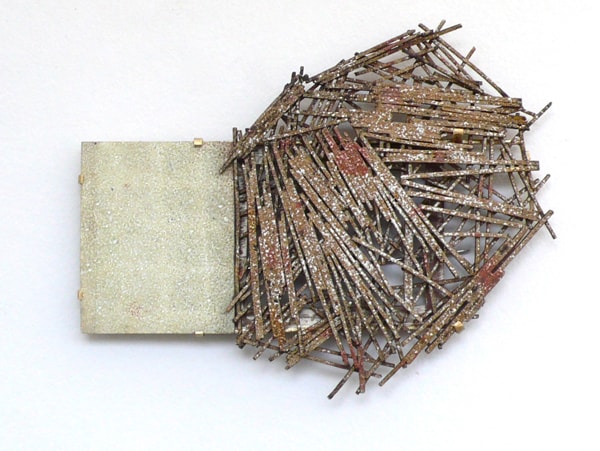
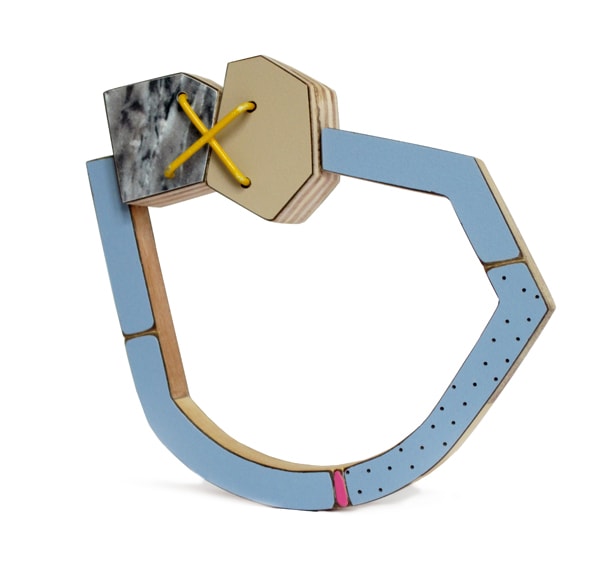
Ike Jünger: In this exhibition I show pieces mainly from the last five years. During this period I developed my work from different starting points. On the one hand I made pieces inspired by nature, and on the other, pieces with strict geometrical shapes and clear colors. Some people may not understand these two different approaches. In my presentation at Rosemarie Jäger, I want to show the connection I see between these two. For example, you can take the geometrical pieces as a reaction to the organic ones. There was a point when I felt there was no progress in my work. It was no longer a challenge to produce these organic brooches. So you might say that one form of expression is a response to the other.


Ike Jünger: Jewelry Read More »

25 years of Ted Noten

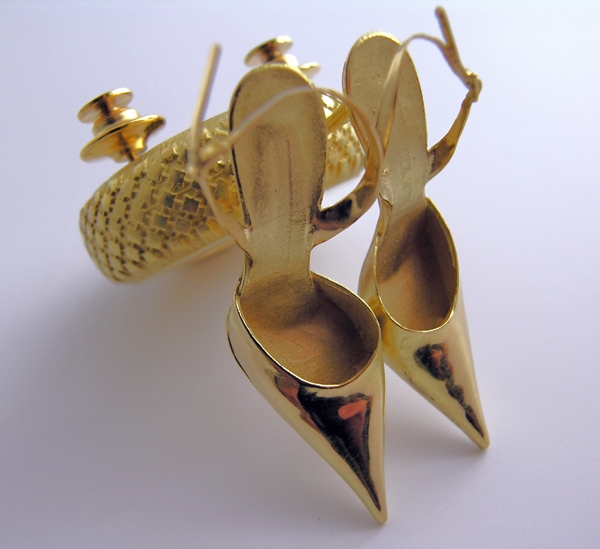
Atelier Ted NotenTed Noten … well, what can you say? He is a phenomenon in this small world of art jewelry. He has become an atelier, not a lone maker; he has developed see-through purses and bags, not just jewelry; he has made videos; he designed the AJF pin in 2012; he cut up a luxury car and made the pieces into brooches; he has written a manifesto; and so much more. This show at Putti Gallery is a retrospective of 25 years of his work. We had to take the opportunity to interview him.

Susan Cummins: You said, “Your story can only get through to people if you rob them of their prejudices about jewellery.” How do you do that?

Ted Noten: I play with greed and seduce by aesthetics, using archetypes that people can recognize and loads of humor. These elements make my work possible to enter and then there are more layers of comments, criticisms, condensations of meanings. All this without being moralistic! But through absurdist mirroring.


25 years of Ted Noten Read More »

Daniel Kruger: Angle of Incidence

Daniel Kruger: Between Nature and Artifice, Jewellery 1974–2014Daniel Kruger, who is a professor at the University for Art and Design in Halle, Germany, is currently having an exhibition at Sienna Patti, among many other things. For one, he has just produced a beautiful monograph published by Arnoldsche, and for another he has accompanying shows at the Grassi Museum für Angewandte Kunst in Leipzig, Schmuckmuseum Pforzheim, Deutsches Goldschmiedehaus in Hanau, and the Stedelijk Museum ’s-Hertogenbosch. This series of exhibitions and the book took many years of planning and are a huge accomplishment. Daniel Kruger is everywhere.

Susan Cummins: Daniel, you are having quite a moment right now, with a new book, Daniel Kruger: Between Nature and Artifice, Jewellery 1974–2014, and a series of four museum shows, plus of course this exhibition with Sienna Gallery. How long have you been planning these events and how did the plans develop?

Daniel Kruger: The planning started a long time ago because the exhibitions and book were originally scheduled for 2010. I had approached Cornelie Holzach of the Schmuckmuseum in Pforzheim about doing an exhibition there. She agreed, and this was a particular honor as I had already had an exhibition there in 1984 and this would be my second show at this museum. After that I asked Yvonne Joris of the Stedelijk Museum s’-Hertogenbosch in the Netherlands (she died last year) if she would give the exhibition a second venue. There too I had had solo exhibitions in the past initiated by Yvonne in the two municipal museums preceding the present Stedelijk Museum in s’Hertogenbosch: 1981 at the Dienst Beeldende Kunst, De Moriaan and 1994 at the Museum het Kruithuis “Five Stones and a Small Feint”. The project grew with the Goldschmiedehaus in Hanau to where my exhibition of 1984 in Pforzheim had followed from Pforzheim and the Grassi Museum in Leipzig that now will be the initiator of this series of exhibitions. Between one thing and another, the shows were postponed and the order of the exhibitions changed around. This gave me a lot of time and leisure to do the planning.


Daniel Kruger: Angle of Incidence Read More »

Courtney Kemp and Karen Vanmol: Home

Karen VanmolHeidi Lowe Gallery is currently having a two-person show called Home, featuring the work of Courtney Kemp and Karen Vanmol.

Courtney Kemp, who lives in Oregon, keeps both a jewelry and a sculpture practice. In her jewelry, she restructures mundane, domestic bits of living spaces into contemporary and precious wearables. She currently teaches at the Oregon College of Art and Craft and the University of Oregon.

Karen Vanmol, a jewelry artist based in Belgium, explores the tension between city and countryside as familiar childhood landscapes fade and as her understanding of the world is constantly “under construction.” This is her fourth time showing work at the Heidi Lowe Gallery.

Olivia Shih: Can you talk about your background and about how you found your way to making jewelry?

Courtney Kemp: Growing up, I was always excited about building and making. We lived on a farm that had been in my father’s family for years and was filled with really archaic architecture and machinery, so there was the consistent need for repairing and rebuilding. I fell into making jewelry in college without any prior experience or concrete knowledge about the field, but with a solid background in tinkering. I feel it was more the material itself that drew me in, rather than the format. The potentials of working with metal seemed endless.

Courtney Kemp and Karen Vanmol: Home Read More »

Silke Spitzer: Breathing

Silke SpitzerSilke Spitzer’s exhibition Breathing was recently on display at Ornamentum Gallery in Hudson, New York, from July 12 through August 10. In this interview, Silke describes the relationships between her life and work, and her materials and surroundings. 

Missy Graff: How did you become interested in making jewelry? Please describe your background.

Silke Spitzer: Growing up as the daughter of an arts, music, and sports teacher, I cannot remember a time when I was not creating or making something. I was always sitting or kneeling barefoot on the ground, carving, drawing, sewing, painting, cutting, scribbling, collecting, adding, and combining the things that surrounded me. To me, creating and living have always seemed to be the same. The beauty of nature, light, smell, the deepness of a voice, a thought or special sound, have always touched me. 

Growing up, I always considered creating a living by making with my own hands to be my dream job and life’s goal. Et voilà! I feel the same way today.

Why jewelry? Well, I guess it just happened. I grew up with the desire to create. Making jewelry was just one option I decided to explore. The tools seemed interesting and the scale seemed manageable. I enjoy the intimacy of making a piece all alone, by myself from the very beginning to the very end. I am very interested in the solitude that working on a small scale offers, a familiar scale, my body’s scale, a scale that is very much my soul’s size. 


Silke Spitzer: Breathing Read More »

Jorge Manilla: Beyond the Limits

Jorge ManillaIn the past few years, Jorge Manilla has created a personal style of work that is the result of his Mexican background and conceptual education in Europe. In his work, Manilla often manipulates a wide array of materials to make sense of the intricate and painful relationship people have with religion. Currently, he is simultaneously working as a guest teacher, an artist, and a PhD student at the Royal Academy of Fine Arts, Antwerp. On the occasion of his show, called Beyond the Limits, at Galerie Ra in Amsterdam, I had a chance to ask him a few questions.

Olivia Shih: You first received technical jewelry training at the school of Design and Crafts (Mexican Institute of Fine Arts) in Mexico before enrolling at St Lucas University College of Art and Design Antwerp in Belgium for your master’s degree. How did this transition influence your work? 

Jorge Manilla: My education in Mexico opened a world of possibilities. Those years taught me that a piece of classical jewelry acquires its value by the materials and techniques used, as well as by its aesthetic and wearability. When I learned how to make jewelry I started selling it straight away, but I often asked myself, why did I do it? Who did I do it for?
Soon after that, I decided to move to Belgium. A year of sculpture at the Academy of Art in Ghent was the perfect bridge to start my contemporary jewelry education. During that year, I started to think more deeply about ideas, concepts, and processes.

At St Lucas, I learned to make jewelry by not making jewelry. During that time I forced myself not to think about the portability of the piece; I stopped using precious metals, which I think was one of the most difficult things to do.

Jorge Manilla: Beyond the Limits Read More »

Christian Hoedl: Unconventional Armour

Christian HoedlChristian Hoedl, who has lived in both Austria and Germany, is known for creating thought-provoking contemporary jewelry for men. In his work, Hoedl moves effortlessly between fabric and metal, constructing precise yet deeply personal pieces. Jewelers’Werk Galerie in Washington DC is presenting his latest work.

Olivia Shih: In the past, you’ve often worked with scintillating fabric chains, which shift and change with the moving wearer. What first inspired you to “fabricate” with fabric instead of with metal?

Christian Hoedl: My inspiration came from contemporary dancers, who are gorgeous and most precise in their unique techniques and are constantly developing new modes of expression. I admire their endurance and their ability to redefine postures daily.

Next is my love of fabric, which comes from early childhood experience on the north Tyrolean Alps, with high quality cotton and many different interpretations of cotton into fabric. The last generation of amazing and newly developed threads, from Europe to Japan, has given me a large number of possibilities to work with, and my eyes shine bright just thinking of this.


Christian Hoedl: Unconventional Armour Read More »

Kadri Mälk

Kadri Mälk, photo: Tanel Veenre Aaron Patrick Decker: How did you come to jewelry? Kadri Mälk: Initially I studied painting for four years and really enjoyed it. Before that, I worked in a publishing house. After studying painting, I suddenly felt that maybe it wasn’t for me, maybe I needed something more intimate. After that

Kadri Mälk Read More »

Julia Turner: Surfacing

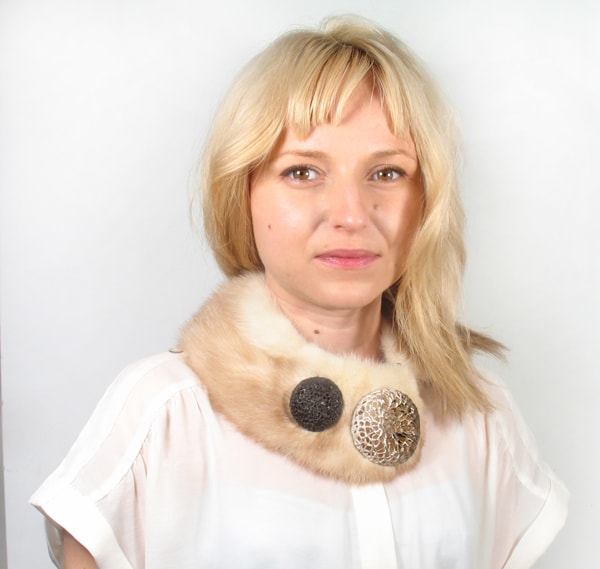
Julia TurnerJulia Turner loves surfaces and textures. Her wood jewelry is beautifully colored, sanded, scraped, and generally abused in the most aesthetic of ways. Her show at Shibumi Gallery in Berkeley is a delightful grouping of lightweight and utterly wearable jewelry featuring a mixture of one-of-a-kind and production work, with the two types seamlessly working together. I asked her to tell her story and answer a few questions.

Susan Cummins: Can you tell us the story of your education and how you came to be a jeweler?

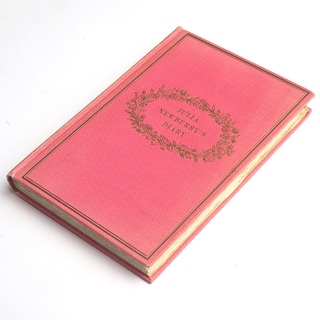
Julia Turner: I started college studying various things relating to language, not thinking I would end up in an art field although I’d been making things since I was little. At some point I took an art class as an elective, and that led to another, and another. In my junior year I went to Italy on a study-abroad program that combined language courses with studio art courses, and I think the change really happened there.


Julia Turner: Surfacing Read More »

Todd Reed: Raw Elegance

Todd ReedTodd Reed has been designing jewelry for over 20 years, and is today living and working out of his Boulder, Colorado studio. His early work incorporated raw diamonds, which was quite unusual at the time. His venture has grown from a one-man operation into a large team of master jewelers, and Todd spends his time creating new designs, collaborating with his team, and managing the business. He currently has a show at de novo in Palo Alto, California, and this provided an opportunity to ask him about his background and current work. 

Bonnie Levine: How did you get your start as a jeweler? When did you know you were interested?

Todd Reed: I started to get interested in jewelry when I was 10, primarily watching and being interested in the craft of putting things together. By the age of 19 I had a studio and was teaching myself jewelry making and starting to realize what it took to turn an idea into a well-constructed finished piece. At this time I was a leathersmith and making silver adornments for handbags and leather jackets, etc. I would simply adapt the ornaments to jewelry items by adding an ear wire or ring shank.


Todd Reed: Raw Elegance Read More »

Scroll to Top