Artist

Matthieu Cheminée: Stampclastic

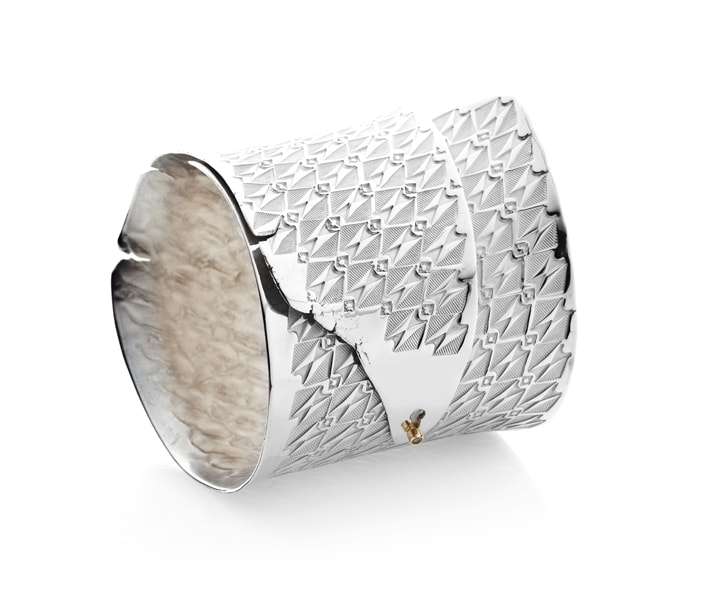
Matthieu CheminéeMatthieu Cheminée, a Canadian jeweler, focuses on the fundamental metalsmithing techniques that are practiced across the world today, with a focus on stamping and casting. From his early start learning from Native American silversmiths to studying with jewelers in West Africa to learning traditional jewelry-making techniques in Montreal, Matthieu is passionate about facilitating a collaboration of learning and teaching between jewelers. His recent show at L. A. Pai Gallery in Ottawa, Canada, called Stampclastic, coincides with the launch of his new book, Legacy: Jewelry Techniques of West Africa. Here Matthieu shares more about his background, career, and work in Africa.

Bonnie Levine: How did you get started as a jewelry designer? Was there someone or an experience that inspired you?

Matthieu Cheminée: My mother had a beautiful jewelry collection from all around the world, pieces that my dad would bring back from trips. She had bracelets from Afghanistan, crosses from Ethiopia, pendants from Peru, and more. I had always been attracted to them but my passion for the trade really started when I went to Taos, New Mexico, to visit an aunt when I was 17. I fell in love with all the Navajo, Hopi, and Zuni jewelry. Just before I turned 19, I moved to Taos from Paris to learn English and ended up learning jewelry making with great artisans. For almost seven years I made stamped bracelets and concho belts and I learned inlay and overlay.


Matthieu Cheminée: Stampclastic Read More »

Eunmi Chun: Precious Beasts—Blooming

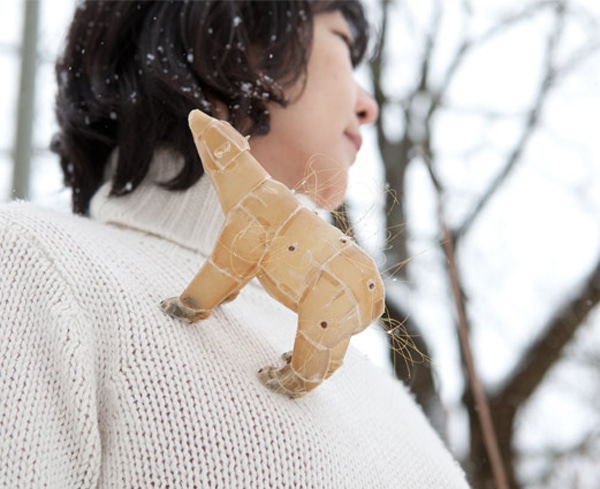
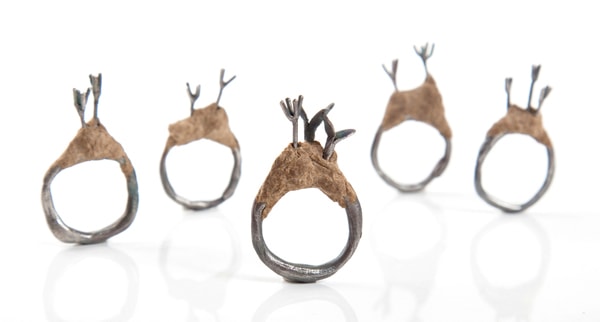
Eunmi ChunEunmi Chun is a contemporary jewelry artist who began her jewelry and metal studies in South Korea and eventually traveled to Germany to study under Otto Künzli at the Academy of Fine Arts Munich. Her current show, Precious Beasts—Blooming, at Rob Koudijs Gallery combines her meticulously crafted and organic work with her insights into human psychology. Known for working with repelling, unusual materials such as cow intestine and pigskin, Chun talks about her deviation from traditional metalsmithing materials in this interview.

Find out more about Chun’s work from Pravu Mazumdar’s One on One article about Eunmi Chun. 

Olivia Shih: You started your education with a BFA in mathematics and craft, then a MFA in jewelry and metal in Korea. Afterward, you traveled to Munich and studied under Professor Otto Künzli. Could you talk about the transition from one environment to the other and your learning process?

Eunmi Chun: I first started my college education in mathematics, so when I joined the metal department, I had to start with senior (third year in Korea) students. As a result, I learned demanding skills in quite a short time, during which my work was inferior to that of fellow students. But due to that situation, I started to develop my own methods.

Eunmi Chun: Precious Beasts—Blooming Read More »

Biba Schutz: Half Full

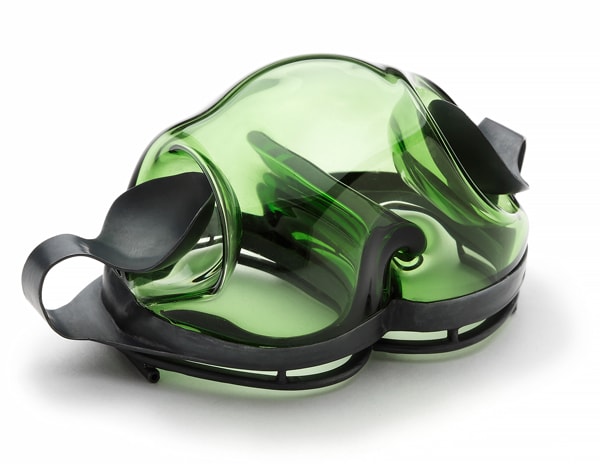
Biba SchutzBiba Schutz is a very productive jeweler living and working in New York City. Her show at Sienna Gallery features a very new series of work. She once used metal exclusively but now has worked glass into the designs. These fresh, wearable necklaces and brooches incorporate glass into her work in a very successful way. The presentation of these new pieces offered a wonderful opportunity to ask her about her work and her history.

Susan Cummins: In your new show at Sienna Gallery, you seem to have changed your approach to making jewelry. Gone are the twisted expressive wires and in come the cool, sleek glass and metal. What happened?

Biba Schutz: I am continually looking for new challenges and traveling in unchartered areas.

As time has passed … my language and materials have grown, but the voice still has the same thread of inspiration and process. I still investigate, challenge, and explore my environment and emotional experiences. There is still mystery, memory, and a place to hide and travel while experiencing my jewelry.


Biba Schutz: Half Full Read More »

Harold O’Connor

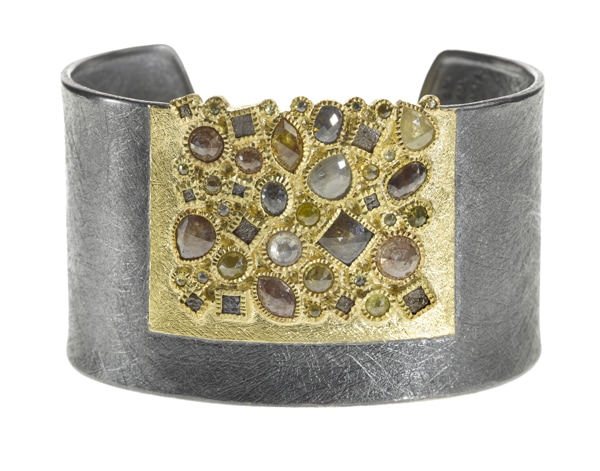
Harold O’ConnorPatina Gallery in Santa Fe, New Mexico, had a show last month of the work of Harold O’Connor, who is highly regarded for his technical expertise and was recently featured in a cover article in Metalsmith magazine. Harold is considered one the great teachers of his generation and he has conducted workshops all over the world. The process of fabrication is evident in every piece and his work is clearly marked by his early training and the time in which he has lived.

Susan Cummins: Harold, you are known for your technical expertise. In fact, you conduct classes all around the world teaching embossing, granulation, and reticulation, among other things. Did learning these skills come easily to you? Can you tell the story of the way you acquired them?

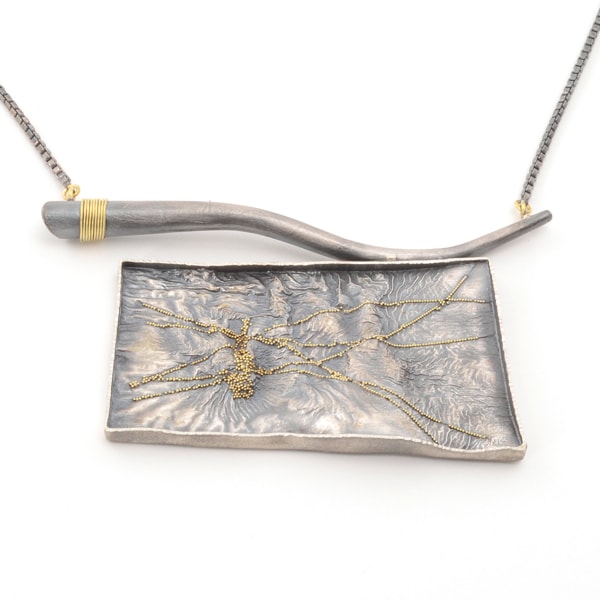
Harold O’Connor: I first learned granulation at school in Pforzheim, Germany, in 1967, but I had forgotten that I had already learned it, as my portfolio of early works I showed at Martha Connell Gallery in Atlanta demonstrates. In 1988 I went to a small workshop in the town of Ahlen, in northern Germany, called the European Gold and Silversmith Academy, to learn granulation in gold. There I met several participants from Cologne, Germany. Eventually they became best friends and also introduced me to other masters of the technique in Cologne. By visiting their workshops, I was able to pick up more hints on executing the technique. We saw the works of Germany’s most famous granulationist, Elizabeth Treskow from Cologne (who has a street and a square named after her). The American granulationist John Paul Miller met with Treskow when he was in Europe. Most likely he, too, picked up some pointers from her. After learning granulation, I did not do it at all for one and a half years, as I did not care to make the classical patterns, such as triangles and pyramids of beads. One day in the studio I realized that the 18-karat gold granulation would go well with reticulated silver patterns. From that beginning I have created many forms over the years in this combination. I had been doing some reticulation on sterling silver over the early years but the results were lacking in pattern and detail. Somewhere along the way I broke down and bought some reticulation silver (.820 silver) and a whole new world opened for me in creating forms with interest and dimension. The granulation evolved over time and in recent years I have added the use of silver granulation in combination with the gold. I tell people that doing granulation is like working with enamels—one needs patience and time and a steady hand. Time is consumed in making the beads for granulation, done by heating small snips by hand or in a kiln. The most difficult process to learn is knowing the right temperature at which the beads fuse to the metal surface. Twenty years into it, I’m still learning what works and what doesn’t. Granulation for me is like Zen meditation.

 

Harold O’Connor Read More »

Rudee Tancharoen: Tales of the Truth

Rudee TancharoenAfter years of studying contemporary jewelry in Europe, Thai artist Rudee Tancharoen returned home to share her passion for art jewelry with the people of Thailand and established Atelier Rudee, the only international academy for art jewelry in Thailand, to do just that. Her current solo show, Tales of the Truth, is on exhibition at ATTA Gallery in Bangkok, Thailand, through July 5, 2014. Here she talks with Bonnie Levine about the show and the important work of Atelier Rudee. 

Bonnie Levine: Tell me about your background. How did you become interested in making jewelry since there is not a long tradition of art jewelry in Thailand? Who has had a major influence on your work?

Rudee Tancharoen: My introduction to art jewelry is quite a delightful coincidence. After I graduated in industrial design from Chulalongkorn University, Thailand, I worked as a designer for a while. However, I found that there are some aspects of industrial work that did not quite agree with me. I wanted to try something else where I could still use my creativity, but involved less in industrial business. I then decided to take a three-year course at the Alchimia school in Florence, Italy, where I was introduced to and graduated in the art of contemporary jewelry. 

During my last year at Alchimia, I had an opportunity to study with Manfred Bischoff for a whole year and his philosophy has had a major influence on my work in several aspects.


Rudee Tancharoen: Tales of the Truth Read More »

Robert Smit: Golden Ring of Honor

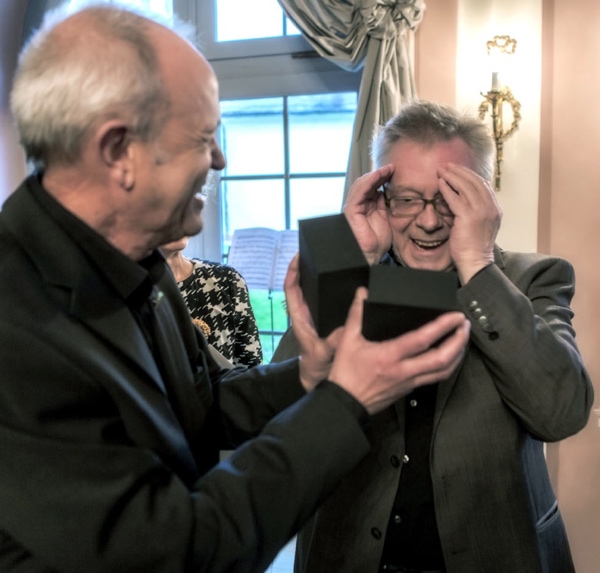
Otto Künzli and Robert SmitRobert Smit was awarded the Golden Ring of Honor this year, which places him in the Pantheon of great contemporary jewelers. It was given in recognition of his dedication and brilliance in making jewelry, drawings, and paintings over many years. This year, the ring was made by Otto Künzli, who was the last recipient of the Ring of Honor. Otto’s design is quite amusing. Rosemarie Jäger gave Robert a reception at her gallery to mark this occasion. Robert is a prolific and thoughtful artist who has strong opinions that guide his process. It was a pleasure to have the privilege of interviewing him. 

For further recent publications about Robert Smit, you can read Liesbeth den Besten’s article in Metalsmith, v.33, n.5, 2013, and the catalog published by Padova, Musei Civici agli Eremitani, on the occasion of this year’s show, called Esoteric Revelations.

Susan Cummins: Congratulations! You were just awarded the Golden Ring of Honor 2014 by the Association for Goldsmiths’ Art in Hanau, Germany. This recognition is a great honor. What is the history of this 41 year-long tradition? And how do you feel about getting it?

Robert Smit: The tradition was started in 1933, so it is already 81 years old! In the beginning, the Golden Ring of Honor was given every year up until 1957. In 1960 it was changed to every 3 years. The first years it took place in Berlin. Then in 1947 it moved to Hamburg, because the Gesellschaft für Goldschmiedekunst had to move out from Berlin. For the last 29 years, the meetings and presentations of the award have taken place in Hanau. See the list of Ehrenringträger (Carriers of the honorary ring) at the end of the interview. 


Robert Smit: Golden Ring of Honor Read More »

Lena Olson: Close to Me

Lena OlsonLena Olson has been an independent jewelry artist since graduating from HDK School of Design and Crafts in Gothenburg, Sweden, in 1996, working with wood as her primary material. Her current show, Close To Me, at Platina in Stockholm, Sweden, is the result of a year-long research project where she examined the placement of jewelry on the body as a physical place and the personal relationship we have with the pieces of jewelry we choose to wear. Here she talks with Bonnie Levine about the show and her life as maker, teacher, and original collaborator behind the Hnoss Initiative in Sweden.

Bonnie Levine: Tell me about your background. How did you become interested in making jewelry?

Lena Olson: I always wanted to be an artist, and enjoy working in three dimensions and with tools. Hard materials and small things were also attractive, so jewelry just seemed natural. I was lucky to have an encouraging teacher who knew about HDK, the School of Design and Crafts in Gothenburg. Since about the age of 12 my goal was to be accepted there at the metal department. After some years in different preparatory art schools, I was actually more into sculpturing, so it was a rather crucial choice to make. I am happy I saw the possibilities of jewelry as sculptures connected to the body even then. 


Lena Olson: Close to Me Read More »

30 Years West: Sandra Enterline and Valerie Mitchell

Sandra Enterline and Valerie MitchellSandra Enterline and Valerie Mitchell are old friends. Both attended Rhode Island School of Design and drove across the country together after graduation. They stayed in California and so called this show 30 Years West. For the past 30 years, they have shown together, vacationed together, exchanged ideas, and generally remained an important element in each other’s lives. Their show at Gravers Lane Gallery in Philadelphia seemed like a good time to catch up with both of them.

Susan Cummins: Did you discover you were a jeweler while you were attending Rhode Island School of Design, or did you know before that? Please tell the story of how you became a jeweler. Did you grow up on the east coast? Where?

Valerie Mitchell: I was born in Hollywood, California, where my dad Victor was shop foreman at the established Allan Adler Silversmiths. At age six, we moved east by train, and I grew up in Bristol, Connecticut. My genetic influence was increased by the curiosity of odd jewelry parts, stones, and hand tools stored in an old workbench in our basement my dad infrequently used. My first jewelry lesson was the summer after receiving my BFA, followed by other area workshops. In 1977, I moved to the Hartford, Connecticut art community, where I developed as an artist, utilizing jewelry as a sculptural, wearable expression while a member of Artworks Gallery. I had a one-person show titled Jewelry from my Environment at the nonprofit downtown space and also a four-person exhibition called City Limits of work inspired by visuals from my urban environ at the Old State House Gallery. My training was minimal but my artistic energy strong. Five years later, I decided to be serious about my training as an artist and craftsperson and chose RISD and Providence for my MFA in light metals.  


30 Years West: Sandra Enterline and Valerie Mitchell Read More »

Peter Hoogeboom and Shu-Lin Wu: Greenware, Crockery, Chinawear

Peter HoogeboomPeter Hoogeboom and Shu-Lin Wu have collaborated on an exhibition at Galerie Noel Guyomarc’h in Montreal, Canada. They both work with ceramics and participated in the Un Peu de Terre sur la Peau, where they met. The rest is history and a fascinating one at that.

This show will travel on to venues in the US, Thailand, China, and the Netherlands.

Susan Cummins: When did you two meet?

Peter Hoogeboom: We met some years ago in France, when the first edition of the exhibition Un Peu de Terre sur la Peau was shown in Limoges. We stayed in the same hotel there, so we talked at breakfast and also did things together during the days, apart from the exhibition things. For instance, we went to a cemetery known for its porcelain decorations and plaques on the graves. (Limoges is the porcelain city of France.) Shu-Lin decided to visit me after I returned home, so a few days later I showed her around in Amsterdam. When the show went to Taiwan at the end of 2011, Katja Prins and I were invited to attend, and Shu-Lin showed us around in Taipei.


Peter Hoogeboom and Shu-Lin Wu: Greenware, Crockery, Chinawear Read More »

Bruno Martinazzi: Vivere Essere Volere Bene

Bruno MartinazziEllen Maurer Zilioli has curated a show of the work of Bruno Martinazzi called Vivere Essere Volere Bene, which translates to something like “To Live, To exist, To Love: for the Pinacoteca Accademia Albertina di Belle Arti in Turin. This city has been Martinazzi’s home base for most of his life, so at 90-years-old, they are celebrating him. Martinazzi is a unique figure in the art world and one with a philosophical bent. I was very pleased to have his answers to some of my questions.

Susan Cummins: You are now 90-years-old, and you have accomplished many things in your lifetime. What are you most proud of?

Bruno Martinazzi: To get my ideas across, I cite Gianbattista Vico, an Italian philosopher and author of the volume Principi di Scienza Nuova, written between 1725 and 1744. In Volume 1, Part II, line 3, he writes, “First human beings hear without attention, then they keep attention with confused and touched souls, and finally, they reflect with pure minds.” From that principle, art and poems take form.


Bruno Martinazzi: Vivere Essere Volere Bene Read More »

Kete with Dodd, Haydon and Wilkinson

Jane DoddCaroline Billing, owner of The National in New Zealand, participated in a fair with three of the artists she represents, and AJF took this opportunity to interview all of them about their work. They are articulate and smart. No wonder the New Zealand jewelers are making their mark internationally.

Susan Cummins: Can you describe the Kete fair and symposium event?

Caroline Billing: Kete was a four-day art fair and symposium that was recently held in Wellington, New Zealand. It is a new event (this was its second incarnation) and the first of its kind here for us. The concept is to bring together galleries to showcase their selected artists across different craft mediums. Talks around the subjects of collecting, artists’ practices, and current issues in craft were held, and it included keynote speakers during the daytime and evenings.

What part did you play?

Caroline Billing: I represented three of my jewelers at Kete with the aim of highlighting three distinct and successful current practices by New Zealanders in contemporary jewelry.


Kete with Dodd, Haydon and Wilkinson Read More »

Scroll to Top