Marta Costa Reis, Mònica Gaspar, and Patrícia Domingues, eds., Madrugada: A joalharia e a política da Esperança (Daybreak: Jewellery and the Politics of Hope). Lisbon: PIN – Portuguese Association of Contemporary Jewellery and CML/MUDE Museu do Design, 2025. (In Portuguese/English)
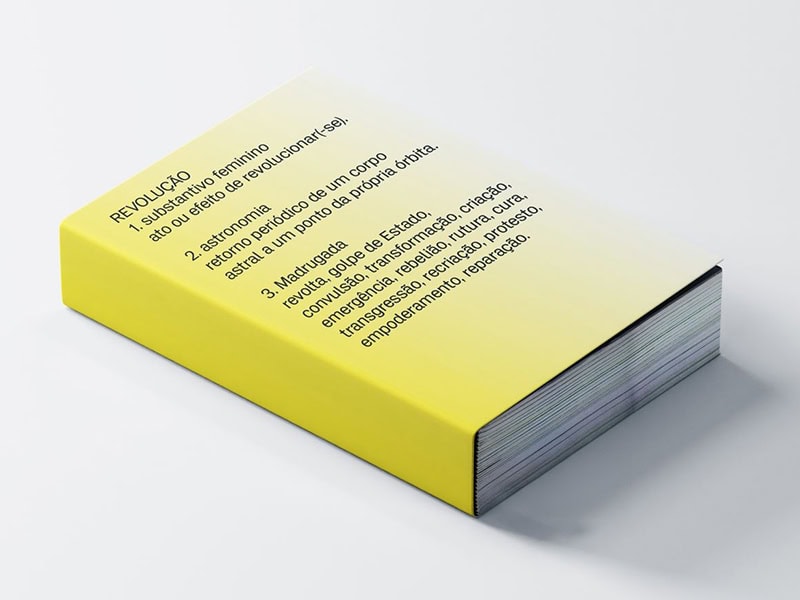
The 3rd Lisbon Contemporary Jewellery Biennial, organized by PIN – Portuguese Association for Contemporary Jewellery, begins at the end of the week, running September 19–27, 2026. This year’s theme, Coexistences, derives from the last section of the 2024 biennial’s Madrugada exhibition. Reviewing the Madrugada catalog, we trace the ideas that sparked Coexistences.
“Madrugada” is a cool Portuguese word for “daybreak”. Madrugada. Jewellery and the Politics of Hope was the main show of the second biennial of contemporary jewelry in Lisbon. It displayed a wide selection of political pieces, both quiet and intense, but all determined to inspire hope.
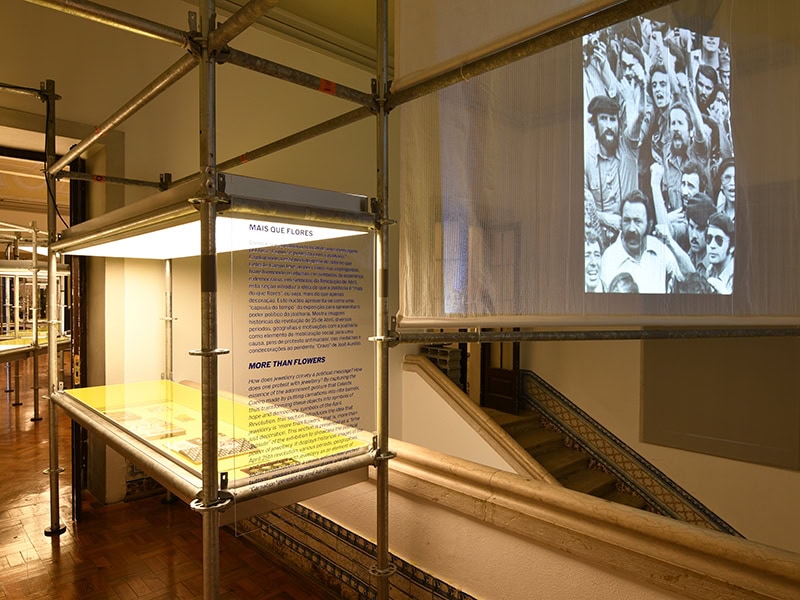
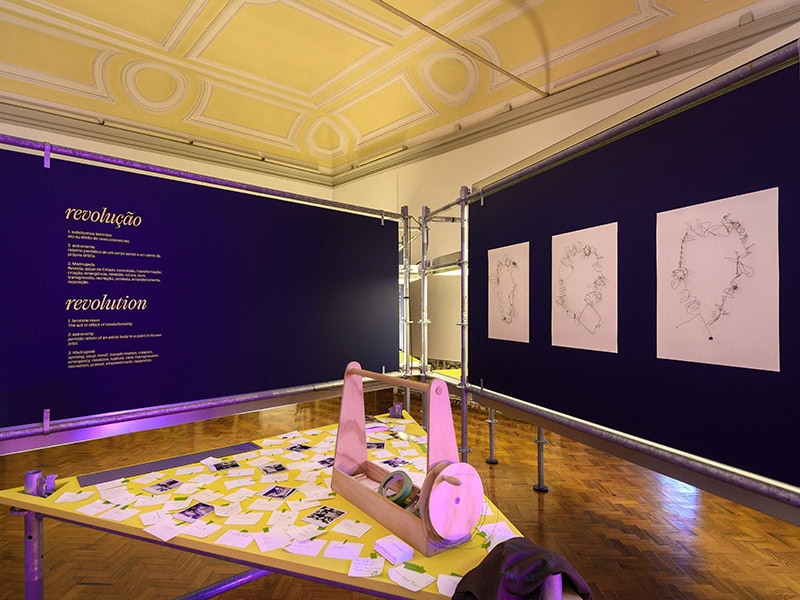
The 50th anniversary of Portugal’s Carnation Revolution served as inspiration for curators Marta Costa Reis, Mònica Gaspar, and Patrícia Domingues. In collaboration with the MUDE Museu do Design (the place to go for Portuguese contemporary jewelry), Madrugada occupied the vacant Calheta Palace.
Works by 90 jewelers from 34 countries addressed all kinds of wrongs, such as injustice against migrants, harmful beauty standards, or deteriorating queer rights. The discerning selection struck me. The hope which the subtitle refers to is the kind that endures uncertainty instead of clinging to optimism or to pessimism, keeping the hands free to get to work. Jewelry pieces that carried both instant rage and this sense of hope were what the curators sought to include.
Primarily for the initiated
At this point, a review should probably discuss the jewelry, but that’s tricky. The curators accompanied the works on view with only the sparest of information. Not much was given besides facts such as the maker, title, and materials.
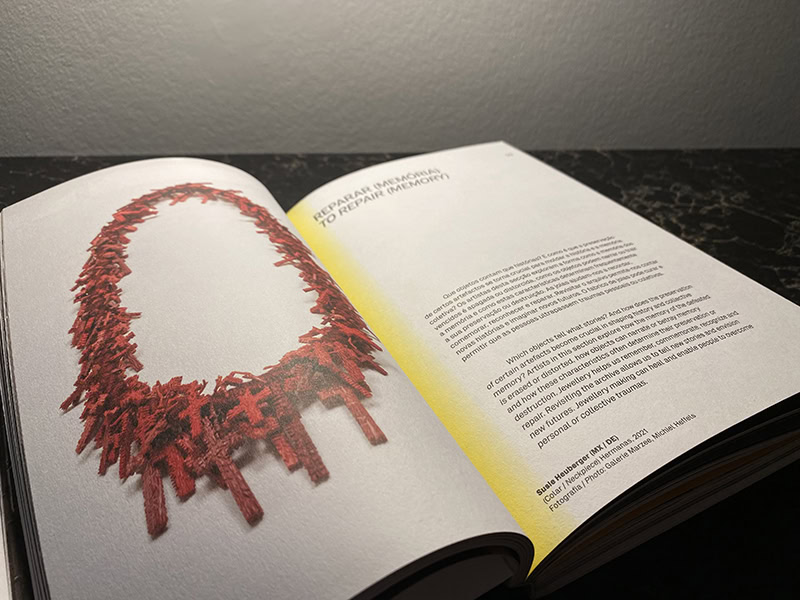
I was lucky to tour the show with Gaspar, Domingues, and some artists. Nanna Melland explained the idea of a swarm behind her aluminum planes. Johanna Zellmer’s passport made sense when she told her migration story. Susie Heuberger later revealed that the pinkish red crosses of Hermanas commemorate Mexican women killed in conflict.
Familiar pieces gave me a small dopamine rush. Ana Escobar Saavedra’s baby’s ID band replicated in stone, for example—already in the maternity ward we wear a bracelet constructing our identity. But many pieces were new to me. Challenging their own jewelry blind spots, the curators selected many young and underrepresented voices and their ways of reacting to crises.
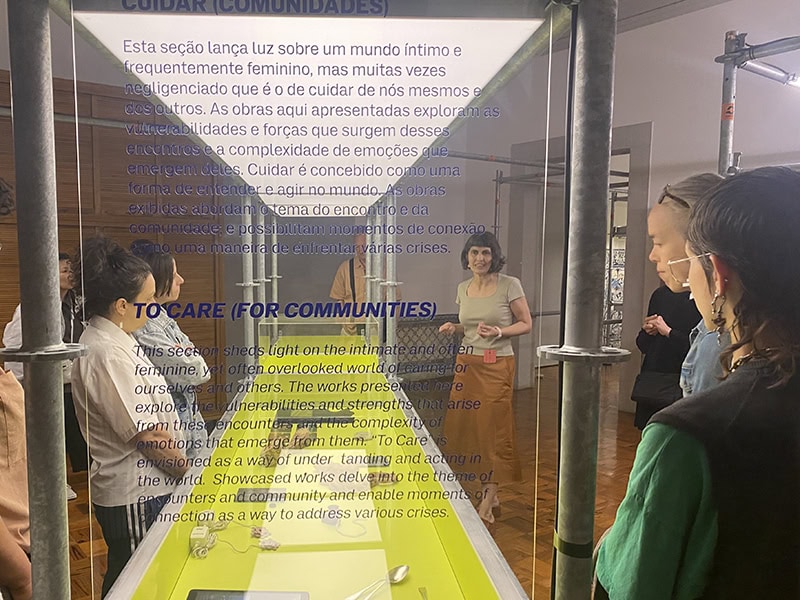
The curators organized the works in eight hopeful actions, such as “To protest (voices),” “To empower (tools),” and “To reimagine (coexistences).” Each of these sections was introduced by a mini essay. Somewhat difficult to read on the transparent panels in the Calheta Palace, they are easily savored in the book.
A practice of curatorial care
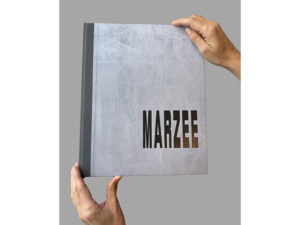
The catalog, with its unmistakably yellow cover, tends to the exhibition’s afterlife.
Nearly all images in the book were taken in situ, where the exhibition’s temporary scaffolding snaked through the tall rooms and narrow passages. Close-up photos of the works in the glass cases show the haze of the dominant yellow partitions.
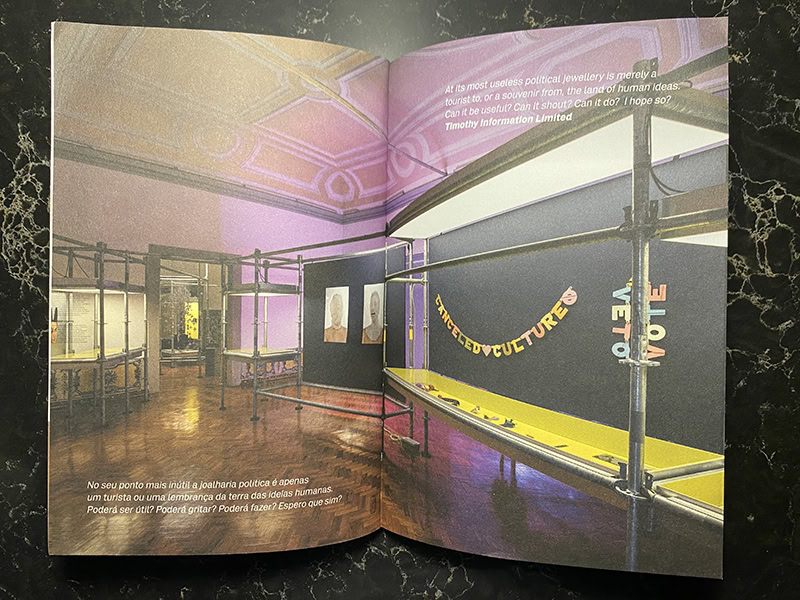
The curators’ deliberate approach in the exhibition extended to later exploring where the curation ends after the return of works. During their AJF talk at Schmuck 2025,[1] Gaspar and Domingues explained that this book itself is a practice of “care,” ensuring that the ideas expressed with the project remain active a little longer.
In an interview conducted by Elena Karpilova, the curators state that for the exhibition they avoided providing a 200-page manual of explanations—as they put it—but supplied a small number of QR codes hoping that “people would get curious and self-initiate acts of micro-research.” This considered decision to limit information risked some works not being understood.
Avoiding labels
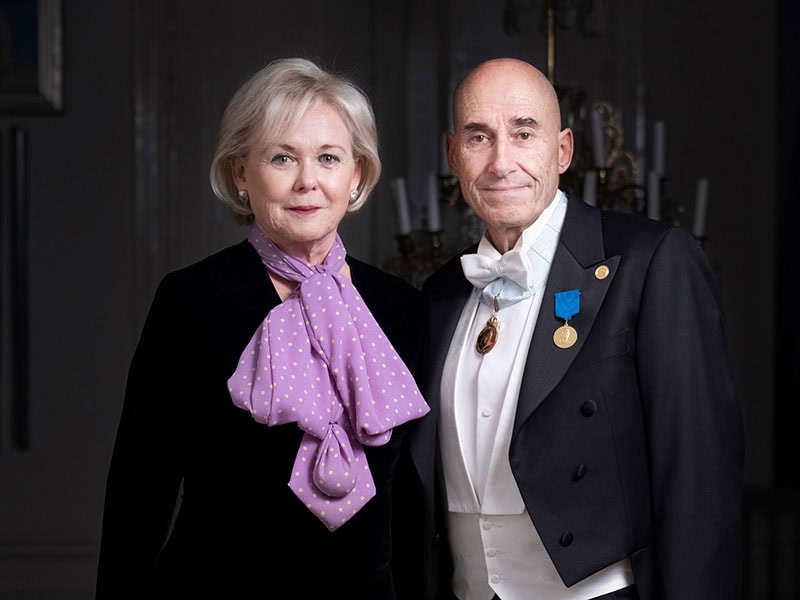
The book carefully lists the materials and dimensions of each piece, and it is slightly more generous than the exhibition by adding a few makers’ quotes and—occasionally—background. The Nobel Bow, for example, refers to the secretary of the Swedish Academy, who often wore blouses with bows at the collar. Male colleagues ended her tenure to avoid #MeToo embarrassments.[2] Wearing the necklace takes courage, especially as politicians worldwide increasingly broaden reasons to arrest protesters for “subversive” accessories, including watermelon brooches.[3]
What are the round disks in Paula Crespo’s necklace Fora de Série, in the section “To repair (memory)”? I flick through to the list at the back: “African Wood, 1 Escudo coins.” Does this allude to timber extraction in Portuguese colonies? Not having that familiar crutch—a small label in the display case or on the page, quietly explaining the idea—made me uneasy in a way I didn’t expect.
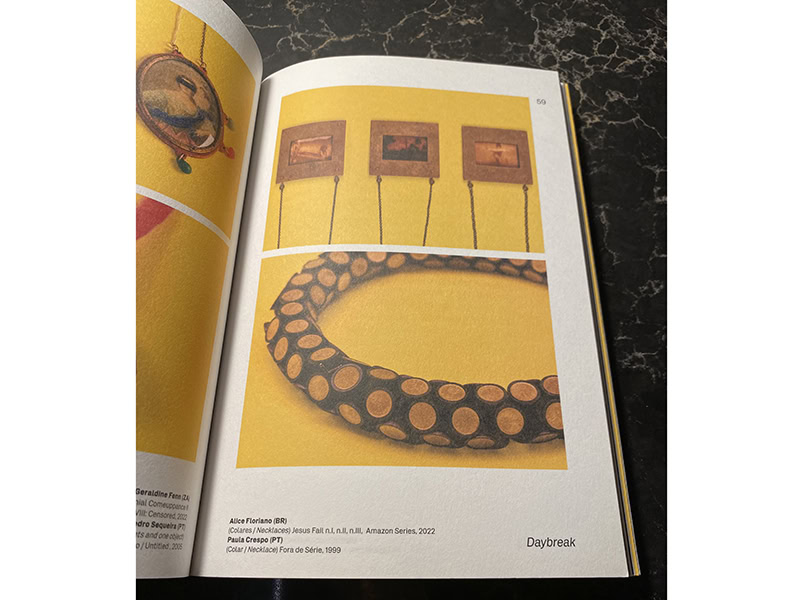
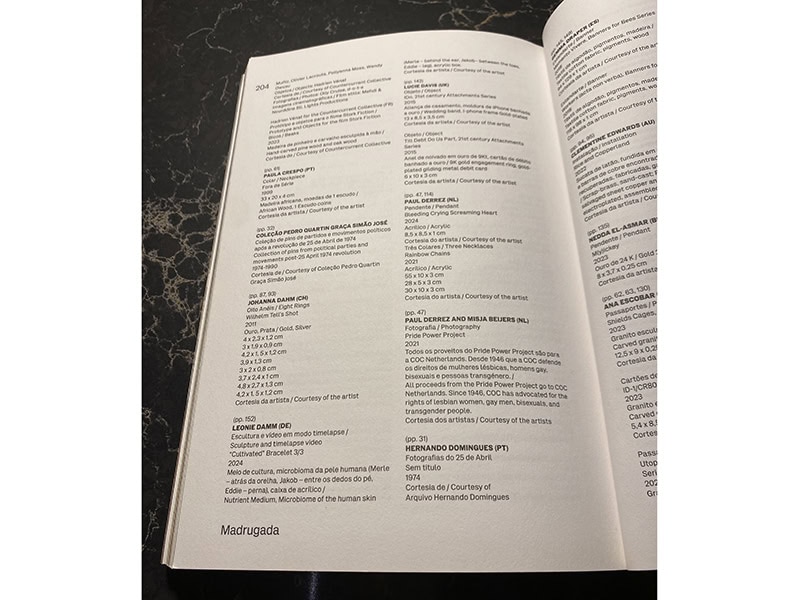
Gatekeeping on the part of the curators? Freedom? Freedom to finally look with my own eyes?
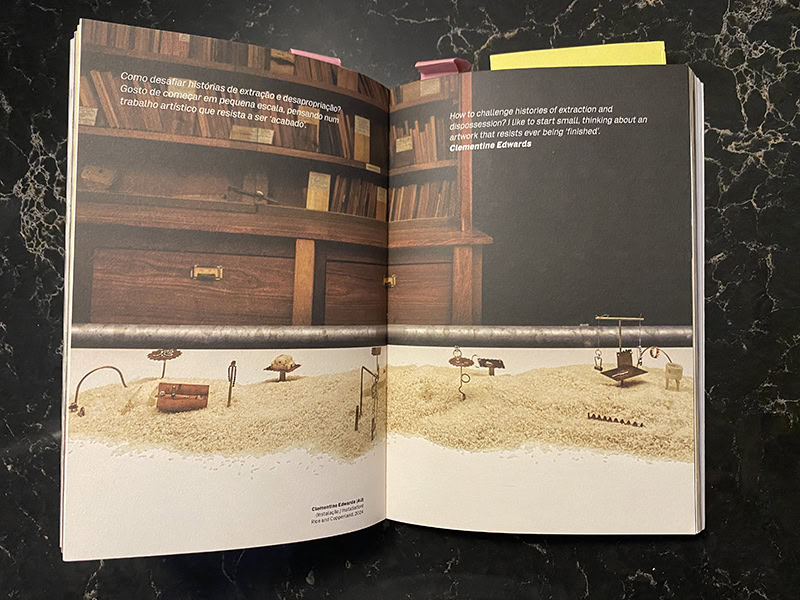
I wished I could immediately “read” works like Clem Edwards’s intriguing Rice and Copperland installation. Why rice? Why copper? Why miniature? The catalog has an advantage over the exhibition, quoting the artist: “How to challenge histories of extraction and dispossession? I like to start small, thinking about an artwork that resists ever being finished.”
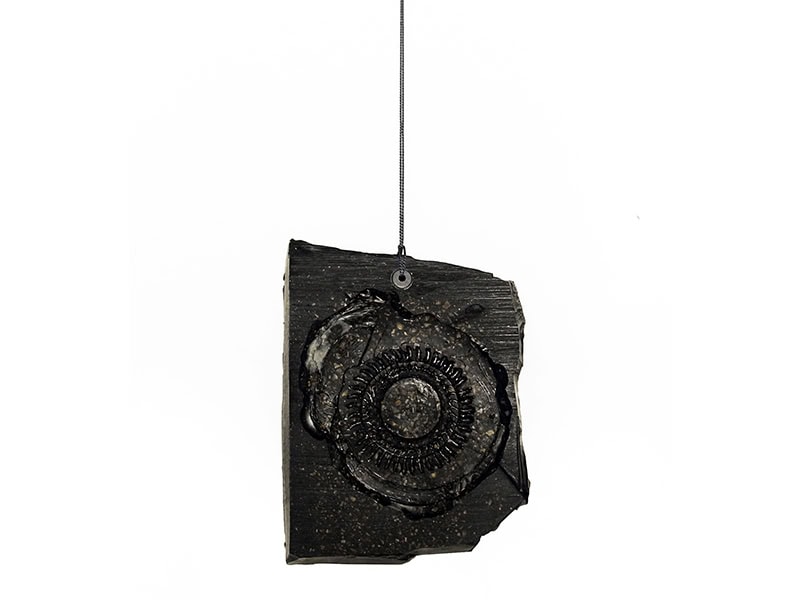
Also, Conversation Piece’s beautiful pendant Black Box, resembling an ammonite, gains depth with a quote that was not in the exhibition. They mention technological obsolescence, overconsumption, and conflict minerals. With this snippet plus the materials listed in the caption—jet and shell but also a manufactured material like ferrite—I create my own backstory.
Jewelry as protest
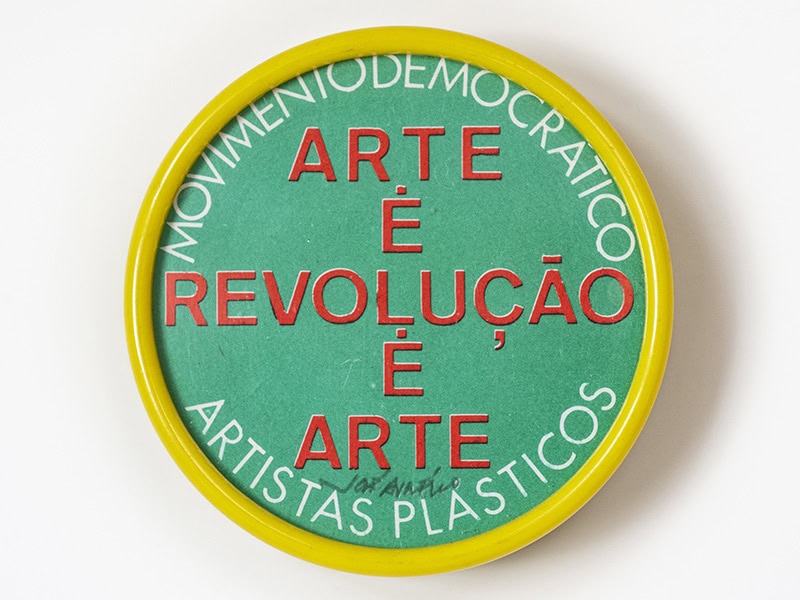
The catalog wastes no time discussing whether jewelry is an apt voice for protest or hope. It implies that it is. Isn’t all art—like the period pin reading “Arte é Revolução é Arte”— somewhat revolutionary? Halfway through, the book quotes Timothy Information Limited: “At its most useless, political jewellery is merely a tourist to, or a souvenir from, the land of human ideas. Can it be useful? Can it shout? Can it do? I hope so?”
But how does it do so? By alarming us? Or by sketching a utopian future where humans and other-than-humans coexist, like in Countercurrent Collective’s film Stork Fiction? Patrícia Domingues states that dystopia (the emphasis is mine) can be a “methodology,” too. It acknowledges a complex reality and makes room to imagine the contrary.
Or can jewelry show what is worth starting a revolution for? Josephine Winther and Gitte Nygaard’s Makers Move collective presented wire jewelry, freshly made by passers-by around the concept of “freedom.” These represent hope in its most active form.
Addressing the chatter
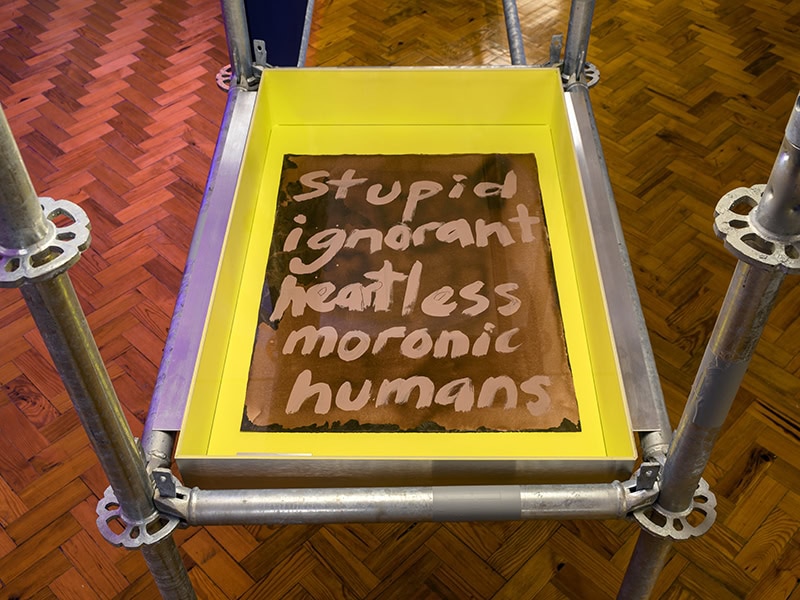
Under the heading “To protest (voices),” Helen Britton’s Shame Australia Shame is an urgent cry, scrawled on a sheet of paper: “stupid ignorant heartless moronic humans.” Photos of 2D works like this one, videos, phone filters, and installations pleasantly interrupt the cadence of the like-sized forms of brooch, bracelet, pendant. We are not looking at the black flower brooches or galalith animal pendants that Britton recently created, we are looking at unambiguous words. In the way of straightforward protest pin badges, are words winning out in jewelry as a medium of indictment?
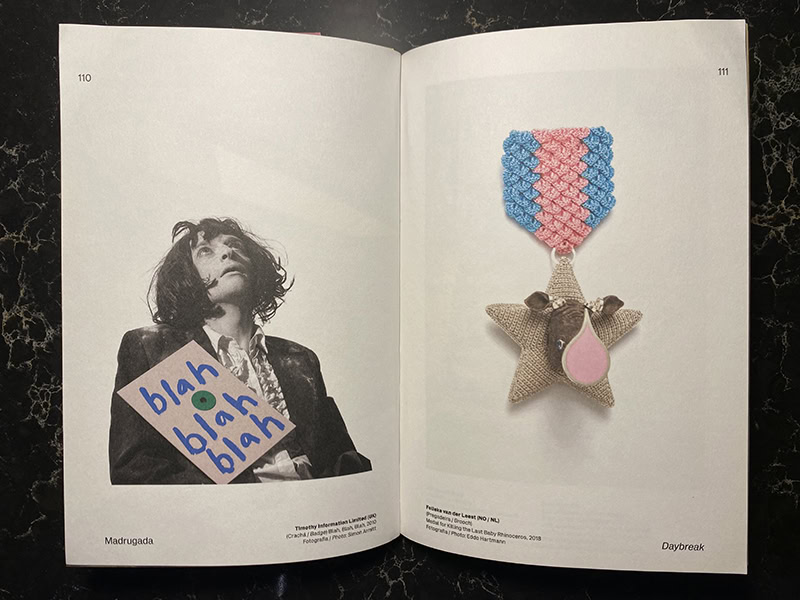
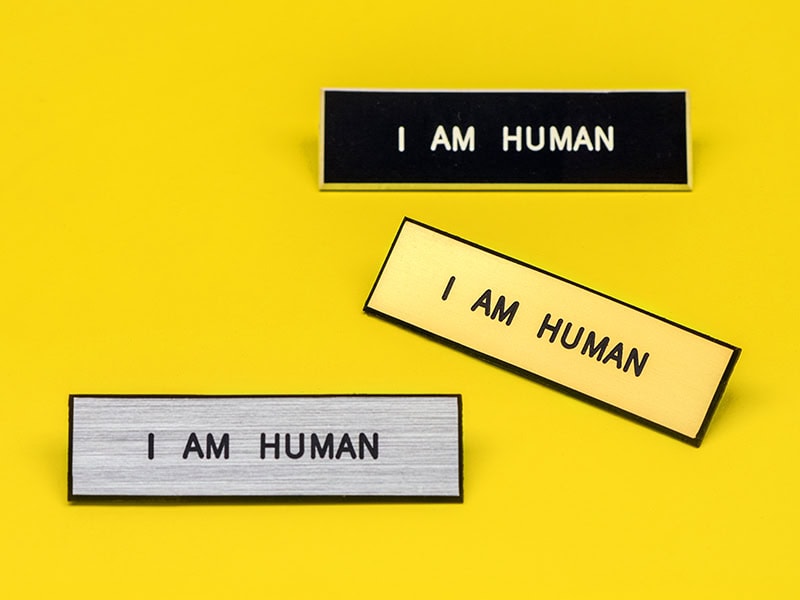
Madrugada contains other pieces with words. Ambiguous ones. Jewelry. This is Timothy Information Limited’s domain, for one. Witness the badge resembling a protest sign saying “Blah blah blah.” Elsewhere, Auli Laitinen’s readymade name tags spell “I am human.” Brilliantly categorized under the heading “To reimagine (coexistences),” it might be a first introduction for a more-than-human-being … or a reason to stay clear.
Madrugada’s eight themes offer clues on how political jewelry “can do,” as Timothy Information Limited puts it. The pieces do so by acknowledging materialities, for example, by transiting boundaries, by encouraging the wearer to become oneself, perhaps. But grasping how each of the many compelling works embodies hope (in the new, active sense of the word)—not so easy without explanatory texts.
The three curators address this curatorial dilemma candidly. The limitations of the exhibition layout have not been entirely compensated for in the catalog. Which is why the politically intended Madrugada—exhibition and catalog, both—is also inadvertently about the role of words in jewelry. And yet this catalog is a rich addition to the archive of jewelry books, and I hope one will be produced for Coexistences, too.
—–
The Madrugada exhibition took place June 28–September 22, 2024. Curated by Marta Costa Reis, Patrícia Domingues, Mònica Gaspar. Interview with the curators in the catalog by art critic Elena Karpilova.
With work by:
Ada Chen, Adeela Suleman, Alice Floriano, Ana Escobar Saavedra, Anna Avits, Anti War Medal exhibition archive (Velvet da Vinci Gallery), Artificial Intelligems, Auli Laitinen, Benedict Haener, Ben Lignel, Beverley Price, Bruno Nogueira, Carla Castiajo, Caroline Broadhead, Catarina Silva, Catherine Blackburn, Chequita Nahar, Christoph Zellweger, Clementine Edwards, Conversation Piece (Nicolas Cheng & Beatrice Brovia), Corrina Goutos, Countercurrent Collective, Damara Inglês, Daniel Ramos, David Bielander, Deganit Stern Stocken, Diana Silva, Eija Mustonen, Felieke van der Leest, Fernanda Fragateiro / Paula Paour, Filomeno Pereira de Sousa, Florance Tebbutt, Frank Tjepkema, Gemma Draper, Geraldine Fenn, Gisbert Stach, Gonçalo Camboa, Handmedal Project (Iris Eichenberg & Jimena Rios), Helen Britton, Kiseno, Johanna Dahm, Johanna Zellmer, Jonathan Boyd, José Aurélio, Joyce J Scott, La Frontera exhibition archive (Velvet da Vinci Gallery & Lorena Lazard), Lauren Kalman, Lauren Kalman & Kipp Bradford, Leonie Damm, Leonor Hipolito, Lin Cheung, Lisa Walker, Lucie Davis, Lucy Ganley, Luisa Kuschel, Luis Torres, Makers Move , Manuel Vilhena, Maria Ignacia Walker, Marilia Maria Mira, Masoumeh Rezaeilouyeh, matt lambert, Mengyin Sun, Miles Robinson, Naama Levit, Nanna Melland, Nedda Al-Asmar, Paul Derrez, Pride Power Project (Paul Derrez & Misja Beijers), Paula Crespo, Paulo Mendes, Pedro Sequeira, Pio Abad & Frances Wadsworth Jones, Pouya Bakhshi, Ramon Puig Cuyàs, Reka Lorincz, Ruudt Peters, Samantha Vincent, Sophie Hanagarth, Susie Heuberger, Ted Noten, Teresa Milheiro, Timothy Information Limited, Timothy Veske-McMahon, Valerie Oi Ying Ho, Vhils, Viktoria Bulgakova, Vivi Touloumidi, Yotam Bahat
Find a video of AJF Live with the curators, recorded when Madrugada was on view, here.
[1] Watch a recording of it here.
[2] Learn more about it under Inger Wästberg’s contribution on this page. (You’ll need to scroll down or search for her name.)
[3] The red flesh, white pith, black seeds, and green rind of the fruit symbolize solidarity with Palestine following the humanitarian crisis and massive civilian casualties in Gaza currently happening in its conflict with Israel.
The opinions stated here do not necessarily express those of AJF.
We welcome your comments on our publishing, and will publish letters that engage with our articles in a thoughtful and polite manner. Please submit letters to the editor electronically; do so here. The page on which we publish Letters to the Editor is here.
© 2026 Art Jewelry Forum. All rights reserved. Content may not be reproduced in whole or in part without permission. For reprint permission, contact info (at) artjewelryforum (dot) org