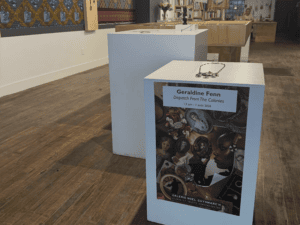
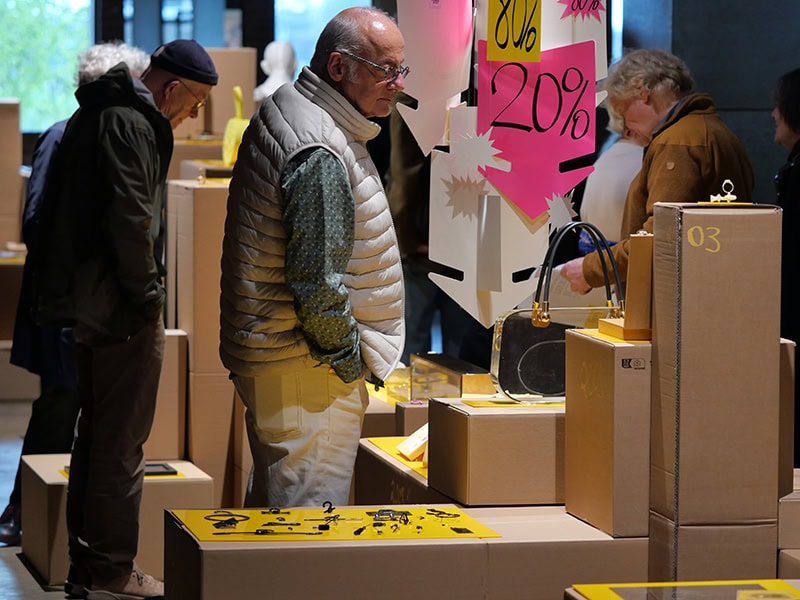
In April, Ted Noten opened his exhibition, Thirty-six Years on the Move / aka Route 36, at Galerie Marzee. In it, he presents one or several objects from each of the 36 years of his creative career, removing the hierarchy of “important” and “unimportant” projects. He placed them all together on a long strip of cardboard boxes—a symbol of constant moving, traveling, and perpetual motion. In addition, a book was published alongside the exhibition, conceived by Noten’s assistant, jewelry artist Into Niilo. The book itself is an art object: It features first-person stories by Noten about the pieces presented in the exhibition, as well as amusing and strange situations connected to them. (Full disclosure: Karpilova, the interviewer for this article, also contributed to the publication.) A Nietzsche quote seems especially fitting for Noten: “One must still have chaos in oneself to be able to give birth to a dancing star.”
The interview is filled with the provocative remarks Noten likes to make. Find out which previously unseen pieces are on view, where can you read the Ted Commandments (that is not a typo), and how a statuette from Moscow became Noten’s muse.
Elena Karpilova: Why did you decide to do the show now, and at Marzee? Thirty-six years isn’t exactly a milestone anniversary.
Ted Noten: The timing was actually accidental. Galerie Marzee was able to offer me a very large space, which is unusual since jewelry galleries are normally quite limited in size.
Exactly 36 years ago, my work was exhibited for the first time, and that was also at Marzee. I was both delighted and intimidated that the Cleopatra of jewelry gallery owners wanted me to be part of her annual exhibition featuring young artists graduating from jewelry art schools.
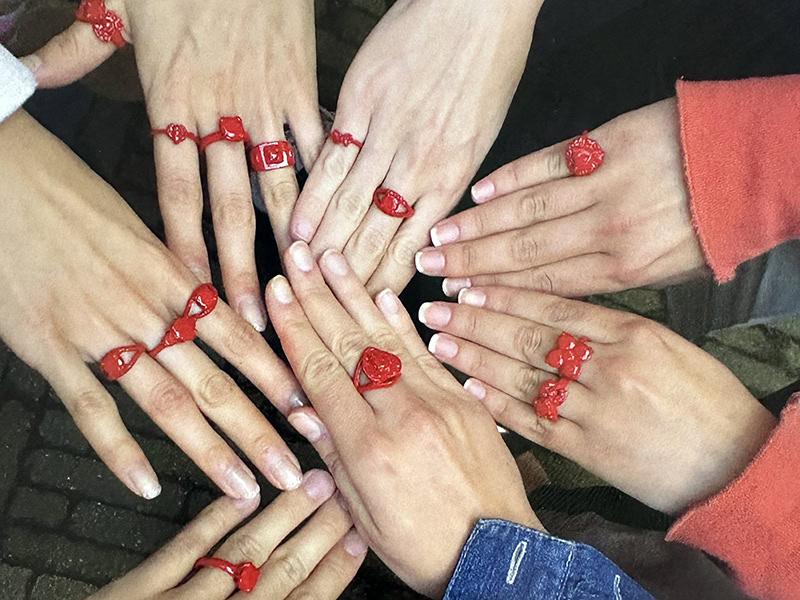
Red Light Design (2011) had only been seen in a book before it was presented at this exhibition. Tell us more about the project.
Ted Noten: This project was a response to the attempt to “clean up” Amsterdam that year. Through the ages, Amsterdam had been known as the city of free love, drugs, walking on the dark side of life, and for its red-light district. The government wanted to change the city’s image by giving parts of the prostitutes’ houses to artists in order to create a different vibe.
A lovely idea, although I didn’t like taking over someone else’s workplace—the prostitutes’. The government gave me a beautiful classical Amsterdam house, four floors leaning against one of the oldest churches in the middle of the city, and offered me a free playground. I set up two studios there, along with three residency spaces for artists. In a way, I was eliminating someone else’s opportunity to make a living.
As a response, I designed a machine outside my studio from which people could buy a red ring for €2.50, sold under the tagline: “Be nice to a girl, buy her a ring.” Imagine a husband coming home every Friday with flowers for his wife. I wanted to offer the district’s customers a similarly symbolic gesture.
The project sold out—around 7,500 to 10,000 pieces. The prostitutes, however, didn’t like the souvenir. They considered it an insult: a compliment worth only €2.50? They would throw the rings out onto the street, and I found them everywhere.
My studio there was only temporary, for two years, and in the end the district remained about 80 percent occupied by prostitutes.
Your work is often politically charged, addressing current issues, power structures, and market systems. Choose one piece from the exhibition that reflects the global geopolitical context of the past three to four years, and tell us why.
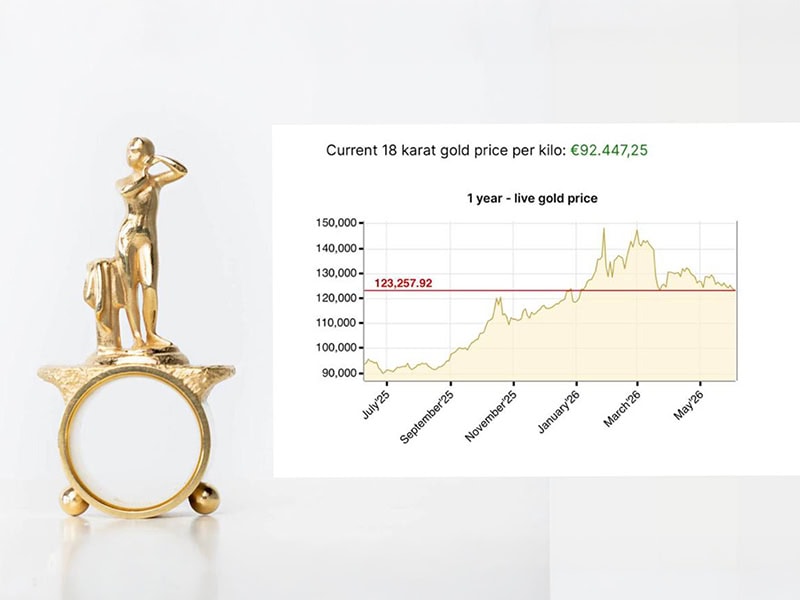
Ted Noten: The Muse. It was part of a series of works I created around the theme Haunted by 36 Women. (Note: This is a series of 36 “portrait-archetypes” of women presented as object-collages: for example, a femme fatale, a reserved girl, a feminist, a fashionista, and others. The works were constructed using found objects. Noten then created smaller versions of the large-scale artworks as jewelry pieces.)
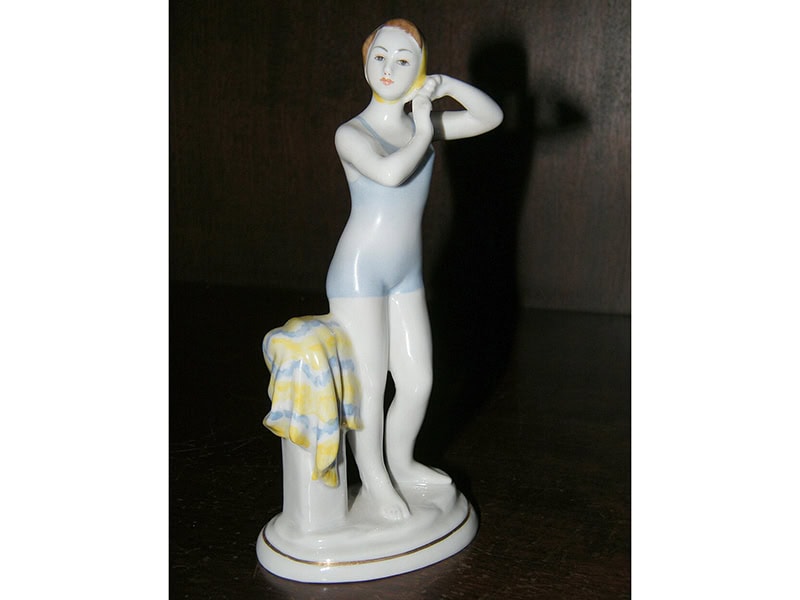
https://commons.wikimedia.org/wiki/File%3AFigurine-girl_after_bathing._The_Leningrad_porcelain_factory._The_Soviet_porcelain.1960_th_years-.JPG
The figure is a replica of a statue I bought in Moscow. To me, she represented the muse. Back in 2012, the ring cost around €9,500. Now it costs approximately €21,000. You can buy it at any time—but no one has ever sent me a request.
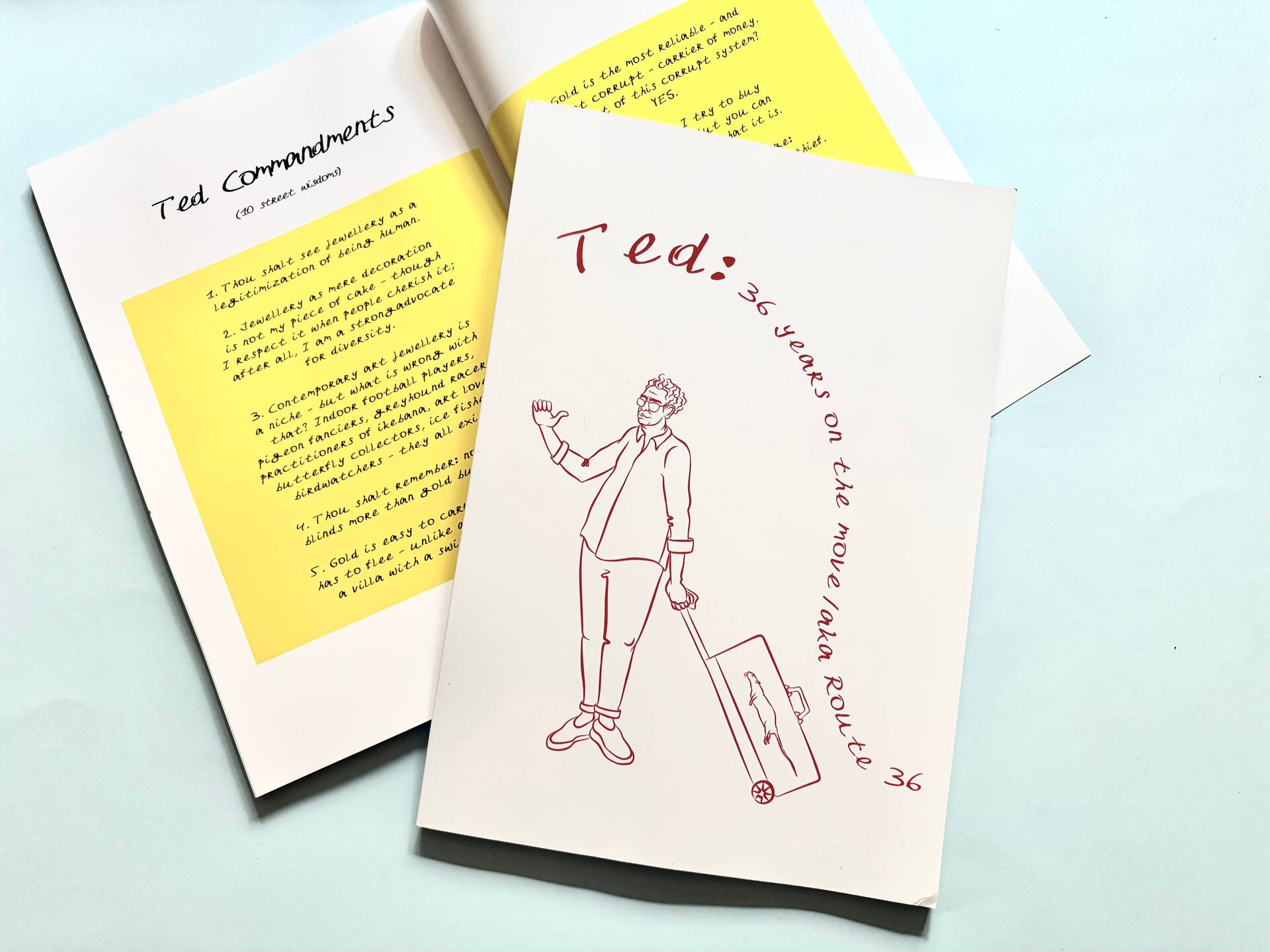
Tell us about the art book Ted: Thirty-six Years on the Move / aka Route 36, which accompanies the exhibition.[1]
Ted Noten: It makes more sense for Into Niilo to answer because it was their idea!
Into Niilo: It felt to me that a regular catalog is easy-peasy and too boring. For quite a while I had been thinking about a graphic novel memoir. And with this exhibition it felt like the perfect timing. It was the ideal situation to give Ted’s storytelling visual form. We were super compressed regarding time but we made it happen. In five weeks—crazy!
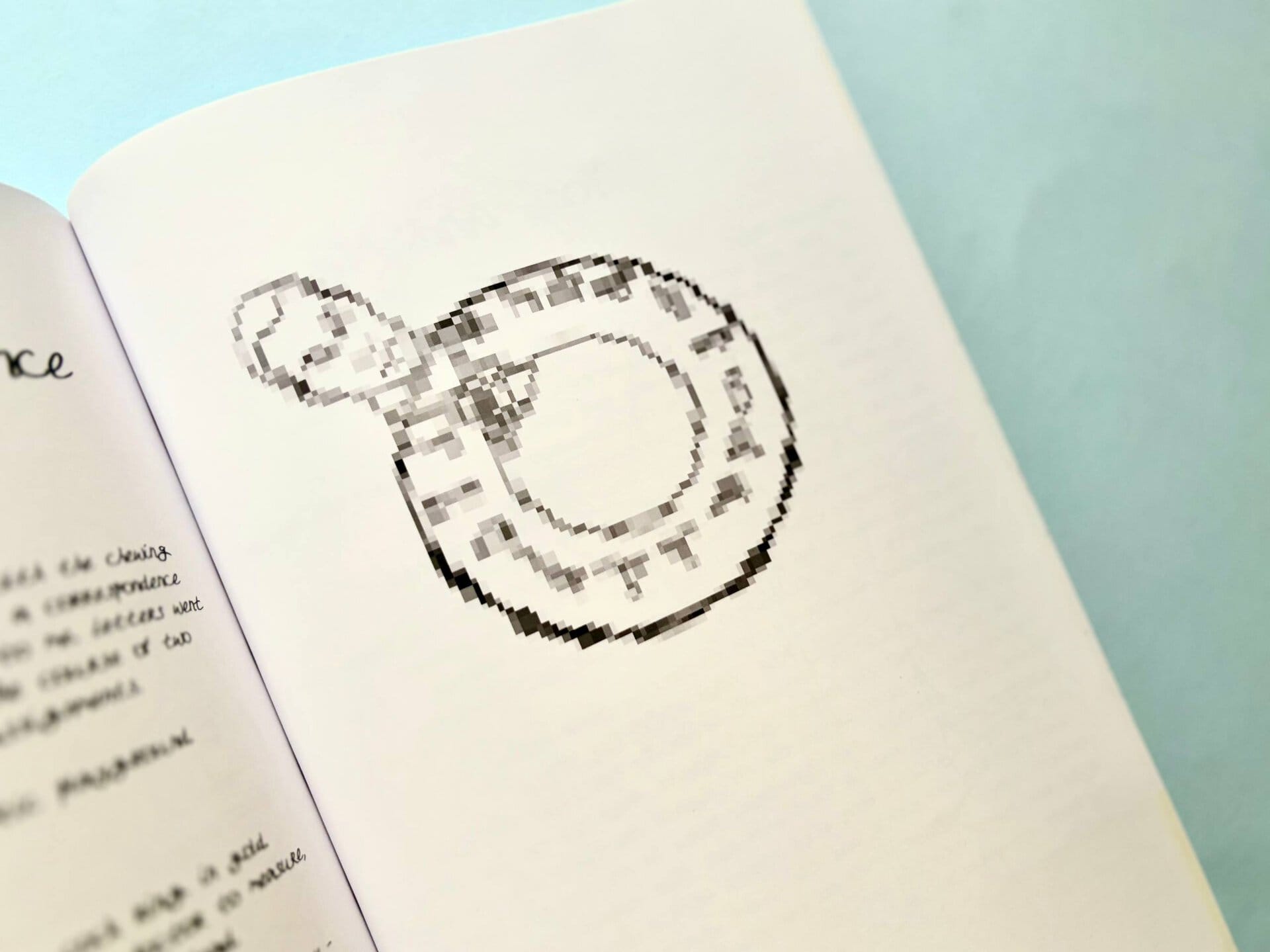
The book contains information about a project called Private Correspondence (2015). Tell us about it.
Ted Noten: A client commissioned me to make a gold cock ring. He invited me to his country and asked me to come take the measurements myself—much like the way tailors in the Middle Ages would travel to kings to take their measurements. I declined. Instead, I suggested that he measure his head—the one on top of his neck! I told him to go to a doctor, have it scanned, and send me the dimensions so I could create a 3D model of it. My idea was to place a miniature version of his head on the ring.
I did make his head in 3D—but I also made my own. And before sending him the final piece, I mailed him a ring topped with a miniature version of my head. When he saw my head sitting on his cock ring, he was furious! “Don’t worry,” I told him. “You can simply unscrew my head and screw on the 3D version of yours.” A few days later, I sent him the miniature of his own head.
Two years of playful, ironic correspondence followed. Over the course of our exchanges, he ended up commissioning seven pieces from me.
There’s a section at the end of the book called Ten Street Wisdoms/Ted Commandments. One of them—the first—states: “Thou shalt see jewellery as a legitimization of being human.” Elaborate on this.
Ted Noten: Well, there are no other living creators as diverse as humans—including rational, emotional, traditional, ritual, and many other motivations.
But some are more ingenious creators than we are. David Attenborough taught me about the animal world and its vast imagination in decorating itself and creating scenarios to attract females.
And why do you specifically mention jewelry as a legitimization of being human? Not architecture, for example?
Ted Noten: If a bird-of-paradise adds red-colored elements to its ‘“theater,” I relate it more to jewelry than to architecture. Why? Out of love for my playground.
In your opinion, what should be taught in jewelry schools—and how—so that the field can go beyond craftsmanship alone?
Ted Noten: The only way is to become a child again!
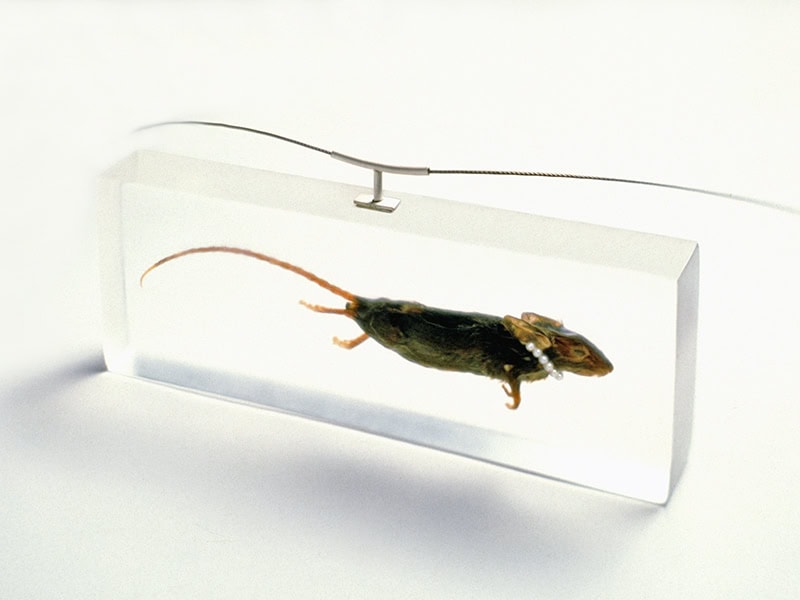
So which of your own works would you call the most childlike?
Ted Noten: Turbo Princess.
Share some advice your teachers/mentors/older colleagues gave you that truly stuck with you and that you still apply today.
Ted Noten: The honorable Onno Boekhoudt sat beside me at the Gerrit Rietveld Academy while he observed me making a ring. I still had the mindset of a craftsperson—making it perfect meant shiny, with no scratches, an over-the-top aesthetic. He asked if he could do something to my ring, and said that if I didn’t like it, he would repair it back to the original. He scratched the ring on the concrete floor, then gave it back to me—and suddenly the ring felt alive. I still get goosebumps remembering that moment.
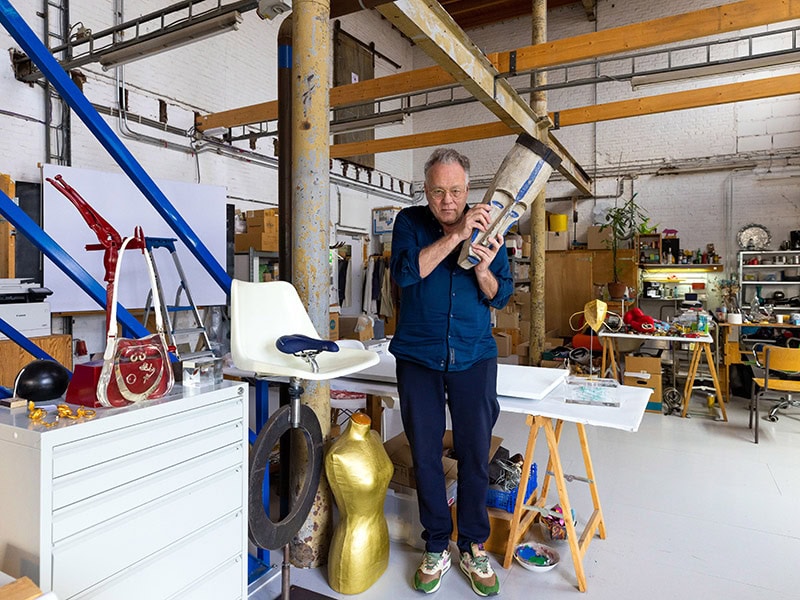
What advice would you give to young jewelers?
Ted Noten: Buy a ring at a jewelry shop, change it into an art ring, and then sell it for triple the amount. I did it!
Has anyone ever stolen your design or idea?
Ted Noten: Yes, and I’ve always felt honored when people stole my ideas.
What’s one of the best commissions you’ve received?
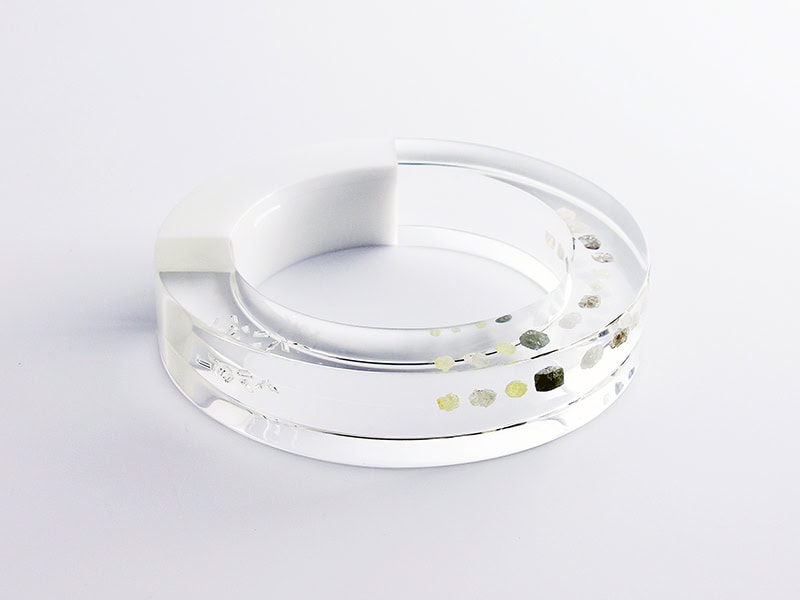
Ted Noten: The best thing that ever happened in my career was when one of the biggest jewelry stores in Amsterdam handed me an almost embarrassingly large bag full of diamonds. They trusted me with a fortune in stones and asked me to create a series of Ted Meets Joost bracelets, rings, necklaces, and earrings.
Once the pieces sold, we would split the profits 50-50. The store owner commissioned me because he respected my different approach to jewelry, and, as a businessman, he also saw the potential to reach new markets.
What has the biggest influence on contemporary jewelry today?
Ted Noten: Conflicts—in the broadest definition of the word.
The opinions stated here do not necessarily express those of AJF.
We welcome your comments on our publishing, and we will publish letters that engage with our articles in a thoughtful and polite manner. Please submit letters to the editor electronically; do so here. The page on which we publish Letters to the Editor is here.
© 2026 Art Jewelry Forum. All rights reserved. Content may not be reproduced in whole or in part without permission. For reprint permission, contact info (at) artjewelryforum (dot) org
[1] To order a book contact Galerie Marzee: mail@marzee.nl or +31 (0)24 322 9670