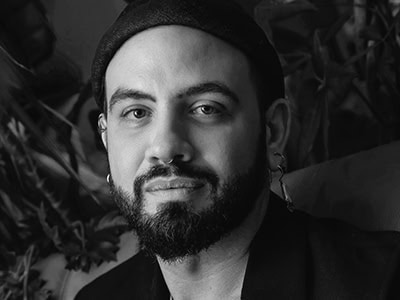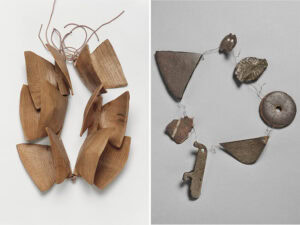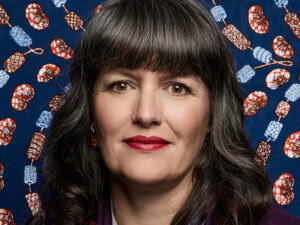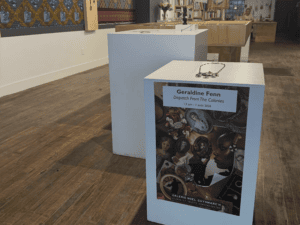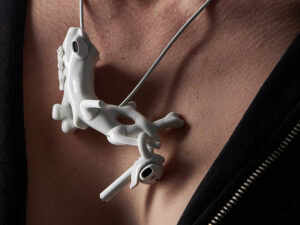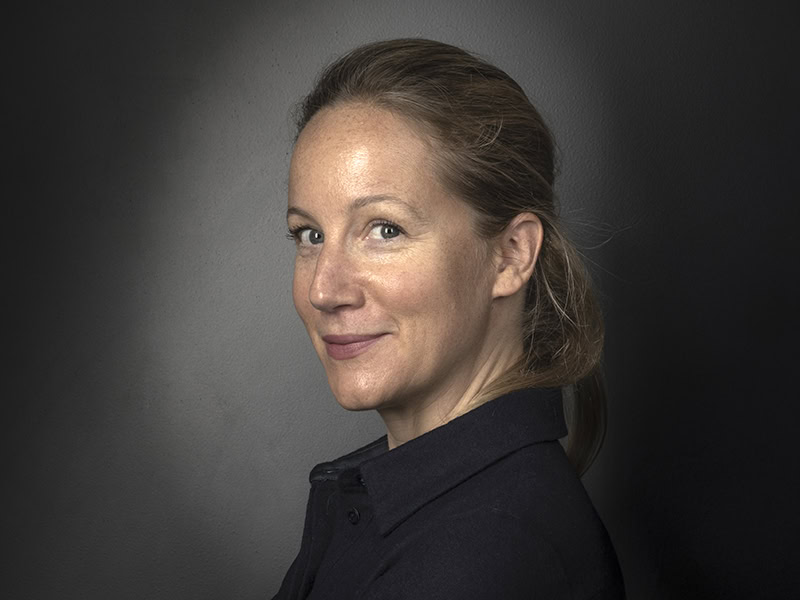
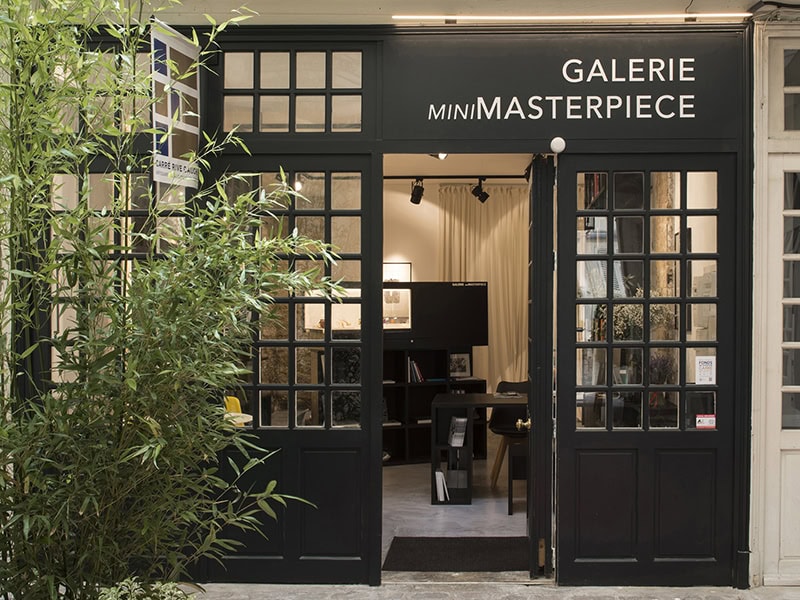
Jewelry made by artist who have focused their main practices in other areas is often referred to as artist jewelry. These makers, and how they approach jewelry, opens up productive conversations for anyone involved in/with jewelry. A primary one: is jewelry a field, a format, a discipline, something else, or some amalgamation? These makers bring in other histories and cannons, creating fresh perspectives and opportunities to see things from a different perspective as well as where natural impulses and broader influences connect and overlap. Esther de Beaucé has founded and operates MiniMasterpiece in Paris, France. It’s a space dedicated to inviting in artists who have developed their viewpoints elsewhere, and presenting them with an offer and possibly a challenge to see what happens when asked to think with and through jewelry, to make something wearable. This is an exciting perspective that contributes to the jewelry conversation, bringing people in as well as pushing conversations out to broader audiences.
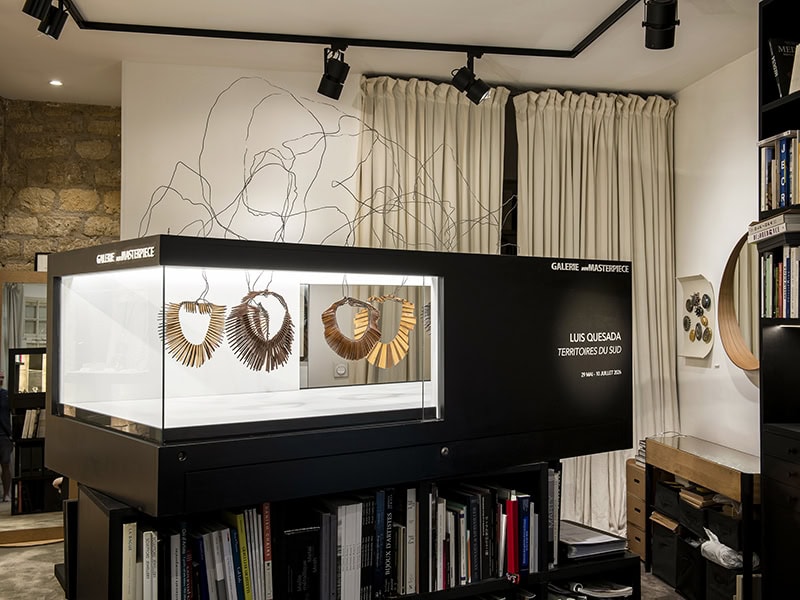
matt lambert: Galerie MiniMasterpiece focuses on artist jewelry. What is the difference—if you see one—between artist jewelry and art jewelry?
Esther de Beaucé: In France, we tend to categorize people and things a lot! An artist, to me, is mainly a sculptor or a painter. But in America, an artist is viewed as a creator, regardless of the subject of his/her creation. I use both terminologies—artist jewelry and art jewelry—and I often explain that the jewels I present in the gallery are mostly made by non-jewelry specialists. That could be the main point: inviting those who work on a larger scale and who accept to come up with a new project that must be wearable.
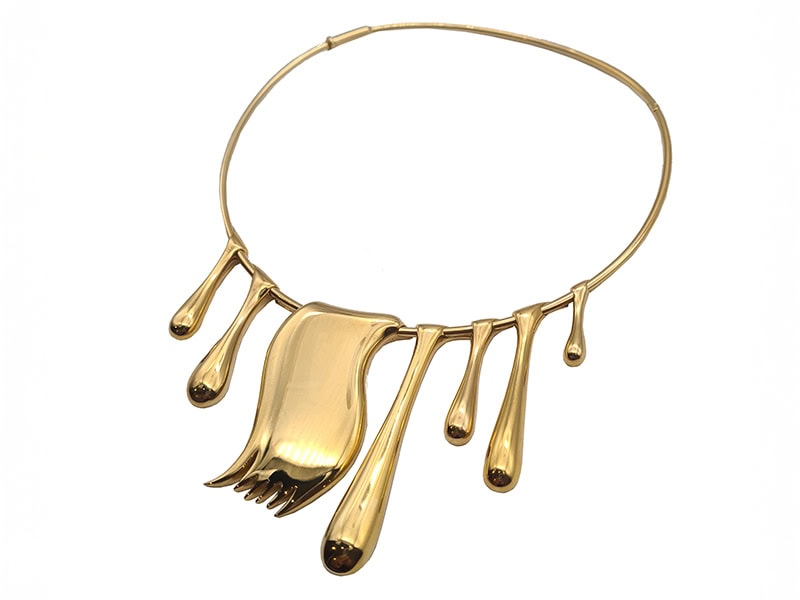
Histories of Galerie MiniMasterpiece almost always state that your mother, Diane Venet, was an avid collector and wearer of artist jewelry. What particular pieces or artists did she wear that stand out for you?
Esther de Beaucé: My mother is a key figure in my personal and professional lives 🙂 As far as I remember, I have always seen her wearing artists’ jewelry. I cannot mention one piece of jewelry in particular. It was all about the collection as a whole. We share the same passion now, her more as a collector, and myself as an editor.
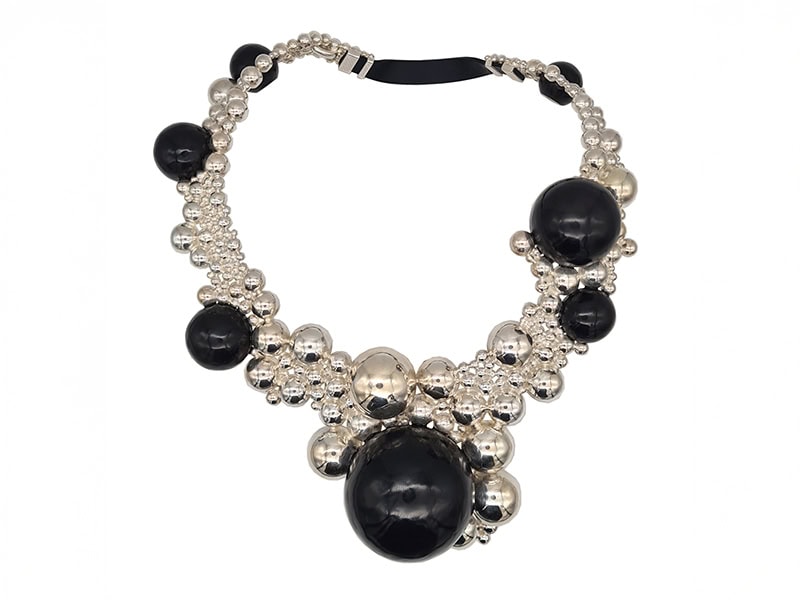
How do you select and approach the artists you work with?
Esther de Beaucé: Before MiniMasterpiece, I ran an art gallery in Paris working with young artists. So I am passionate about contemporary art. Those who I invite are active in the contemporary art scene. When I like an artist’s work (most of the time it is linked to sculpture) I find a way to connect with him/her and launch my invitation. I especially like it when they have never been on the ground creating jewelry before, because it can lead to unexpected shapes.
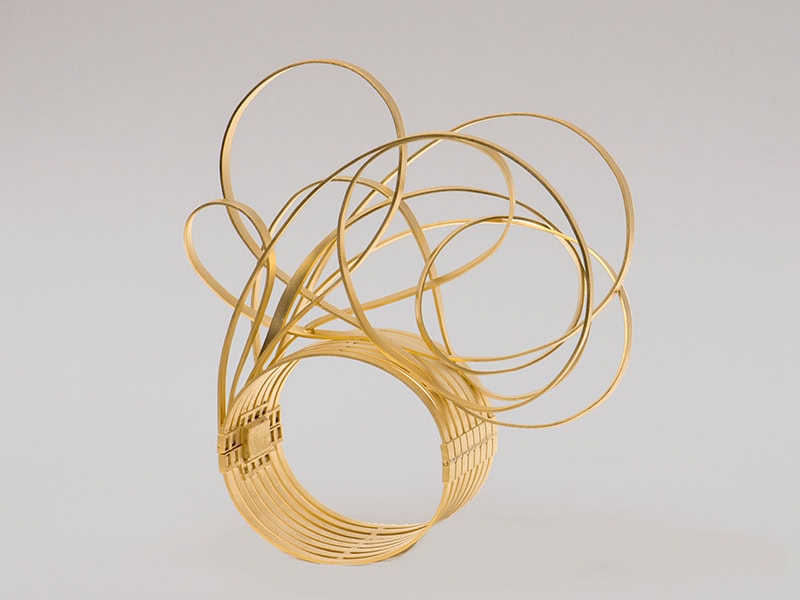
Briefly walk through how the making process works. I listened to your conversation with Sharon Berman on The Jewelry Journey Podcast[1] discussing the importance of working with a skilled goldsmith. What does this look like?
Esther de Beaucé: Dear Sharon, we miss her.
I am very lucky to work with two exceptional goldsmiths: Lisandros, in Athens, Greece, and Hui-Young, in Paris. I work with them, and not others, because they have a great knowledge of artist jewelry. In the past, before they worked with me, they accompanied visual artists on their jewelry projects. So they have a very intensive comprehension of art and its translation to wearable art. They are key players in my projects.
I always involve Lisandros or Hui-Young—sometimes we need an extra intervention when an unconventional material is necessary, but always within the main frame. Also, a few artists I collaborate with make the jewels themselves. They have been trained both as sculptors and goldsmiths. That is the case with Faust Cardinali, Jean Grisoni, and Giorgio Vigna.
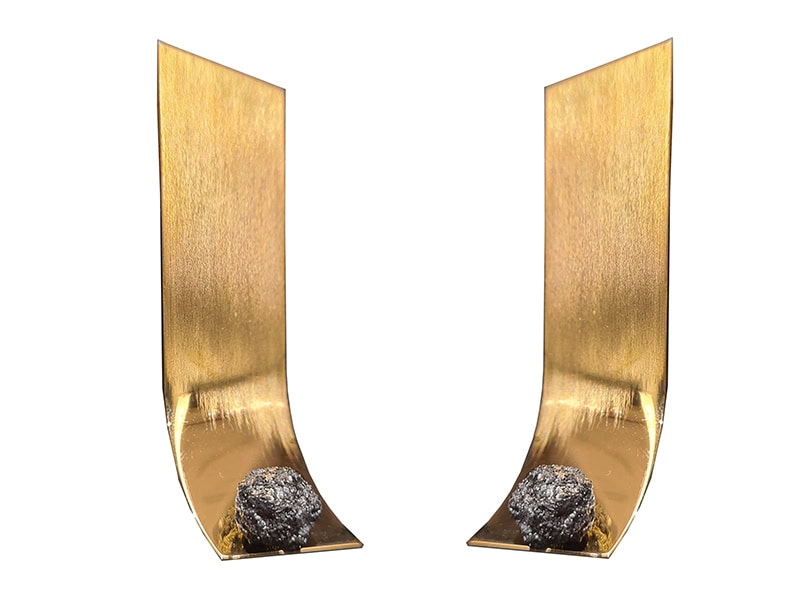
How involved are the artists you work with in learning about the techniques and processes involved in making jewelry?
Esther de Beaucé: I find that artists show a great interest in jewelry techniques. Most of the time they have never experienced gold or silver materials, and the invitation to make a jewel gives them the opportunity to try it out. The quality of the support provided by the goldsmiths creates a studious and comfortable work environment.
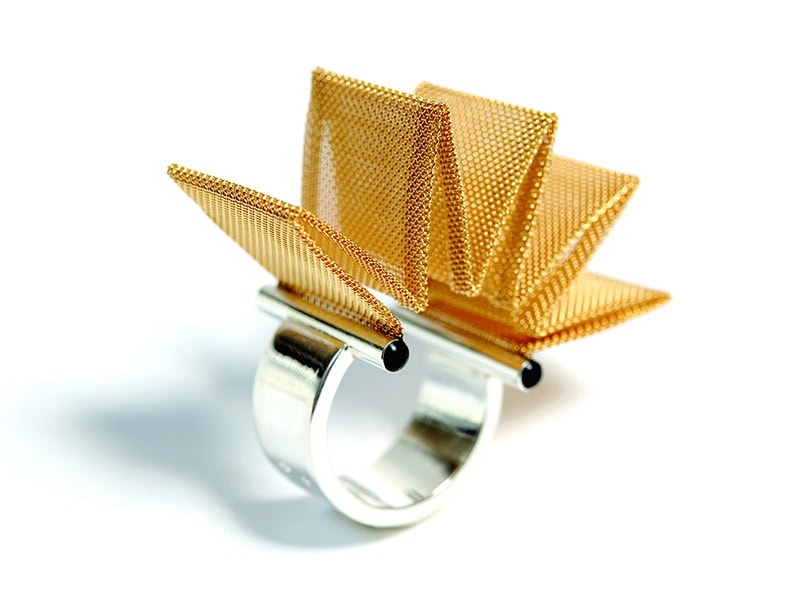
Has working with jewelry impacted the main practices of the artist you work with?
Esther de Beaucé: Artists’ thinking is never one-sided, and you are right to ask that question. The shift in scale toward the miniature often has a reciprocal effect on the monumental.
You mention the importance of wearability. It’s such a subjective term, with a spectrum of what people consider to be wearable. How do you define wearability for your gallery and the work you show?
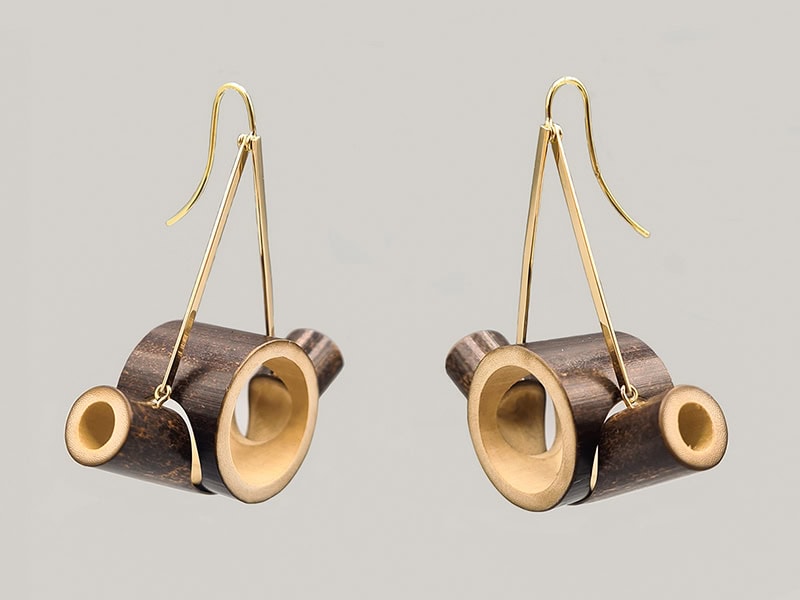
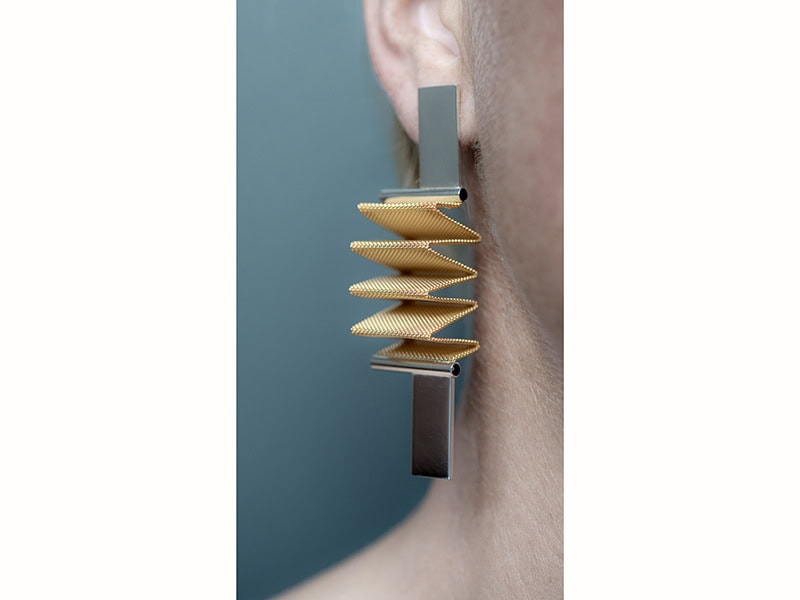
Esther de Beaucé: I agree with you that the concept of wearability is very personal. However, I tend to explain to visitors who are sometimes surprised by the large volumes of the exhibited jewels that it is more a matter of habit and self-permission, and of how we present ourselves to others. When a necklace is bulky, it must be light. When a pair of earrings is sharp, they must be comfortable. It is always a question of balance. But artist jewelry must stand out too! The idea is always to bring to the jewelry world new shapes, new proposals—not to fade away.
You show one-of-a-kind and editioned works. How do you decide that a piece should be made in multiples? Does a multiple change its value? Do you see a difference between an art piece and production?
Esther de Beaucé: There are no hard and fast rules when it comes to choosing between a one-of-a-kind piece and a small, signed, and numbered edition.
I would say the decision depends on the number of jewelry projects developed with the artist and their respective concepts. Sometimes the artist will design just a single piece, and in that specific case, it will likely be a limited edition. Other times, the artist creates a collection of pieces, which may include one-of-a-kind items.
Sometimes, the project can be so difficult to execute that neither the goldsmith, nor the artist, nor I are able to re-create it!
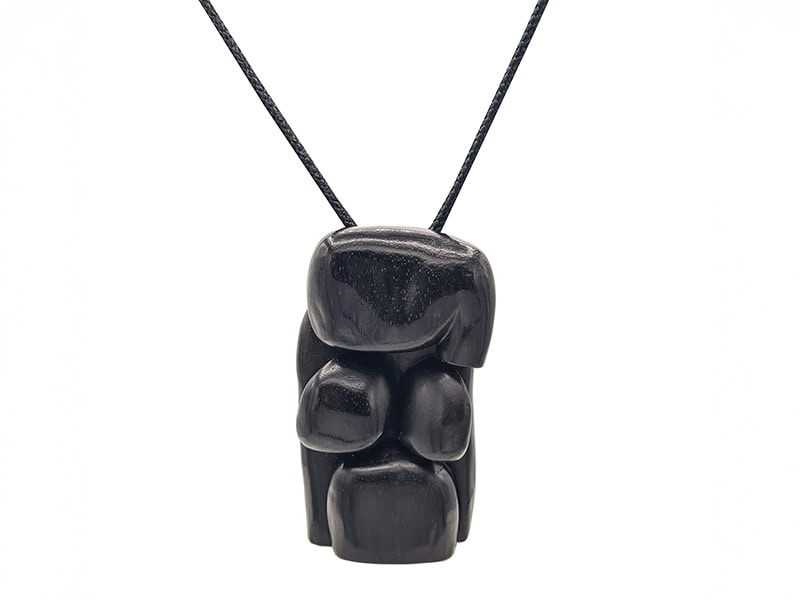
The scarcity effect can certainly impact the value of the jewelry. There are other reasons as well, such as when an artist creates the piece by hand. Take Calder’s jewelry, for example—both one-of-a-kind and handmade. However, the scarcity effect applies in any case to artists’ jewelry because there are so few pieces and they represent an exceptional moment in the artists’ careers.
You studied anthropology at Brown University (RI, USA) and at l’École des Hautes Études en Sciences Sociales (Paris). Does this background inform how you manage the gallery and curate works?
Esther de Beaucé: I never imagined myself working in the art or jewelry fields. For years, anthropology was really my thing and I worked in the documentary film industry for a while—which was a way to stay connected to that passion.
For the past 20 years now, I’ve been comfortable working in the world of art and jewelry, and I’ve found my place there. It’s hard for me to gauge my role as an anthropologist in this new world. Perhaps I put things into perspective a little more than others, trying to understand the context behind the creation of a work of art or a collector’s behavior!
Paris is well known for fine and fashion jewelry, but not for artist/art jewelry. How has the public in France responded to the works you present?
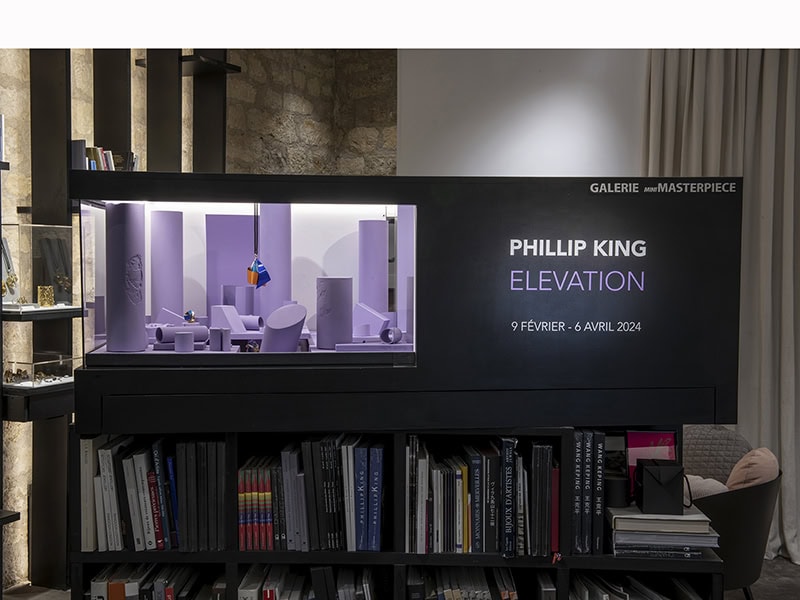
Esther de Beaucé: The Saint-Germain-des-Près area, where the gallery is located, is a vibrant neighborhood for culture as a whole: cinema, galleries, antique shops, jazz bars, book companies. It is not linked to luxury or fine jewelry like Place Vendôme. I had the luck to grow up in this charming neighborhood. Now I live farther away, but I enjoy spending my working days here very much.
Because it is so linked to culture, exhibiting artists’ jewelry here does not surprise visitors. I have French clients, but international visitors, too. In France, many people know of the history of artists’ jewelry because of notable past actors in that field, like the auction house Artcurial, which edited many artists’ jewels in the 1970s and 1980s, or the goldsmith François Hugo, who accompanied major twentieth-century artists such as Picasso, Derain, Man Ray, Tanning, Cocteau, and Ernst in the making of wearable art pieces. More recently, there have been several shows in Paris about the subject, like my mother’s, in 2018, at the Musée des Arts Décoratifs. I would say that France (along with Italy maybe, and America, too, when you think of the MOMA show Modern Handmade Jewelry, in 1946) has held the strongest living tradition of artists’ jewelry for over a century now.
Who mainly collects the works you show? Are they already enthusiasts or collectors of the artists, or jewelry enthusiasts learning about the artists for the first time? Or perhaps there’s a different way of describing them?
Esther de Beaucé: You have perfectly described the two main categories of collectors: those who come primarily for an artist whose monumental work they are familiar with, and those who are first drawn to a specific object. Of course, no one collector is better than another.
To wear an artist’s jewelry, you need a certain temperament, a sense of freedom, and also some financial means—although I always offer a very wide range of prices. It therefore requires a certain maturity, and it is rare for collectors under the age of 30 to be drawn to this type of piece.
In fact, there is a parallel between the maturity of collectors and that of artists. I find that it is often more difficult to collaborate with very young artists than with older ones. An artist rarely undertakes a jewelry project at the very beginning of their career, because it requires them to infuse it with a bit of their own essence, and that demands life experience and professional experience.
The opinions stated here do not necessarily express those of AJF.
We welcome your comments on our publishing, and we will publish letters that engage with our articles in a thoughtful and polite manner. Please submit letters to the editor electronically; do so here. The page on which we publish Letters to the Editor is here.
© 2026 Art Jewelry Forum. All rights reserved. Content may not be reproduced in whole or in part without permission. For reprint permission, contact info (at) artjewelryforum (dot) org