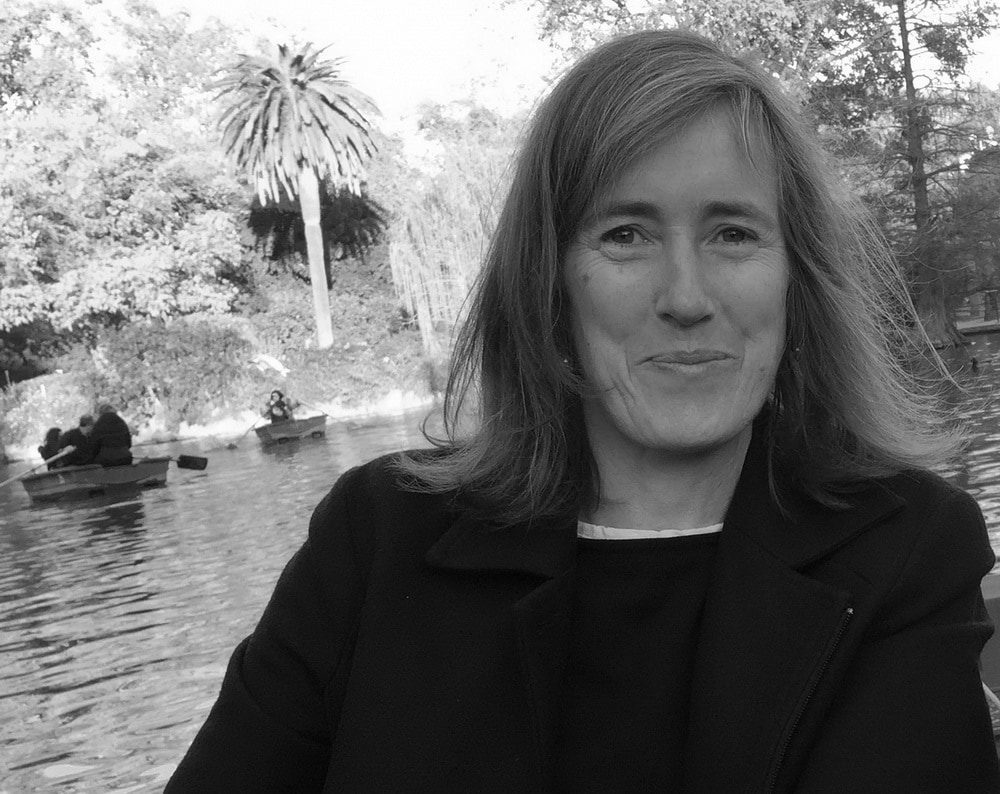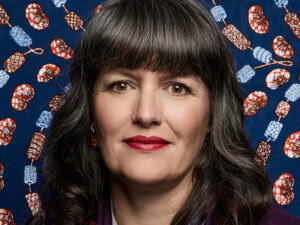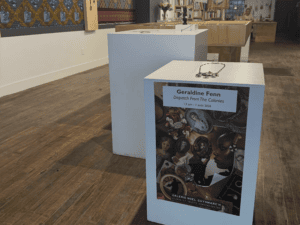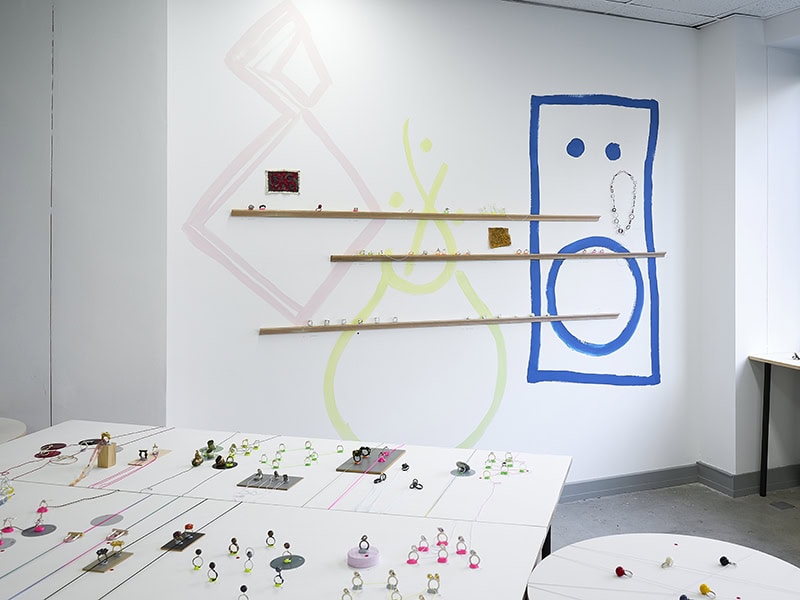
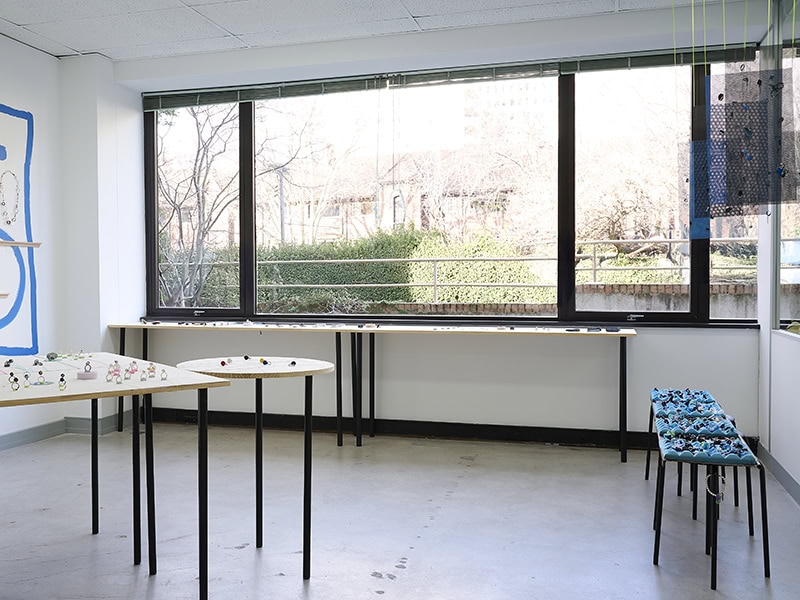
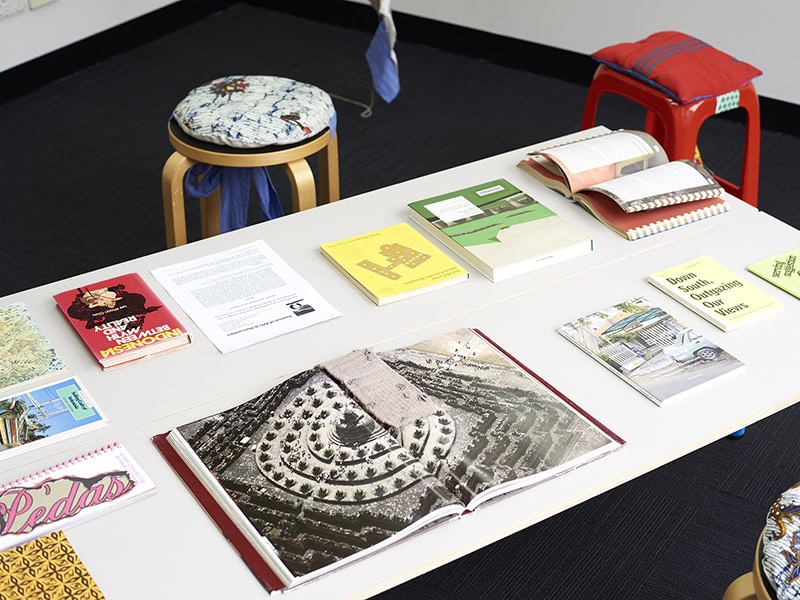
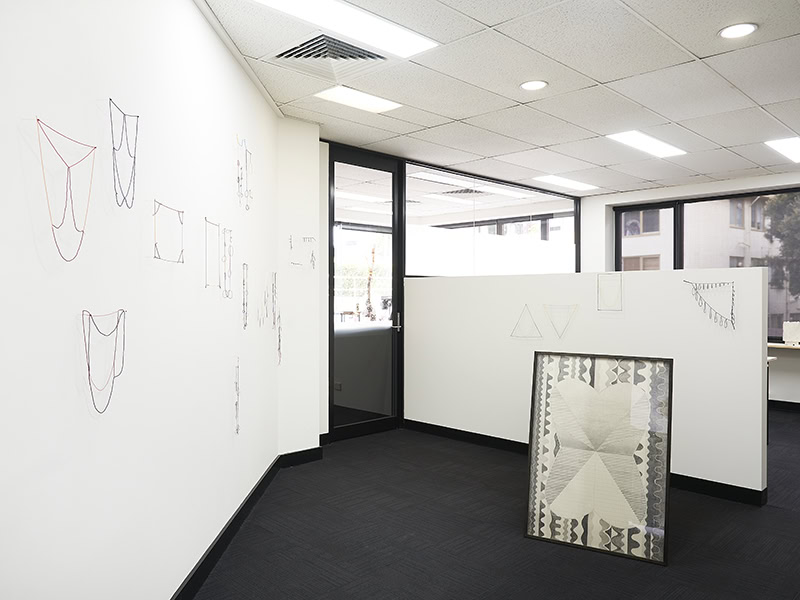
Melbourne has a gallery space run by maker, thinker, writer, and curator Meredith Turnbull. Alta Forma opened in 2023. It shows not only contemporary jewelry but works that expand on what jewelry is and can be. At Alta Forma, audiences engage with a wide range of object-based and visual art practices where crossovers are encouraged.
Vicki Mason: You’re a practicing artist, jeweler, curator, and writer. Why did you want to open a gallery?
Meredith Turnbull: I’ve written about art, curated exhibitions, and pursued my own artistic practice for over 20 years now. Vocationally, I worked as a coordinator and lecturer in higher education in fine art and art history for around 15 years. Higher ed in Australia, like in many other places across the globe, is an increasingly corporatized and financially strained environment where budgets keep getting smaller. I love teaching and students, but it’s hard to see their access to studios and time to make work diminished. It’s also a very extractive process for teachers.
On the flip side of this, I was also really concerned about the limited opportunities for artists who focus on object-based practice to exhibit after they graduate. We have one peak body for craft-based practices in Victoria—Craft—that can’t possibly accommodate everyone. We have Funaki, the nation’s premier commercial gallery for international jewelry, so we can see and engage with a high caliber of work by artists locally and from around the globe. And we are fortunate to have Radiant Pavilion,[1] the Naarm/Melbourne Contemporary Jewellery and Object Biennial, which platforms practices and brings us all together.
We also have a strong history of artist-run spaces in Naarm. In the 1990s and early 2000s, there was a big push to transform these galleries from an artist-pays model to free space and artist-paid-fee model. But it’s difficult for object-based practitioners to break into these contemporary art spaces.
What we don’t have here are equivalent spaces that champion object-based practice. As a result, these artists logically pursue the only other professional avenue open to them: commercial (and often production) jewelry. Coming from working in public institutions, where experimentation and exploration are as important as technical ability, I wanted to make a space that was an incubator of practice, for testing ideas and developing practices in addition to supporting established artists. As I’ve told students over many years, if you can’t see the space where your artwork can be positioned and exhibited, make your own. So I’m trying to follow my own advice and support other artist like me who don’t fit neatly into artistic categories.
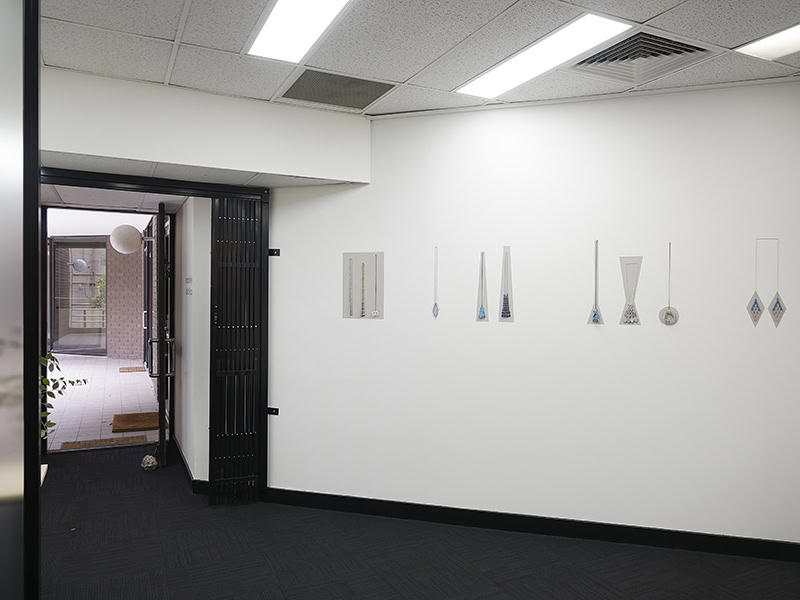
Alta Forma is in a mixed-use commercial building that houses numerous professional offices—law, finance, consulting. Have you engaged with your fellow tenants? What has their reaction been?
Meredith Turnbull: Alta Forma is in a fantastic 1980s building that has a postmodern-meets-Brutalist architectural feel. We are located in the St Kilda Road business precinct. There’s a chartered accountant right next door, and a boutique Southeast Asian travel company. My immediate neighbors have taken Alta Forma in stride. They’re supportive and interested. They see all the behind-the-scenes action. I don’t think they realized artists work so hard! I’m happy to dispel any myths about that.
You have a lot of curatorial and management experience working for major public art institutions in Melbourne.
Meredith Turnbull: Exhibition curation, installation, scheduling, and programming are very enjoyable tasks for me. It comes easily, and I love the engagement and exchange with other artists. Alta Forma is usually programmed 12 months in advance. Finding artists and platforming their work is the easy part.
Tell us about your curatorial approach at Alta Forma.
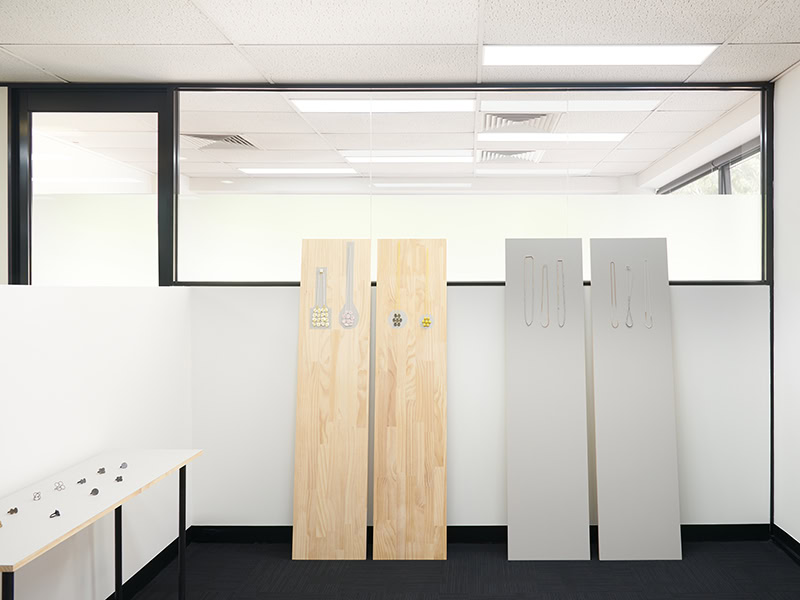
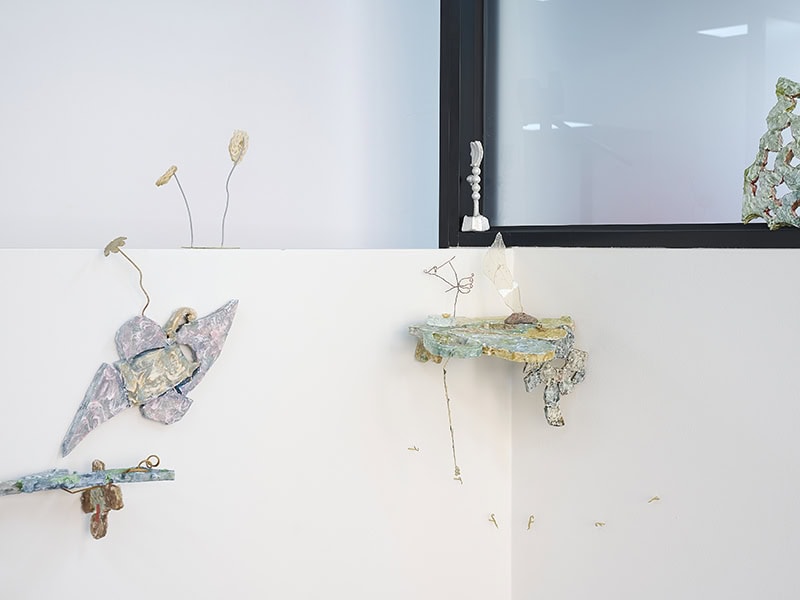
Meredith Turnbull: As an artist and curator, I’m interested in the breadth and depth of artistic practice, but one of my passions is expanded jewelry and object-based practices. I see these categories as connected and sometimes overlapping. Together they can mean jewelry that has a spatial, sculptural, social, or performative component, and objects that aren’t simply autonomous but connect through a series of relations to other objects, actions, contexts, bodies. This area of interest is about seeing where the limits—if any—are. Where does sculpture end and object begin? Where does jewelry stop and performance practice start? These are not new questions, but ever-present and worthy questions of our discipline and research.
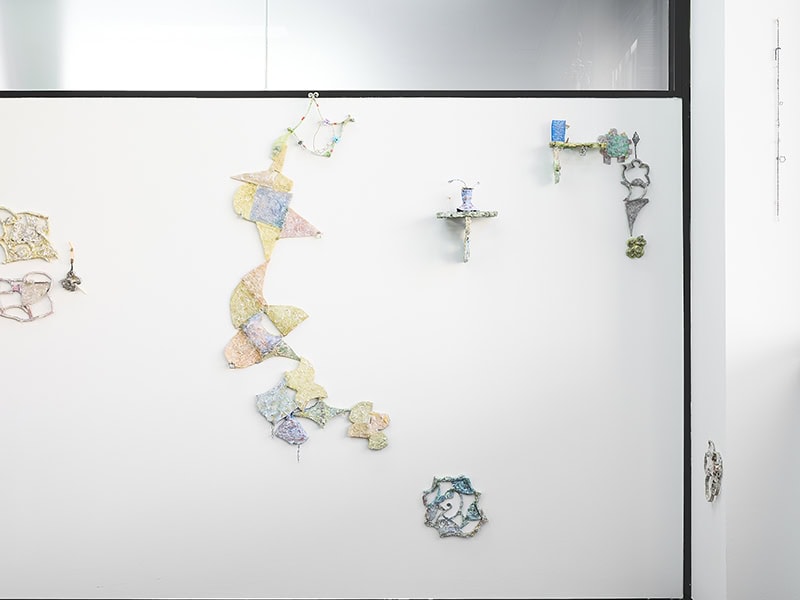
Which of your projects and exhibitions illustrate what an expanded jewelry practice looks like?
Meredith Turnbull: Audrey Tan’s practice. It spans object making, wearable jewelry, sculpture, and installation. Her 2024 solo project, Salt Water Buffet,[2] at Alta Forma, is a good example of this type of work.
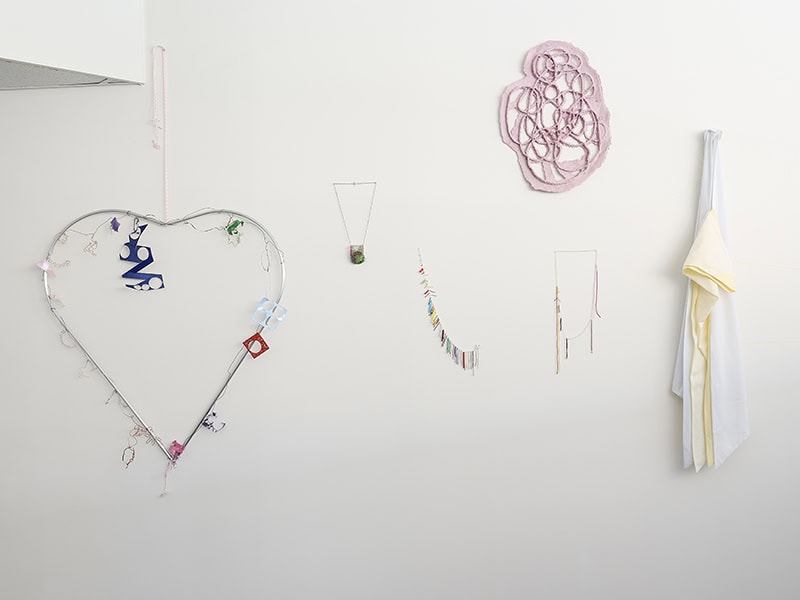
How has your audience responded to artists working outside medium-specific parameters?
Meredith Turnbull: They’re certainly engaged and here for it. Audiences locally are familiar with artists working outside medium-specific parameters. Certainly, there are strong cultures, histories, and traditions all over the world that do this. In Naarm we are most familiar with, and commonly support, contemporary visual art practices that subsume all other types of genres and mediums, like a hungry monster. What we are less accustomed to is really looking at, and engaging with, object-based practices that reach outside of their own immediate histories and contexts to engage with ideas and parameters from other disciplines.
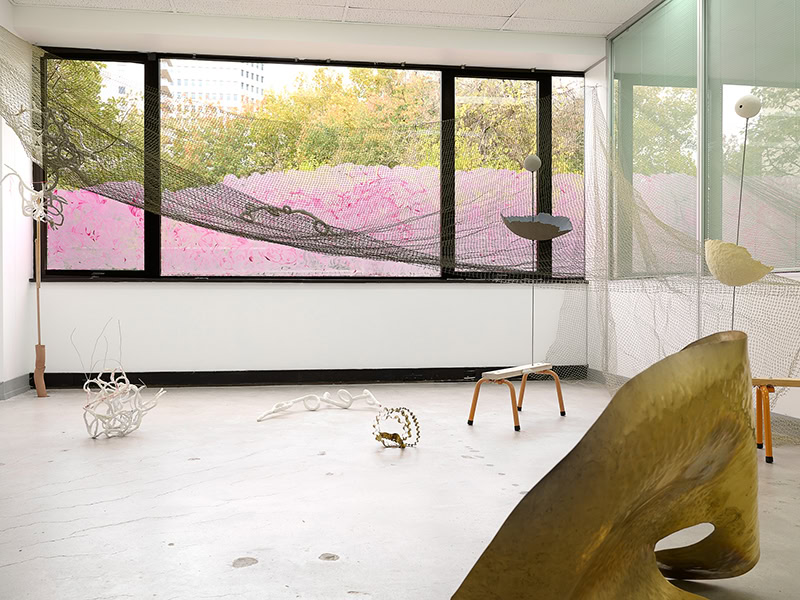
You exhibit a wide range of art forms, including jewelry, ceramics, textiles, sculpture, photography, film, installation, and sonic performances. What do you look for when selecting artists to work with?
Meredith Turnbull: I’m looking for serious, and critical, material investigation and transformation. I’m less interested in artworks that are a closed circuit, which is certainly common in some types of jewelry practice. While I respect this approach, I want to see and feel the space for viewers to complete the work, [which they do] by bringing meaning from their own lives to the work—their sense of self and history. By engaging with it, activating it by wearing, displaying, potentially co-creating it. I often work with artists who I have an existing relationship with, or those unrepresented or underpromoted in Naarm. l look for artists who value exploration and experimentation over getting it right.
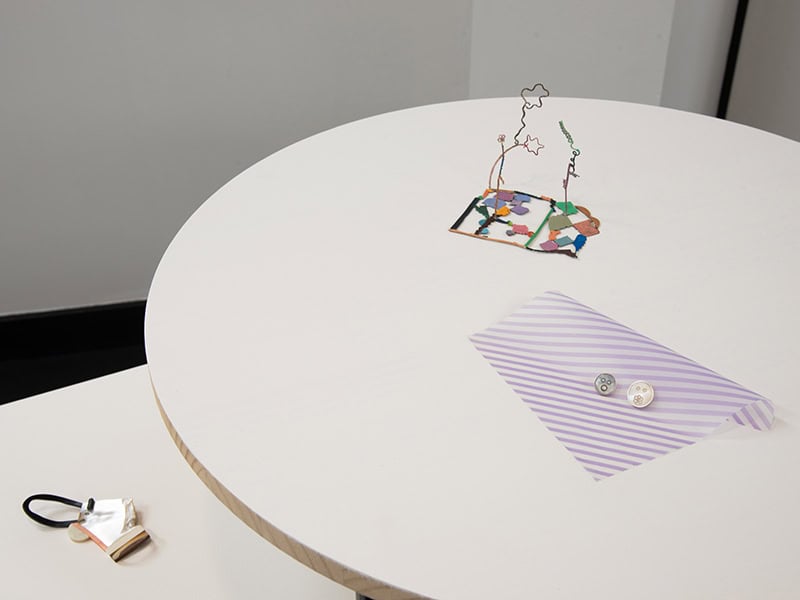
You support emerging and early-career artists. Why?
Meredith Turnbull: Yes, I work with emerging artists, but I also work with artists across a spectrum of experience, from five to 40 years in their practices. I’ve heard a lot of criticism about contemporary jewelry practice in Australia, compared to, say, peers in Aotearoa, whose diversity and breadth I greatly admire and respect. If there’s no investment locally in early careers, and no experimentation, where do we think that work is going to come from? It doesn’t just magically appear out of art school. It needs support, it takes time and dedication. It also needs to fail, be unresolved, and try again. That’s something we can certainly learn from the contemporary visual art community. We can’t have a robust, critically engaged art community if we don’t support it at the grassroots level.
Do you represent a core stable of jewelers?
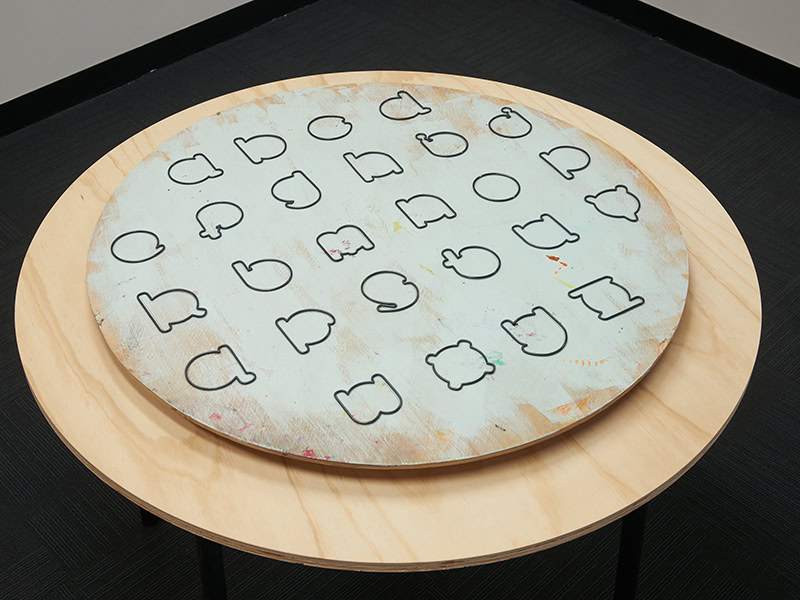
Meredith Turnbull: At this stage, Alta Forma represents two established practitioners in this capacity, Roseanne Bartley and Mascha Moje. I’m cautious about representing more artists, as I want to be able to deliver quality representation—including an annual exhibition, assistance with applying for grants, and award opportunities, among other things.
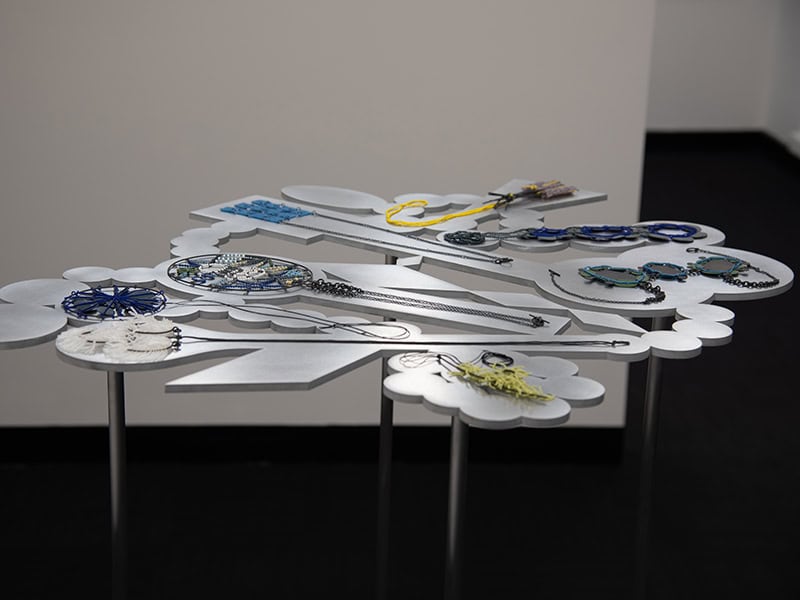
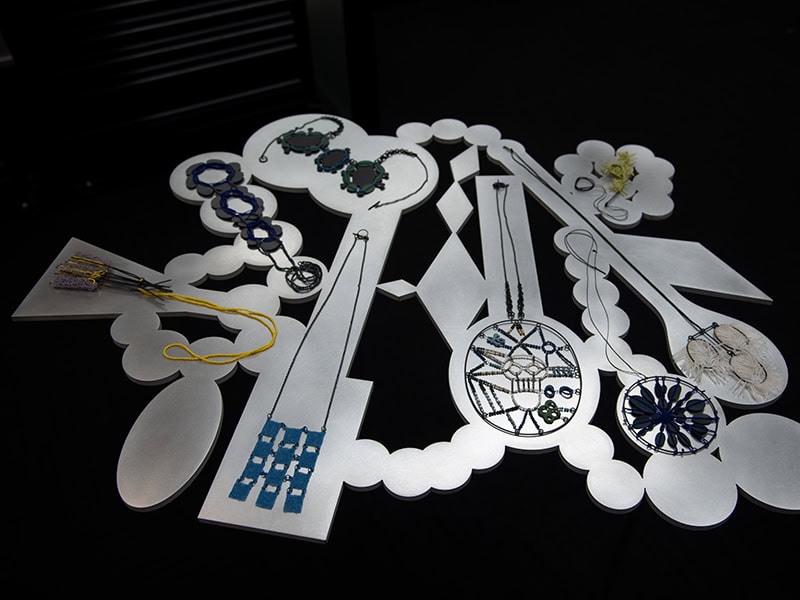
You’ve shown a good handful of international jewelers. Do you want to position the gallery as a participant in a global art discourse?
Meredith Turnbull: All good art should be in dialogue with local and global discourses. But my current focus is on ensuring the work I support and present is critically engaged, rather than the gallery itself being positioned in this dialogue.
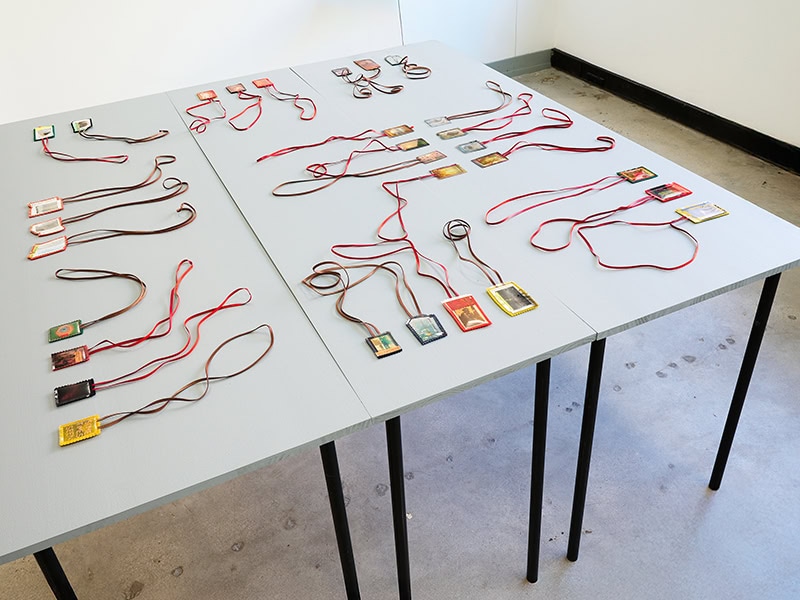
In 2025, your shows featured duos. What happens when two makers show together?
Meredith Turnbull: Duos was a way to challenge and engage myself curatorially in the practices being exhibited. To think deeply about them and how they might be experienced and interpreted in dialogue. It was also about providing artists an opportunity to respond or be in orbit with one another, to support each other through the process. In the Western art historical tradition, the strategy to compare and contrast is a time-honored approach to analyzing and interpreting artworks.
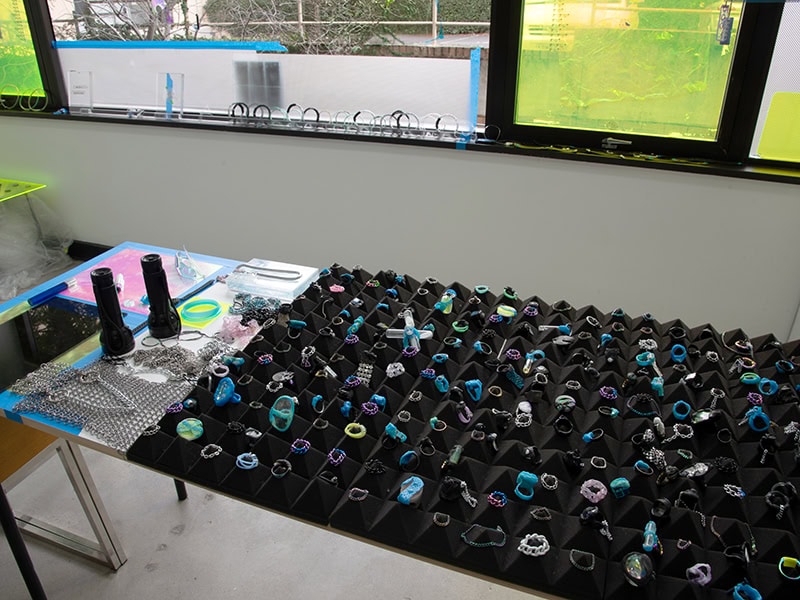
Melbourne has a thriving contemporary jewelry scene. How have your fellow gallerists responded to the new space?
Meredith Turnbull: Katie Scott, the director of Funaki,[3] has been very generous with advice and counsel. Daine Singer,[4] the director of her eponymous gallery (who also represents my visual art practice) has also been incredibly supportive. Andy Taylor, co-director of Oigåll Projects[5] with Mitchell Zurek, has also been encouraging. I’m grateful to all three.
I’ve done two collaborative projects, with Daine Singer[6] and with Funaki, this year. State of Flux,[7] which showed at Alta Forma this month and at Funaki earlier in 2026, was curated by Anita Hirschhorn and explored dialogues between enameling and glaze—techniques that share a process of transformation through heat.
I’ve also had conversations with other gallerists, artworkers, and many fellow artists. I’ve been conscientious in respecting others’ spaces, their galleries, and their styles. I don’t want to copy or encroach on others. We don’t need replication of anything that’s on offer and done well here. We need more spaces for the development of experimental work.
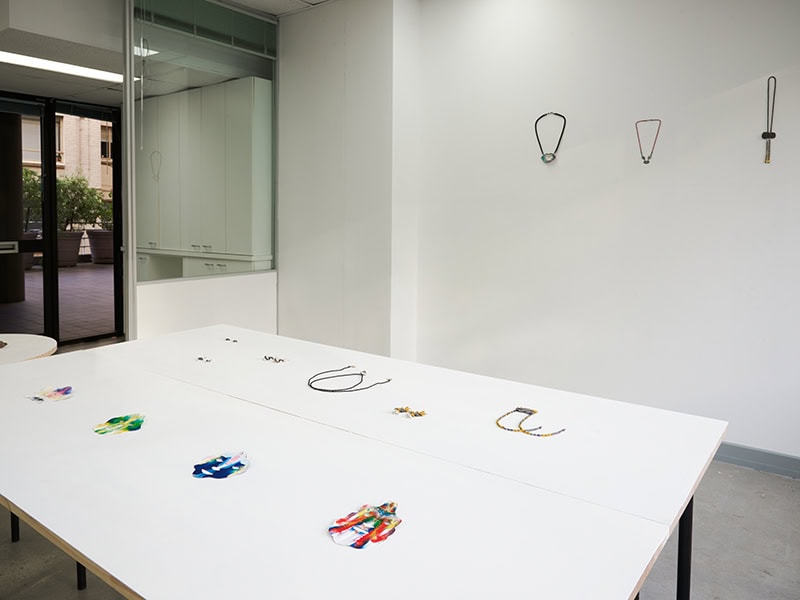
Your own workshop is connected to the gallery space. How do you balance making your work with running the gallery?
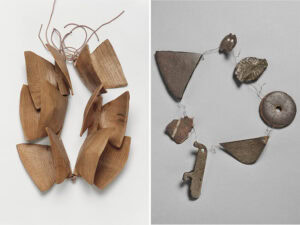
Meredith Turnbull: That’s probably one of the most challenging aspects of running the gallery. There’s not much time left over for my own practice. But cutting down on commute time to the studio certainly helps, and when you hit mid-career you just have to keep going. I’ve been honored to be featured with Vanessa Arthur and Moniek Schrijer (both from New Zealand) in Glimmer,[8] curated by Monique Barnett as part of the reopening of Toi Tauranga Art Gallery.
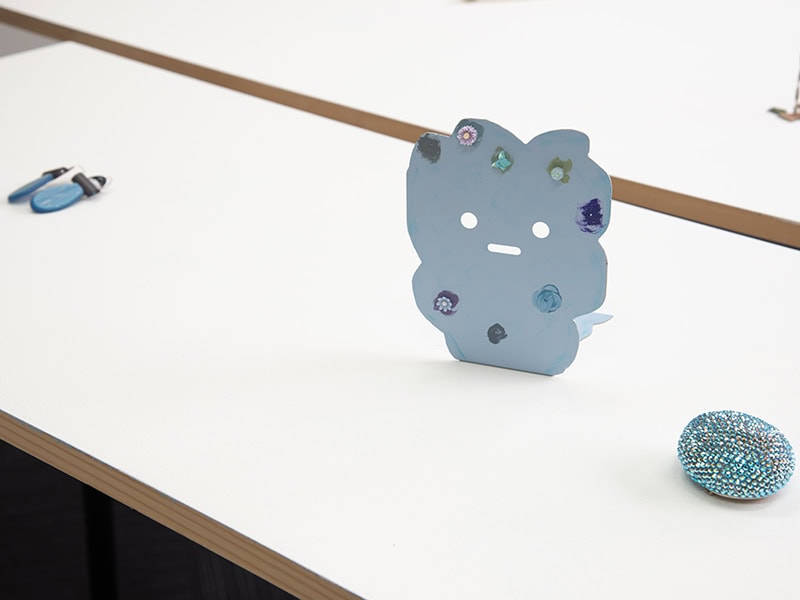
You’ve mentioned having guest artists/curators come on board to put together exhibitions. Give us a sneak peak of upcoming projects and shows!
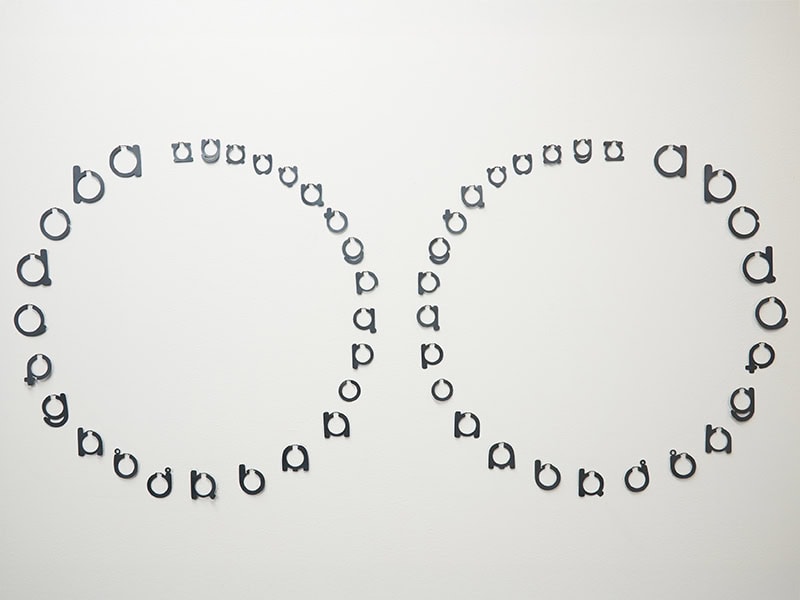
Meredith Turnbull: There are so many exciting projects coming up. Roseanne Bartley, Adam Cruickshank, and Kelly McDonald will exhibit together in September. Manon van Kouswijk is curating a group show of international artists in October. Mascha Moje is curating a project that includes new work by Kiko Giannoca and Jeremy Vander Noord in November. There will be some surprises, too.
[1] https://www.radiantpavilion.com.au/.
[3] https://galleryfunaki.com.au/.
[4] https://www.dainesinger.com/.
[5] https://oigallprojects.com/.
[6] By Necessity, https://www.dainesinger.com/by-necessity-meredith-turnbull.
[7] https://altaforma.au/current.
[8] https://artgallery.org.nz/blogs/exhibitions/glimmer-vanessa-arthur-moniek-schrijer-and-meredith-turnbull.
The opinions stated here do not necessarily express those of AJF.
We welcome your comments on our publishing, and we will publish letters that engage with our articles in a thoughtful and polite manner. Please submit letters to the editor electronically; do so here. The page on which we publish Letters to the Editor is here.
© 2026 Art Jewelry Forum. All rights reserved. Content may not be reproduced in whole or in part without permission. For reprint permission, contact info (at) artjewelryforum (dot) org