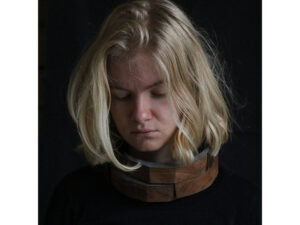
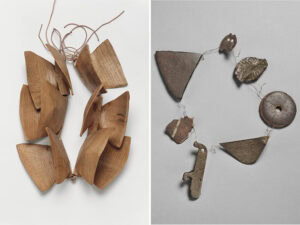
Win $20,000 to support the creation of a solo exhibition featuring your contemporary jewelry—apply for the Solo Exhibition Award! It aims to advance an artist working in the field of art jewelry, and it’s open to jewelry artists of any age and nationality. Less than a week remains to apply for the 2027 Solo Exhibition Award. (Deadline: November 15, 2026.) The proposed project should be about jewelry, loosely defined. Click here for more information.
In this interview, we speak to one of the jurors for the 2027 cycle of the grant. (The other jurors are Geraldine Fenn and Bella Neyman. Click on their names for links to our interviews with them.)
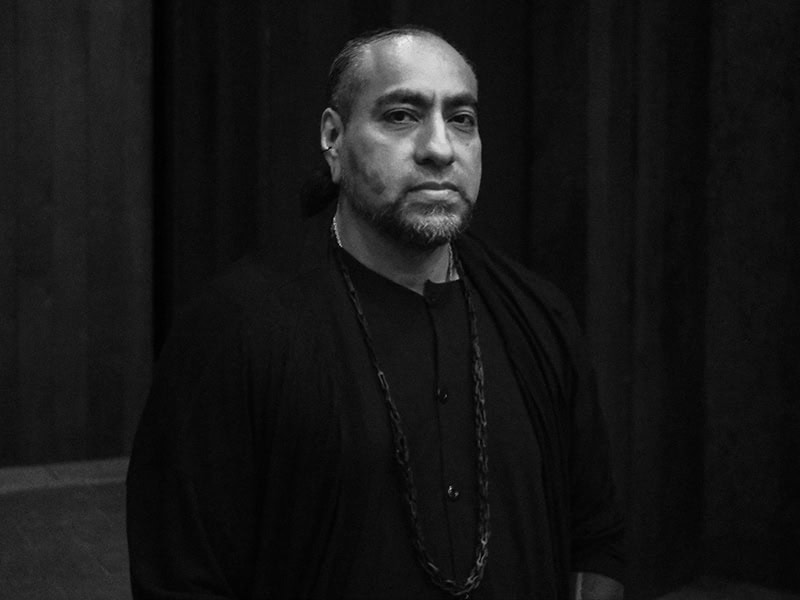
Art Jewelry Forum: Explain how you were introduced to contemporary jewelry, and what you are doing now in relation to it.
Jorge Manilla: My relationship with contemporary jewelry developed through my interest in art, materials, the body, and the capacity of objects to communicate beyond their conventional functions.
Coming from Mexico, where craftsmanship, rituals, and cultural traditions are deeply interconnected, I have always been interested in how materials and objects carry personal and collective memories.
Contemporary jewelry offered me a space to question established definitions and explore the boundaries between jewelry, sculpture, the body, and artistic expression.
Today, I continue developing my artistic practice alongside my commitment to education, research, and international collaboration. I am Head Professor of Metal and Art Jewellery at the Oslo National Academy of the Arts, where I teach, mentor emerging artists, and supervise artistic research, including doctoral projects.
I also develop exhibitions, lectures, curatorial projects, and educational initiatives across Europe and Latin America, including Múltiple, an independent study program developed with Batek Escuela de Joyería in Mexico.
For me, being an artist and an educator are inseparable. Teaching constantly challenges my artistic thinking, while my practice informs the way I guide others. After many years in this field, I believe my contribution is not measured only by the work I produce, but also by the knowledge I share, the artists I accompany, and the opportunities I help create.
This is the second time AJF is presenting this award, thanks to Linda Peshkin’s generosity and love for art jewelry. What do you think is important for a solo show?
Jorge Manilla: I believe a solo exhibition is much more than presenting a collection of finished works. It is an opportunity for an artist to articulate a position, construct a narrative, and reveal the thinking behind their practice.
A strong exhibition should establish meaningful relationships between concepts, materials, processes, and objects. Coherence does not necessarily mean aesthetic uniformity, but rather that artistic decisions have purpose. I am particularly interested in exhibitions that take risks, challenge expectations, and open new questions.
For contemporary jewelry artists, a solo exhibition can be especially significant because it creates space to move beyond conventional definitions of jewelry and engage with broader artistic discussions.
How can a solo exhibition impact an artist’s career?
Jorge Manilla: It can transform an artist’s career through visibility, professional connections, and critical recognition. However, we must remember that access to these opportunities is not equal. Awards such as this one are important because they provide resources and independence to artists who may otherwise lack institutional or financial support.
For me, the greatest value of a solo exhibition is not simply what it represents in an artist’s career, but what it makes possible afterward.
An exhibition should not be an endpoint, but the beginning of another artistic investigation.

What do you think is the single most important conversation for artists to be having today?
Jorge Manilla: For me, the most urgent conversation is about artistic responsibility: What are we producing, why are we producing it, and what is the relevance of our work today?
We live in a time when artistic visibility is increasingly connected to speed, consumption, and the pressure to maintain a recognizable identity.
I believe we need to question whether we are developing genuine artistic investigations or simply reproducing accepted languages and aesthetics.
Contemporary jewelry has spent decades challenging traditional ideas of value, preciousness, and craftsmanship. Yet I sometimes wonder whether we have created new conventions that are just as restrictive as those we originally questioned.
We should not confuse unconventional materials with conceptual depth, technical complexity with artistic relevance, or international recognition with artistic quality.
Working between Europe and Latin America has also made me aware of how differently artistic practices are supported and recognized. If we believe contemporary jewelry is an open and critical discipline, we must question who defines its values and whose voices are represented.
For me, the essential question is not whether an object qualifies as contemporary jewelry, but what it contributes to the conversation. What does it question? Why does it need to exist?
Art should not simply confirm what we already know. It should challenge the way we think.
Besides grants such as this one, what other ways do you think that artists can be encouraged and supported?
Jorge Manilla: I strongly believe supporting artists goes far beyond financial assistance. It requires education, critical dialogue, access to knowledge, and sustained opportunities for artistic development.
Throughout my career, I have been committed to teaching, mentoring, and creating platforms for artists at different stages of their practice, both within academic institutions and through independent initiatives in Europe and Latin America.
Education should not be limited to transmitting techniques or established knowledge. Its responsibility is to encourage independent thinking, experimentation, and the development of an individual artistic language.
As educators, our role is not to produce artists who think like us, but to help them discover their own questions and positions.
International exchanges, residencies, independent study groups, and long-term mentorship are essential. Artists need spaces where they can experiment, make mistakes, reconsider their ideas, and develop without the constant pressure of producing successful or marketable work.
I also believe established artists, educators, and institutions have a responsibility to open doors and challenge the structures that limit access to opportunities.
For me, contributing to contemporary jewelry means not only developing my own artistic practice, but also helping create the conditions in which other artists can grow, challenge existing conventions, and eventually transform the field itself.
The opinions stated here do not necessarily express those of AJF.
We welcome your comments on our publishing, and will publish letters that engage with our articles in a thoughtful and polite manner. Please submit letters to the editor electronically; do so here.
© 2026 Art Jewelry Forum. All rights reserved. Content may not be reproduced in whole or in part without permission. For reprint permission, contact info (at) artjewelryforum (dot) org