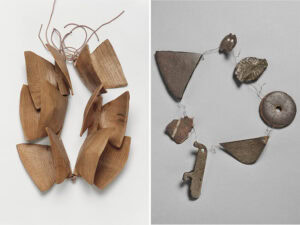
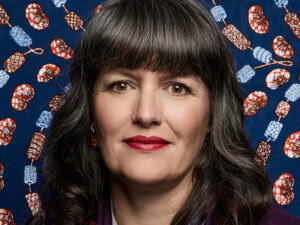
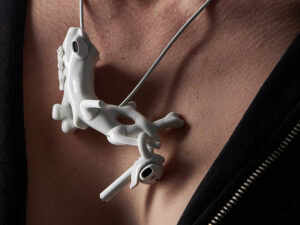
Marie-caroline Locquet views jewelry more as something conceptual. In her work, she aims to redefine jewelry, presenting it not as an object standing in for wealth, power, or status, but as a provocation. She produces restraints and defensive weapons, each one being, she states, “a unique wearing experience that explores our shared fragility.” Through implications of violence and sexual dominance, these evoke at once discomfort and erotic tension.
The Young Artist Award, supported by Karen and Michael Rotenberg, is given every two years. It acknowledges promise, innovation, and individuality in the work of an emerging jewelry artist aged 35 or younger. Through this prize, AJF supports new and exciting work that will inspire future developments in the field.
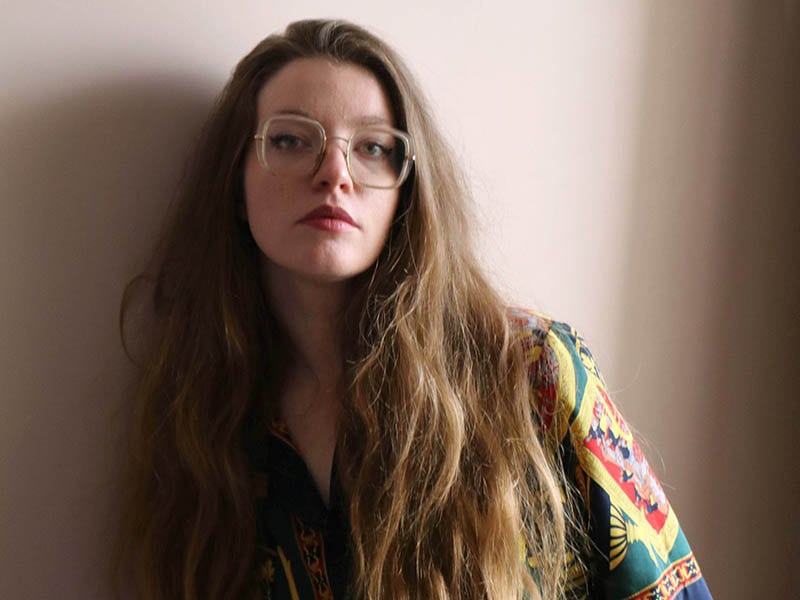
AJF: Congratulations on being a finalist for the Young Artist Award competition—that’s quite an accomplishment! How did you become interested in jewelry? And what inspires your work?
Marie-caroline Locquet: Everything started at the beginning of my art studies. I discovered works by artists that challenged my vision and the definition of jewelry. The works I am talking about were not about beauty, showing wealth, etc. They were “strange,” “uneasy,” somehow “dangerous”—in fact, radical. It’s the bottleneck of Bernhard Schobinger and Dorothea Pruhl’s work for example: some pieces that shift the way jewelry is understood. It really changed my point of view on art. In a way, jewelry interests me as an object of disruption, reflection, and provocation.
So I entered the field like this, full of questions and curiosity. Mostly looking to answer this thought point: Why make (and, consequently, wear) jewelry that seems so disturbing at first sight? What does it mean to make something that seems “unwearable”? This notion of “un-wearability” became the core of my research.
What does being a finalist mean for you? Do you think it will influence you going forward?
Marie-caroline Locquet: Being selected as a finalist is a meaningful recognition of a direction I have been pursuing for several years. It gives me confidence to keep going radical, pushing things further, and challenging myself, the wearer, and the viewer.
Tell us about the work you applied with.
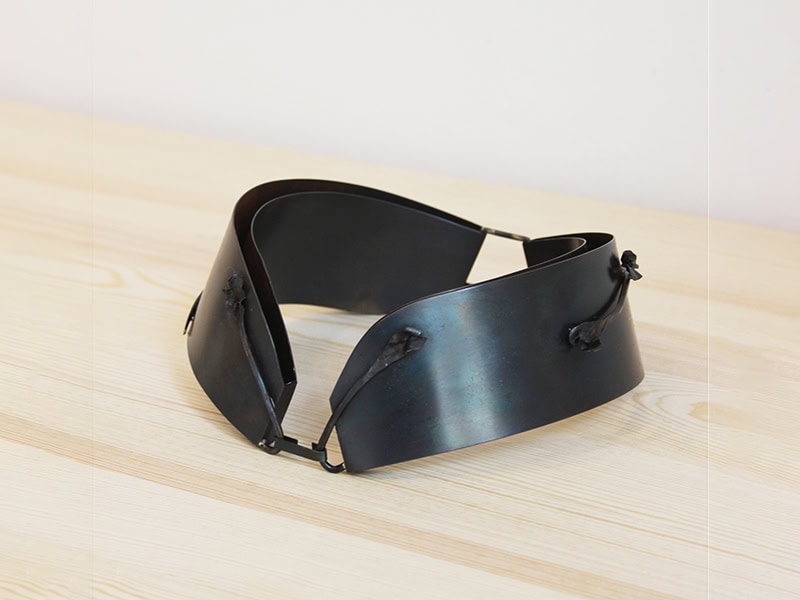
Marie-caroline Locquet: I grew up in the north of France where I felt the weight of self-demonstration and the camouflage of social affiliations through adornment at an early age. Thus, it is a conceptual interest that led me to jewelry, considering it more as a subject for study than from an aesthetic affinity. In my practice, each piece redefines the status of jewelry, considering it less as a showcase object (of wealth, power, etc.) and more as a confrontation with a highly disruptive potential in public space. It’s not about seduction or representation, it’s about disturbance, violence and fragility, seduction and domination, vulnerability and confinement. The materials, pushed to their extreme limits, bare themselves and reveal their true nature through forms that evoke both desire and death. Whether defensive weapons or restraint devices, each piece offers a unique wearing experience that explores our shared fragility. They pose a challenge to all who observe them, constantly maintaining the tension between social discomfort and the temptation of embrace.
Tell us more about one of the pieces in your application.
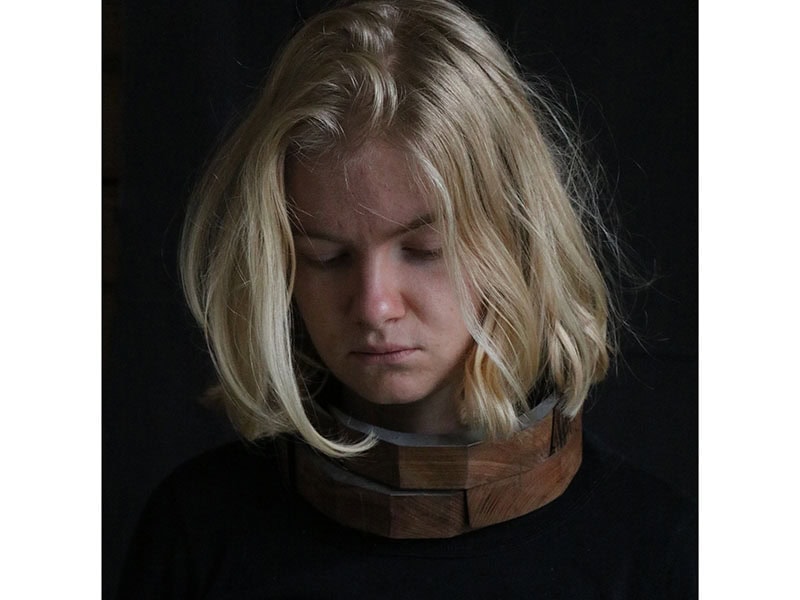
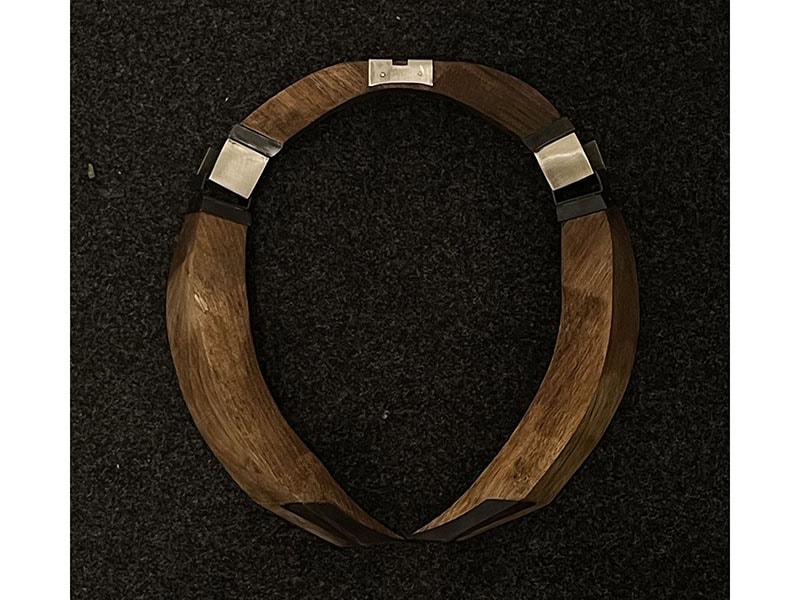
Marie-caroline Locquet: In the past, the confinement, violence, and vulnerability induced or manifested by some jewelry led me to also draw on the collier d’appartenance (a collar given by a person to those who submit to them in submissive relationships); the “slave collar” originating from a 19th-century Norman and Auvergnat tradition, given to women at marriage as a token of possession; or animal-labor tools such as the horse collar.
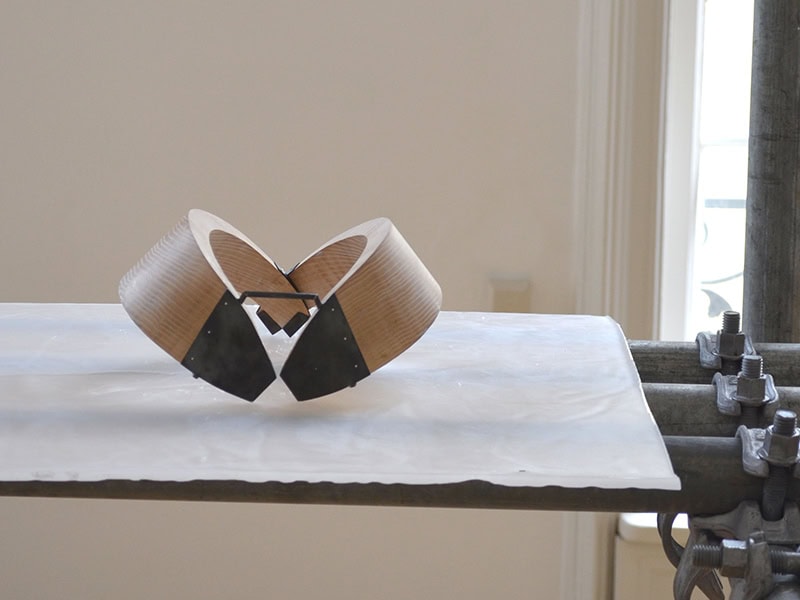
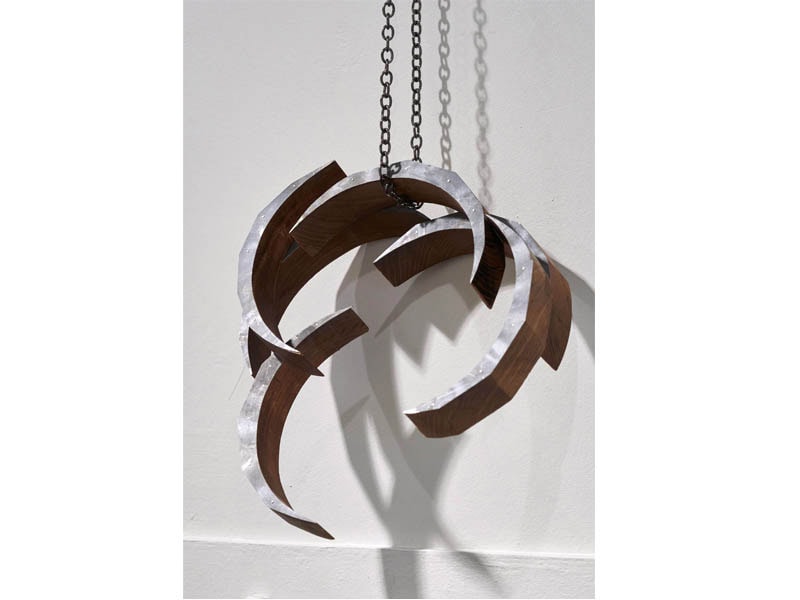
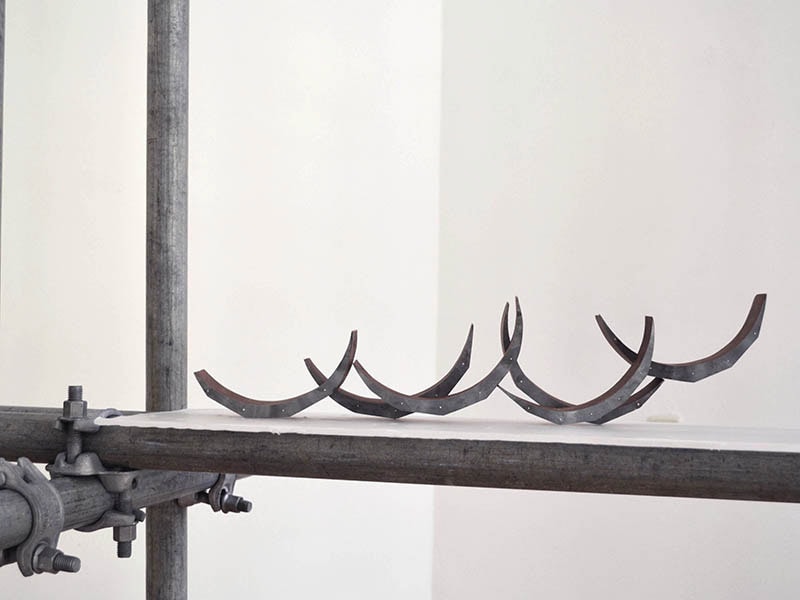
But I want to talk about my piece Hands, which exposes different layers of my works. It shows my obsessive research into systems, movements, clasps, and the border between jewelry and sculpture. The piece unfolds and occupies the space like a complex mechanical object, before closing around the neck … like an act of strangulation. It’s my most complex and intimate piece, expressing confinement and violence.
What excites you about the field of art jewelry?
Marie-caroline Locquet: The way this object allows the shaping of a complete approach that moves from the object itself, to research, to the creation of spaces that resonate with it—this is what fascinates me most.
More broadly, how body ornament shapes the image of a society. I believe everything we wear draws on the references, the boundaries, the values of the world we inhabit. A few years ago, I started a large iconographic research project and collection around worn/unwearable stuff called “Unwearable—adornment is impure, makeup is obscene, disguise is an abomination.” It shows me, in a way, how ornament, when connected to the body, can tell so much about social representations and the culture it belongs to. It’s constantly moving between intimacy, the private sphere, and the public space.
Do you have any frustrations with the field?
Marie-caroline Locquet: Jewelry Is Still a Risky Business was the title of an exhibition we curated with colleagues and friends while we were students during MJW in 2018, in reference to a work by Paul Derrez. The title immediately came back to me when I read this question. I think jewelry should remain risky.
I sometimes feel that contemporary jewelry is still expected to justify its presence within contemporary art. When I was studying jewelry in a French fine art school, I often encountered the idea that it was somehow “less,” “superficial,” or “niche.”
That’s something really interesting to me. It’s a strength of the medium, because it opens new ways of looking and thinking. But does it also reveal a certain distance between the field and audiences beyond its established community?
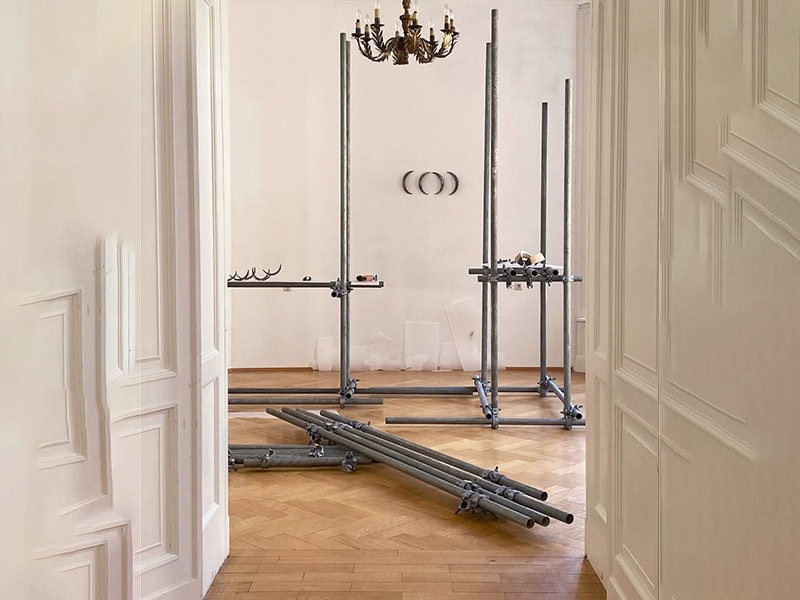
This reflection is also why some of my pieces are more “literal,” such as Panicroom Vector 1. They act as keys to enter the work. Therefore, in a broader context, I think it’s important to stay on course: to keep exploring, to create meaningful experiences for viewers, and to open up new perspectives. Being a finalist for this award is a strong confirmation that I am in the right place.
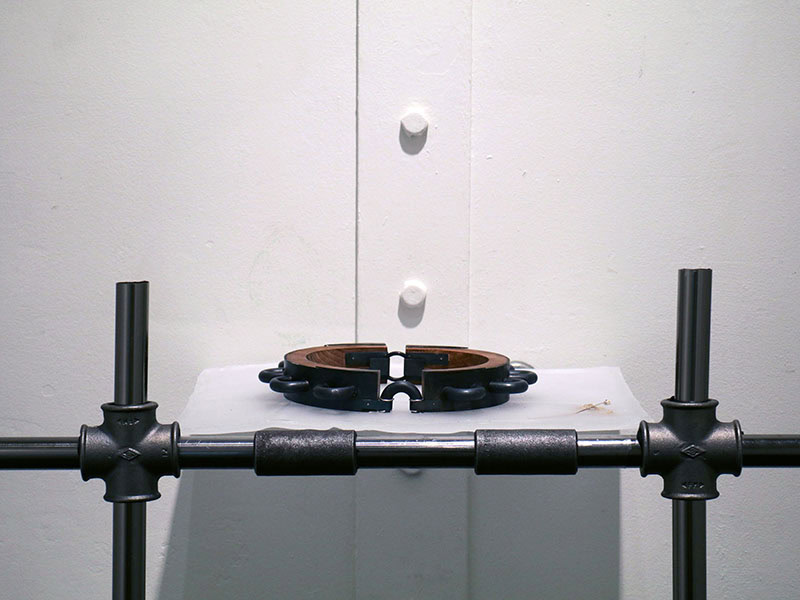
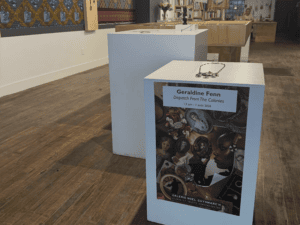
installation view at A-Galerii, Tallinn, Estonia, photo courtesy of the artist
Where would you like to be five years from now?
Marie-caroline Locquet: Five years ago, I had just graduated. Looking back, I am happy with everything that has happened since then. Recently, I started a new chapter of my practice, extending my thinking to the space to make them resonate together. It’s something I will show soon in a new exhibition project, hopefully. Then I will continue in my directions, make my practice grow, develop my work language, apply for residencies, keep making projects with other artists, and so on—the artist’s daily life.
Research and teaching is also something appealing to me. It’s the best space to reinvent, to push forward the collective notion of body ornament, and the way we can still extend, deform, shape, and question the definition of jewelry.
Let’s see what happens in the future. I trust the process, will keep working, and want to thank everyone who supports my work. They have my endless gratitude.
Congratulations again! Thank you for taking the time to tell us about yourself and your practice.
The opinions stated here do not necessarily express those of AJF.
We welcome your comments on our publishing, and will publish letters that engage with our articles in a thoughtful and polite manner. Please submit letters to the editor electronically; do so here. The page on which we publish Letters to the Editor is here.
© 2026 Art Jewelry Forum. All rights reserved. Content may not be reproduced in whole or in part without permission. For reprint permission, contact info (at) artjewelryforum (dot) org