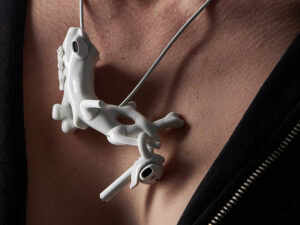
Bernhard Schobinger and Dorothea Prühl came to jewelry from opposite sides of a divided Europe. Schobinger came of age in Switzerland’s postwar avant-garde, while Prühl developed her practice in East Germany, first as a designer and later as an influential teacher at the art school in Halle where she had trained. In 1962, the year Prühl graduated, a 16-year-old Schobinger was just starting art school in Zurich. Both made jewelry the center of their artistic lives, but they arrived at strikingly different ideas about material, value, form, and wearability. Schobinger has pried metal out of a city street to use in jewelry, and set a meteorite in a ring; Prühl carves wood from fallen trees. Each, in their own way, asks where preciousness in jewelry really resides.
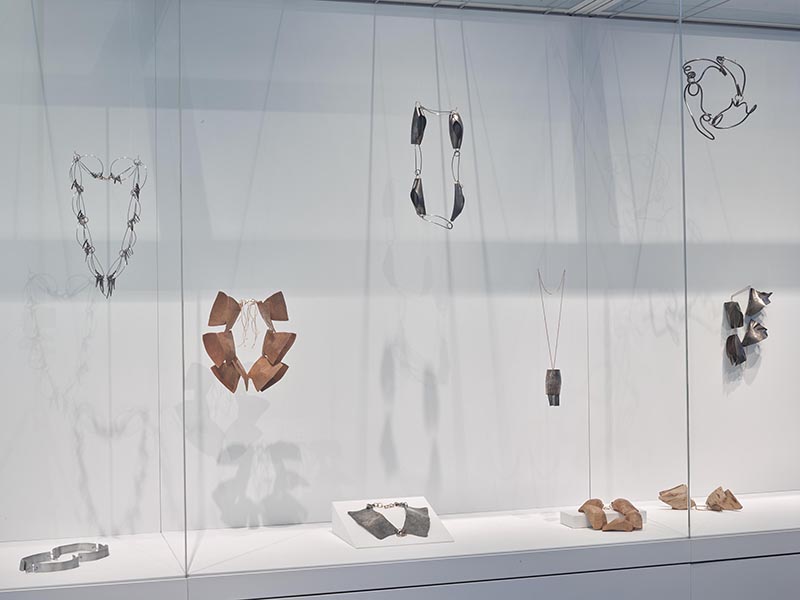
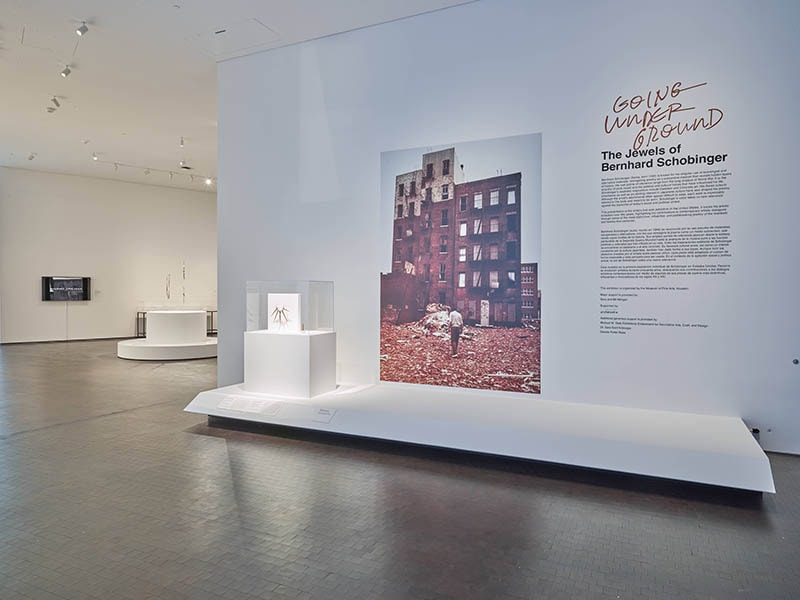
The Museum of Fine Arts, Houston, is presenting concurrent retrospectives of the two artists, Going Underground: The Jewels of Bernhard Schobinger and The Jewelry of Dorothea Prühl, both on view through January 3, 2027.[1] They are the first US solo exhibitions for either artist. I spoke with the co-curators of both exhibitions, Cindi Strauss, the MFAH’s Sara and Bill Morgan Curator of Decorative Arts, Craft, and Design, and Elizabeth Essner, the museum’s Windgate Foundation Associate Curator of Craft, about the worlds in which each artist developed, how the two shows ended up in tandem, and the ways each has expanded the possibilities of jewelry.
Tiffany Dubin: How did these two exhibitions come about?
Cindi Strauss: When I learned a few years ago that the Rotasa Collection Trust [Susan Cummins’s collection of contemporary art jewelry] was being gifted to the MFAH, I immediately began to think about all of the exhibitions that could be mounted.
In speaking with Susan, I proposed two solo shows to kick off a celebration of the gift. I had always wanted to do a Bernhard Schobinger exhibition, and with the Museum about to have more than 30 pieces of his jewelry between the Rotasa and Helen Williams Drutt Collections, it made sense. Rotasa also has the largest collection of Dorothea Prühl’s jewelry in the United States, so she was an obvious choice, too.
Having both shows up at the same time was a coincidence of the Museum’s schedule. However, once Elizabeth and I realized it would happen, we both became very excited about the dialogue that could occur between the artists.
Their aesthetics are very different, but their practices have some similarities: a singular dedication to their work, and the importance of place and personal experience in their jewelry. Both artists also came of age during turbulent eras in Europe. Although they lived very different lives, the times imprinted themselves on their outlook and creativity.
How did the worlds in which they developed shape their work?
Elizabeth Essner: Prühl was born nearly a decade before Schobinger, and while their lives have not been distant geographically, the cultural and political climates in which they developed were worlds apart.
Prühl was born in 1937 in Breslau, Germany, now Wrocław, Poland, so World War II and life in the (German Democratic Republic) profoundly shaped the course of her life, even after German reunification in 1990. It would be impossible to untangle Prühl’s artistic achievements from her daily experience behind the Iron Curtain.
That said, Prühl is an artist who looks inward for inspiration; she is not interested in political messaging. She takes a much longer view of civilization and of the ways jewelry has always expressed what it means to be human.
RELATED: Marion Fulk reviews The Jewelry of Dorothea Prühl here
Schobinger, on the other hand, was born in Zurich in January 1946 and came of age alongside the major cultural movements that emerged after World War II. He was launched into the world of avant-garde art when he enrolled in Zurich’s School of Applied Arts. He was drawn to the geometric Concrete Art of Swiss artists Max Bill and Richard Paul Lohse, which became a source of inspiration in his early jewelry.
His work shifted radically during the 1970s as he found kinship with the growing international punk movement and developed his own artistic vision. Detritus and throwaway objects became his primary materials as he set out to redefine the very essence of jewelry.
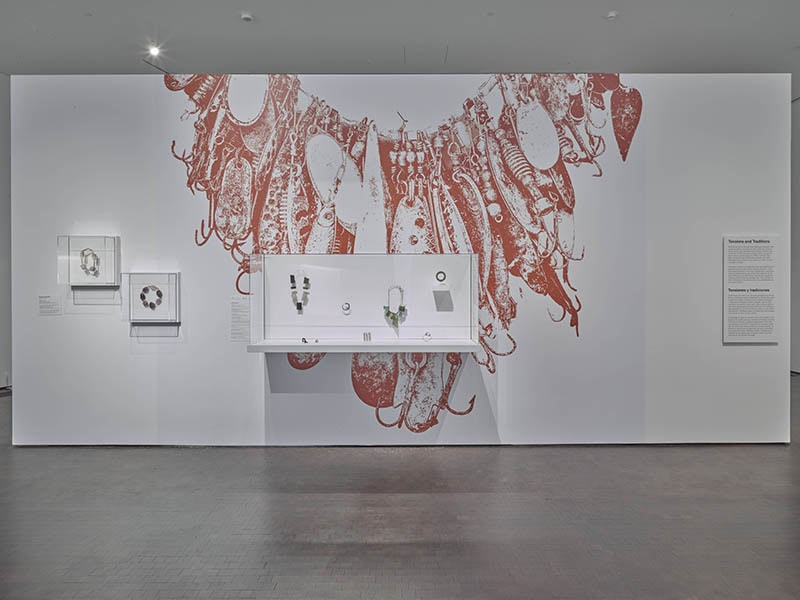
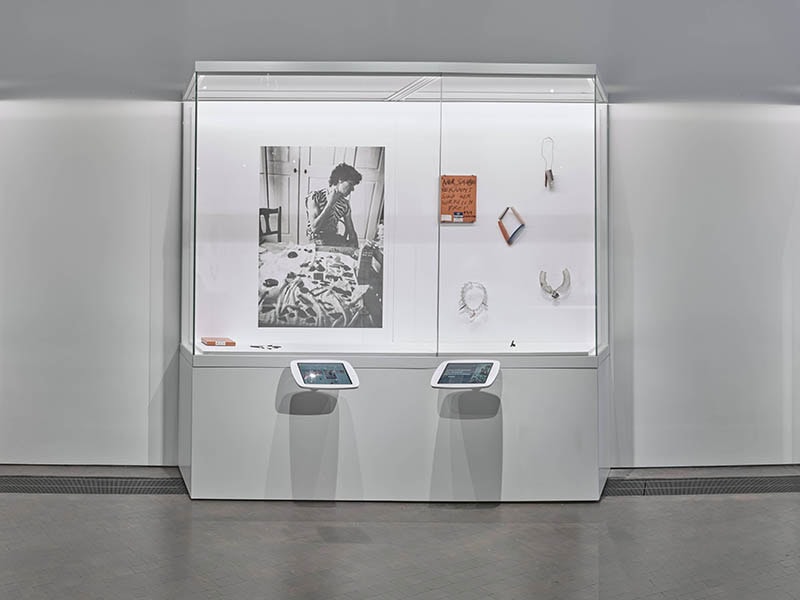
Schobinger has described himself as “a human paradox.” His jewelry pairs rigorous Swiss goldsmithing with broken glass, saw blades, and found materials, and his thinking was influenced by the philosopher Paul Feyerabend, whose 1975 book Against Method challenged the idea of fixed rules in science. How do you understand those apparent contradictions?
Cindi Strauss: There is no question that Feyerabend’s writings, combined with Schobinger’s own life experiences, are central to understanding his artistic practice.
But the complexities of the jewelry itself are just as important, and a quick look misses a lot. For example, Schobinger uses found objects that can make his jewelry seem unwearable, uncomfortable, or even dangerous, yet every piece is eminently wearable. His commitment to that is paramount.
Then there is Schobinger’s commitment to craftsmanship. He is a trained goldsmith, and you can see the strength of those skills in every piece he makes, particularly in details such as clasps and connections.
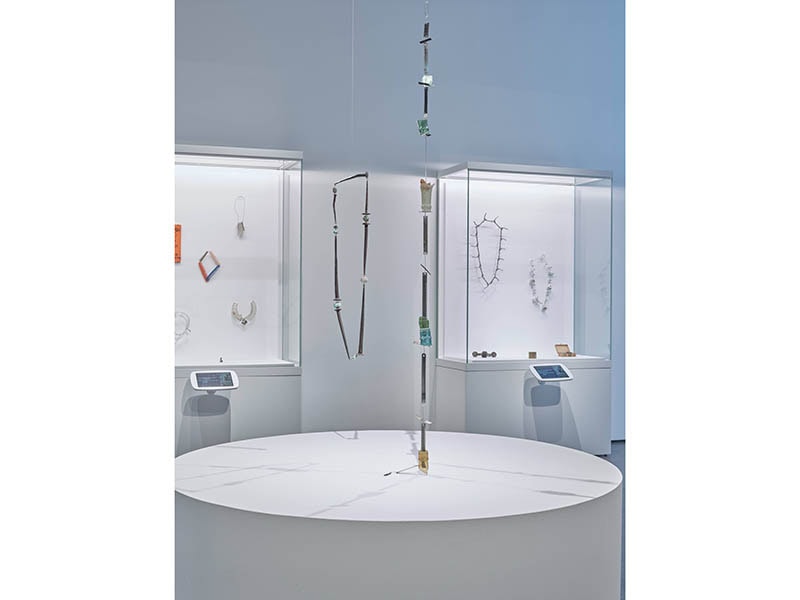
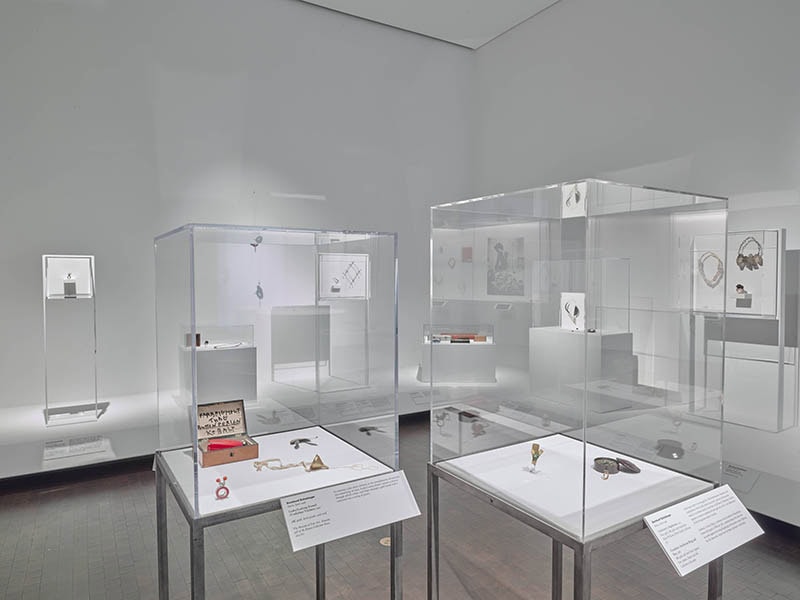
Prühl’s jewelry, in carved wood, titanium, and other metals, can appear remarkably simple. What lies beneath that simplicity?
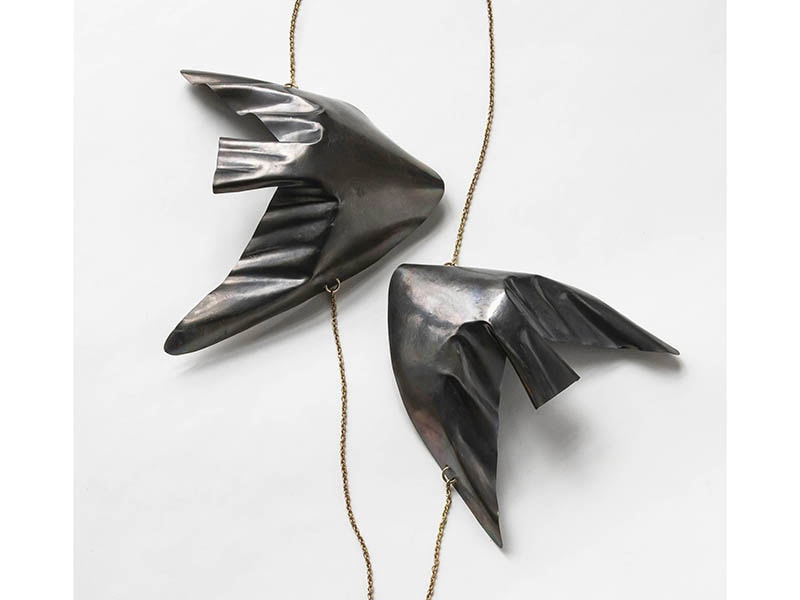
Elizabeth Essner: The simplicity of Prühl’s jewelry can be deceiving. She makes only a handful of pieces each year and brings her deep body of knowledge to every aspect of their making. She considers not only how her materials will embody her forms, but also how her pieces will sound and move, and, most importantly, how they will make the wearer feel.
Her relentless dedication results in jewelry that seems so innate it is as if it has always existed.
Prühl is driven by the creation of form, a result of her training at the renowned Burg Giebichenstein in Halle (Saale), Germany. When Prühl graduated, form was her primary focus, and it remains central to her practice today. In fact, Prühl often says that if she needs to explain a piece, she knows the form is not good enough.
What would you encourage visitors to look at closely in each exhibition?
Elizabeth Essner: The exhibitions are right next to each other in the Museum’s galleries, so we hope visitors will take their time with both. It feels like a fool’s errand to pick just one piece by each artist but, for Schobinger, NYC 1980 is particularly pivotal.
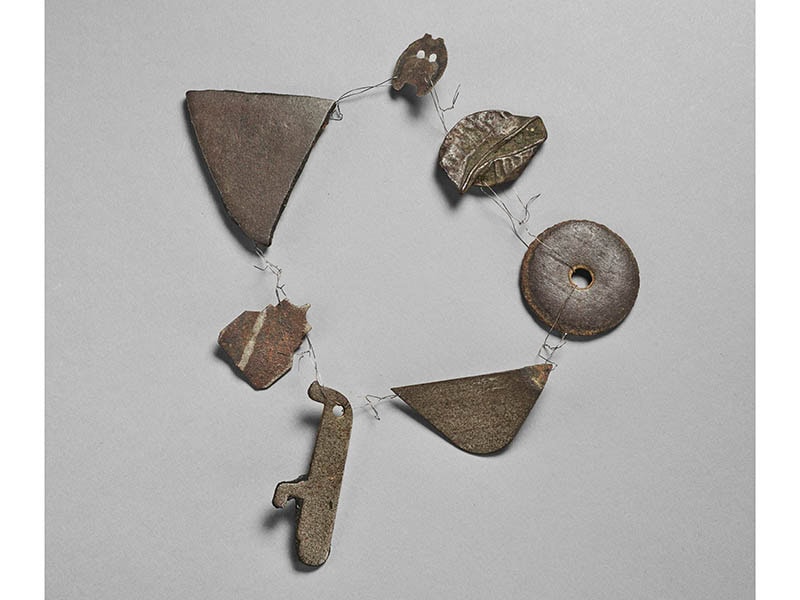
When he made it, Schobinger was shuttling between his home in the Swiss village of Richterswil and the underground punk communities of Zurich, London, Berlin, and New York City. The chunks of metal in the necklace come from West Broadway, where he quite literally pried them out of the asphalt.
The necklace suggests both amulet and armor, and its elemental shapes carry traces of Concrete Art. But look closely at the nearly invisible twists of wire that connect the pieces of metal. They are intact but can only barely hold the piece together. It is as if Schobinger was desperate to capture the explosive energy of the moment, knowing that it could be too fragile to endure.
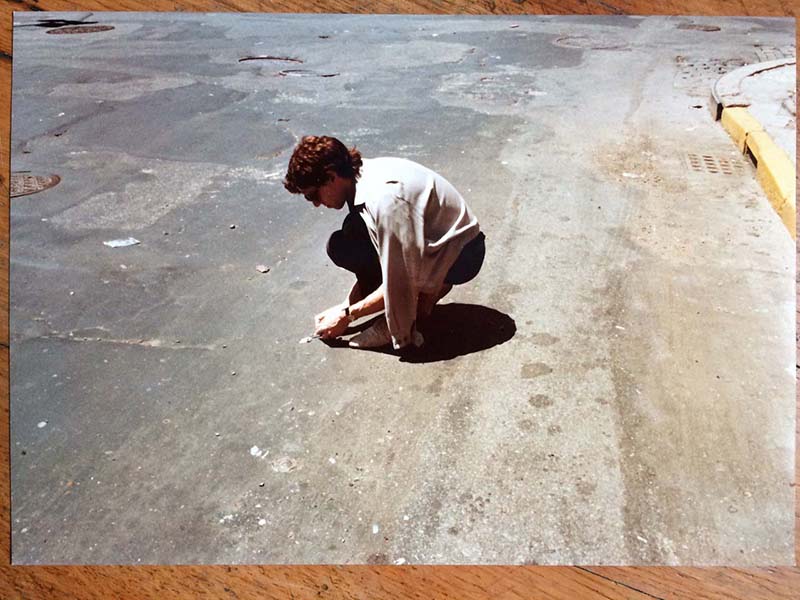
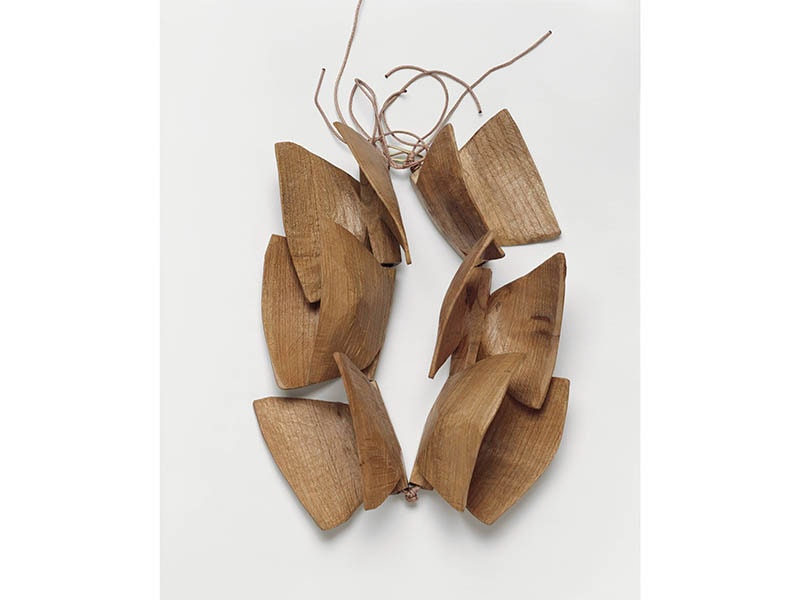
Prühl’s working methods are just as unique. While she makes her metal jewelry in her studio in Halle, she carves her wood jewelry in the forests about three hours north. There, Prühl works alone in a simple farmhouse with no running water, a single source of heat, and a limitless supply of wood from fallen trees. Flowers from Augustenberg (1989), named for this wooded hamlet, is an ode to Prühl’s rural youth, capturing the tender spirit of the landscape in a garland of flowers.
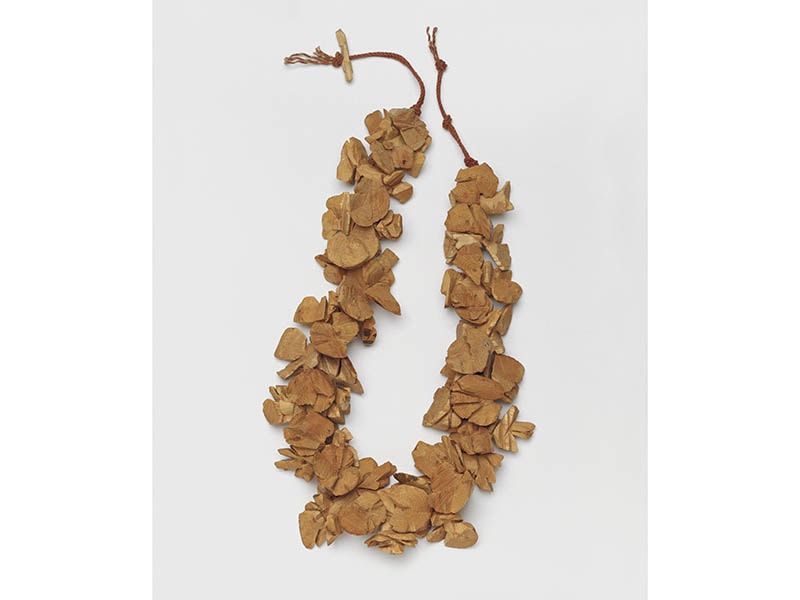
alder wood and string, the Museum of Fine Arts, Houston, promised gift of the Rotasa Collection Trust, © Dorothea Prühl, photo: Helga Schulze-Brinkop
Has working on these exhibitions changed the way you think about jewelry?
Cindi Strauss: I have had the privilege of getting to know many international jewelry artists and visiting their studios over the past 25 years, but Dorothea and Bernhard have deepened my understanding of what it takes to be an accomplished artist in the field.
The singular dedication above all else, the daily effort, the commitment to their craft. They never stop for a moment. Working on their shows has also made me think about the long arc of creativity.
Elizabeth Essner: I am constantly reminded of the ways jewelry can hold some of our most intimate stories, but these two artists have taught me that it can also carry humanity’s deepest meanings.
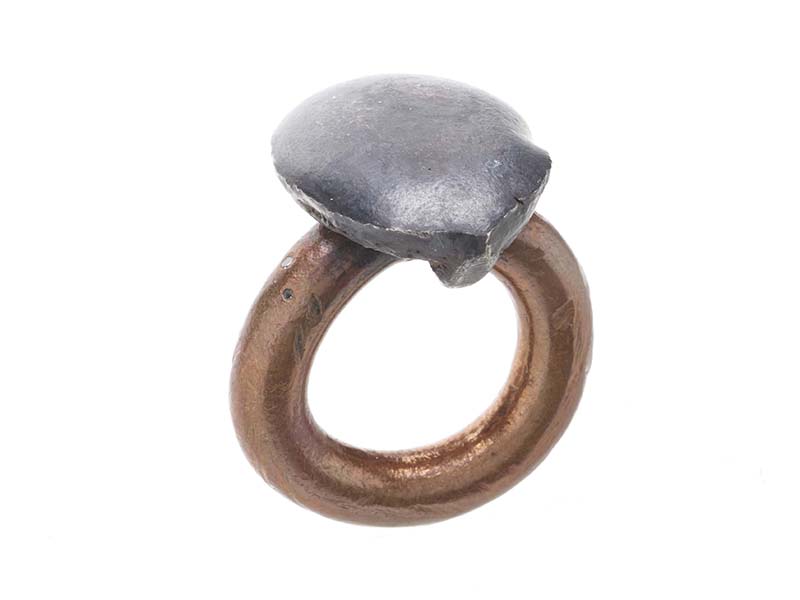
By including a meteorite in a simple ring, Meteor Iron Ring (1993), Schobinger connects jewelry to a timeline far beyond civilization and out into the cosmos. Prühl honors us with her vision: birds in flight, flowers, butterflies. At first these subjects seem modest, even mundane. Yet to slow down and really look at a butterfly or a bird’s wings is to be humbled by the miracle of the world around us.
[1] Exhibition dates: The Jewelry of Dorothea Prühl, September 6, 2025–January 3, 2027: Going Underground: The Jewels of Bernhard Schobinger, September 3, 2026–January 3, 2027
The opinions stated here do not necessarily express those of AJF.
We welcome your comments on our publishing, and will publish letters that engage with our articles in a thoughtful and polite manner. Please submit letters to the editor electronically; do so here. The page on which we publish Letters to the Editor is here.
© 2026 Art Jewelry Forum. All rights reserved. Content may not be reproduced in whole or in part without permission. For reprint permission, contact info (at) artjewelryforum (dot) org