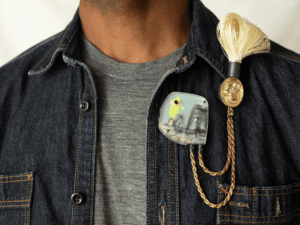
- The 3rd Lisbon Contemporary Jewellery Biennial took place September 19–27, 2026
- Each edition has a theme—this year’s was “Coexistences,” with a focus on humankind’s relationship with the planet, the world beyond humans, and ecological survival—a question that resonates across disciplines, knowledge, and cultures
- It featured more than 30 events across the city, organized by an international roster of participants
- I highlight some of the most vibrant and memorable events and moments
The third biennial demonstrated how a curatorial proposition can expand the discussion around jewelry, bringing craft into sustained conversation with contemporary art, philosophy, and architecture. Across Lisbon, coexistence became a practical negotiation between objects, bodies, histories, and cultures.
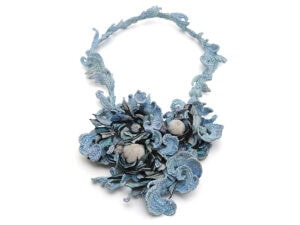
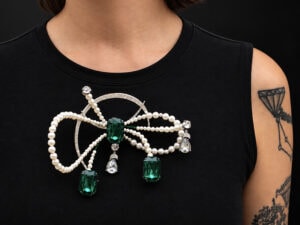
The main exhibition, Coexistences—Jewellery and the World’s Beauty, remains on view at MUDE, Lisbon’s design museum, through January 31, 2027. Curators Marta Costa Reis and Patrícia Domingues brought together 156 works by 70 artists. How do nature, humans, and technologies coexist within and beyond their systems? Posthumanism and encounters between the material and ephemeral, natural and artificial, run through the exhibition. Brooches share space with large objects, installations, and video, placing jewelry within a broader cultural and material conversation.
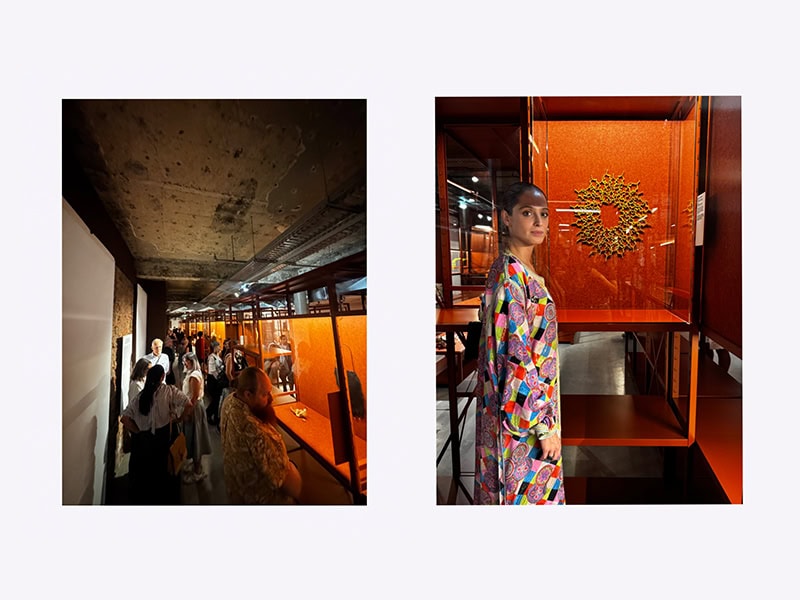
Also at MUDE, an exhibition celebrates artist, teacher, and gallerist Tereza Seabra’s donation of her private collection to Lisbon. Assembled since the late 1960s, its 346 works by 196 artists trace six decades of contemporary jewelry, as well as Seabra’s professional relationships. Twelve interconnected sections organize pieces by color, scale, material, form, and technique rather than chronology. A separate space honors her first jewelry instructor, Thomas Gentille, who died this year.
I was surprised by the amount of plastic display material. The transparent cases allow viewing from every angle—even underneath—but make individual pieces difficult to isolate within this funhouse environment. “But that’s Tereza! Diverse, vibrant!” Ruudt Peters remarked when I mentioned it.
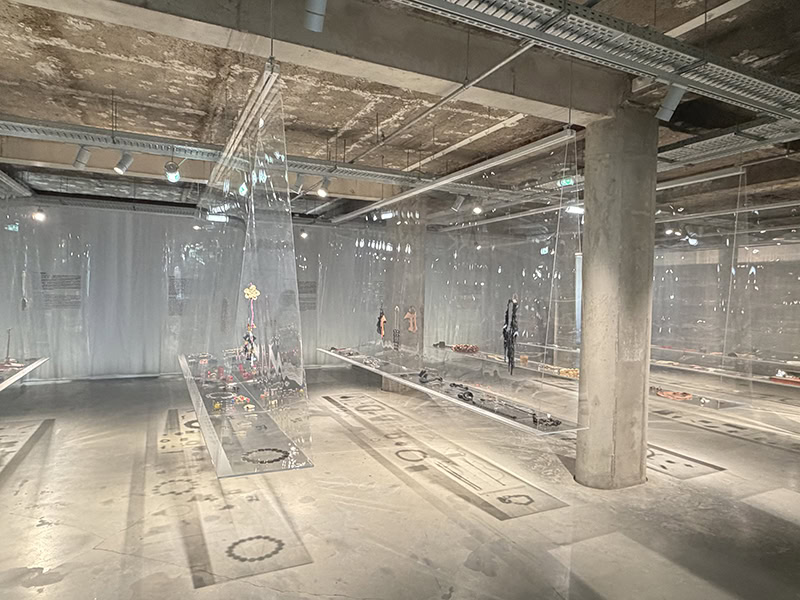
Schools at Ar.Co, curated by Catarina Silva, presented approximately 130 student works from seven countries. “Each school assigned ‘coexistences’ as a semester theme, then a teacher selected up to 10 students to represent the school,” Silva explained.
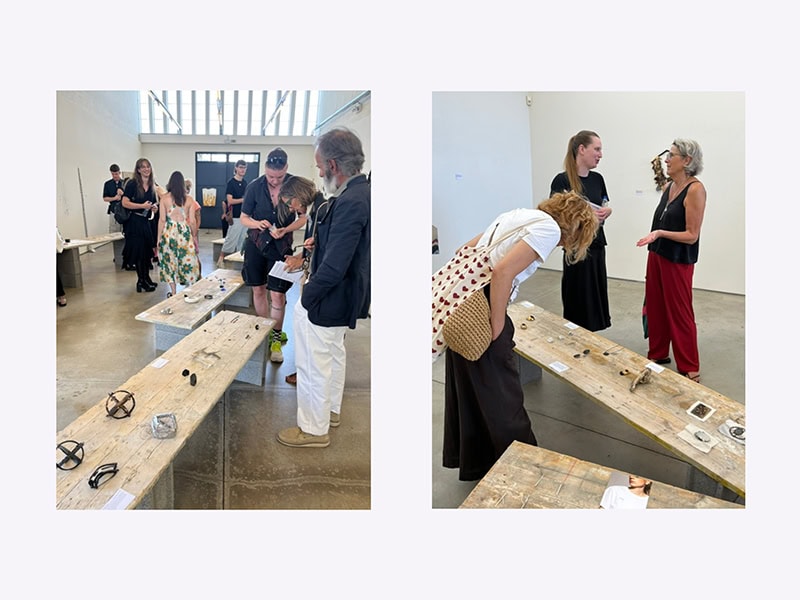
Eleven of the biennial’s 28 events and projects (more than 30%) occupied churches and adjoining rooms. Sometimes I wondered whether a baroque space already burdened with meaning was a fitting space for an exhibition. Artists faced a difficult balance. How to create compelling displays while respecting the setting’s symbolism, materials, and architecture?
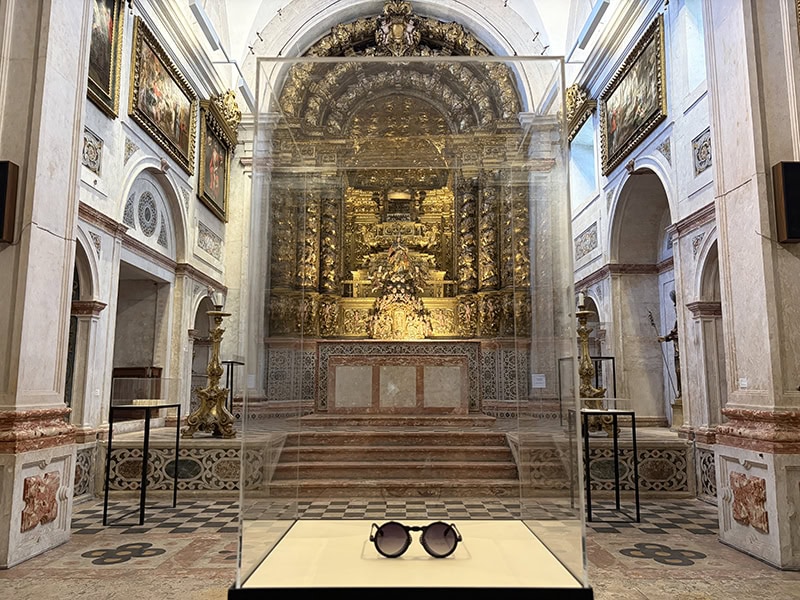
What Makes Us Blind offered a persuasive response at Convento dos Cardaes. This functioning convent also houses women who are blind or have other disabilities. The show’s title recalls Otto Künzli’s iconic Gold Makes You Blind. Curators Costa Reis and Manuel d’Olivares explored gold’s role in jewelry, social stratification, and material hierarchies, placing contemporary pieces alongside thematically related artworks belonging to the convent.
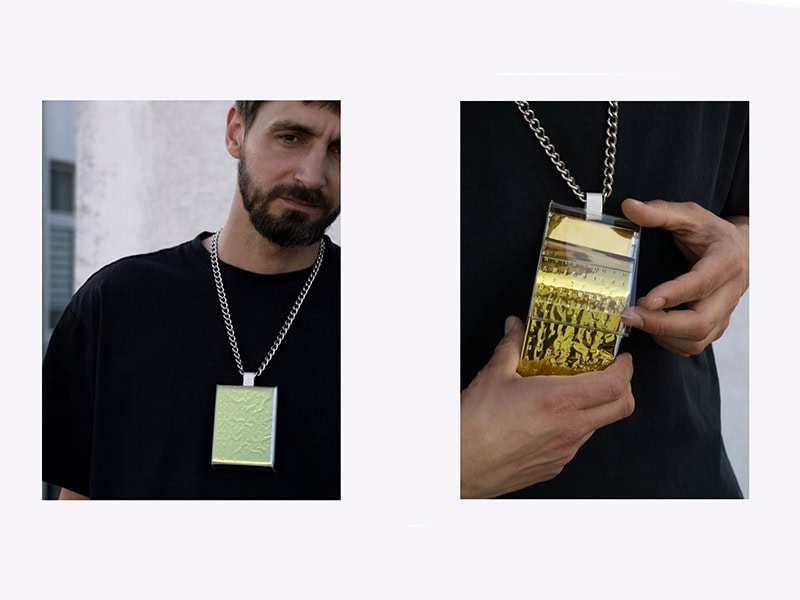
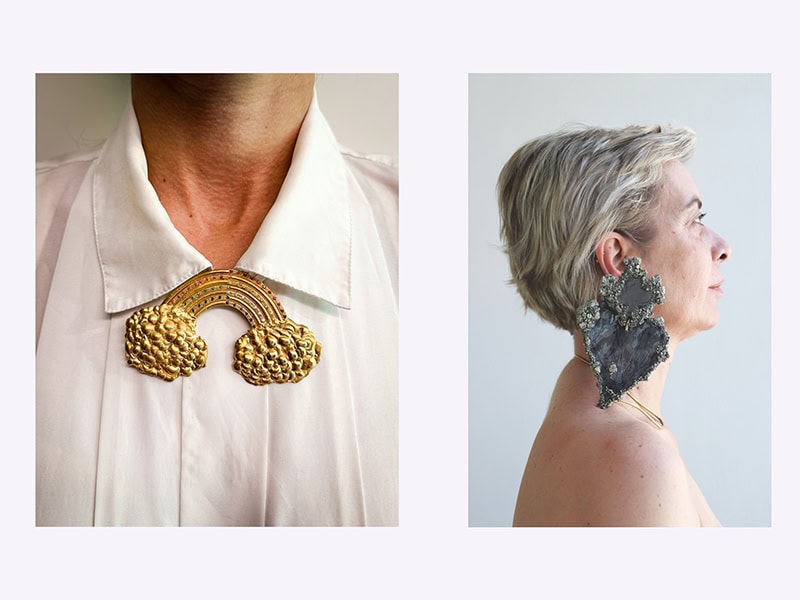
Three winners were selected from among this exhibition’s participants. Each winner received a one-year Silver-level Art Jewelry Forum membership. First-prize winner Viktoria Austmeyer’s pendant contains a gold-colored emergency blanket embossed with “Humanity.” The wearer can unfold it whenever needed, for themselves or someone else. Maria Benedita took second prize with a piece that invokes the Irish legend of gold at the rainbow’s end. The treasure remains unreachable because the rainbow’s position depends on its observer. Carla Solheiro’s third-prize earrings reference Desfile da Mordomia, the northern Portuguese procession in which women proudly wear family gold weighing from one to more than five kilograms. Re-created in toxic lead, the earrings question the burden of status and inheritance.
Some blind parishioners were invited to experience the pieces through touch. Curator d’Olivares recalled, “One of them touched a piece and said, ‘How beautiful!’ Another said she could feel how much work had gone into it. A third, touching a necklace by Geraldine Fenn featuring silver flies, couldn’t identify them. Flies are physical creatures, yet we don’t know them through touch—we recognize them by sight.”
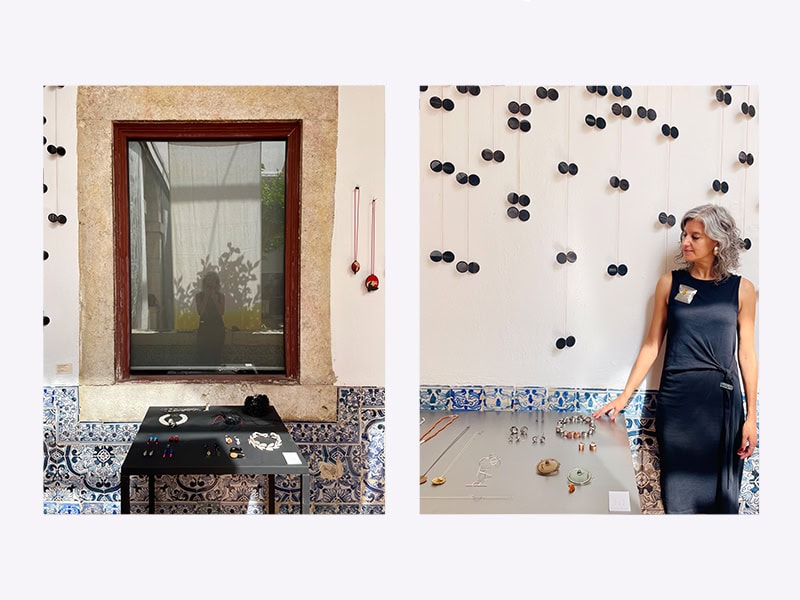
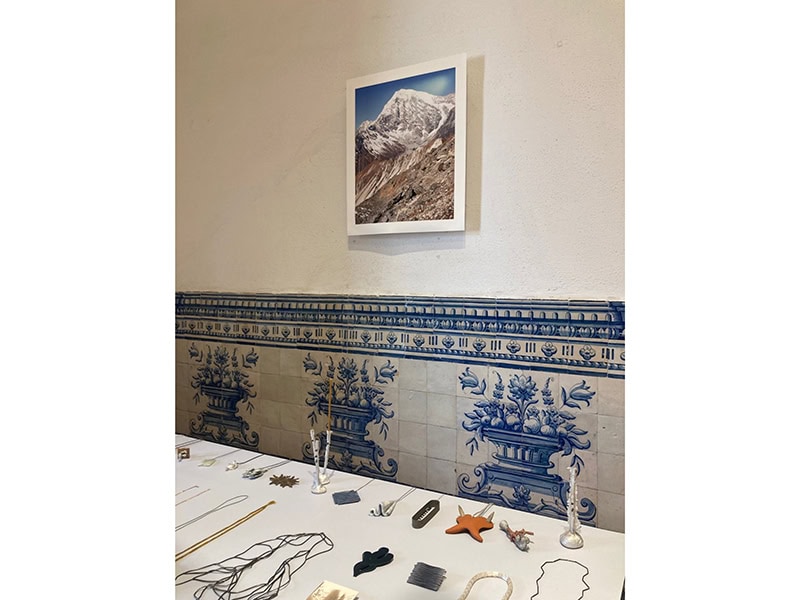
In the convent’s open-air cloister, six galleries from across the globe participated in Jewellery Room. Above Galerie Beyond’s tables hung a photograph concealing an incongruous television screen. Taken by the founders’ son, Victor Darmont, it showed Nepal’s Langtang Valley. He had spent a week there recovering from a severe blood infection. An avalanche struck shortly after his departure, killing those who had cared for him. This beautiful photo carrying a devastating story, covering up a television in a functioning convent above a temporary jewelry display—this layering became, for me, an image of coexistence.
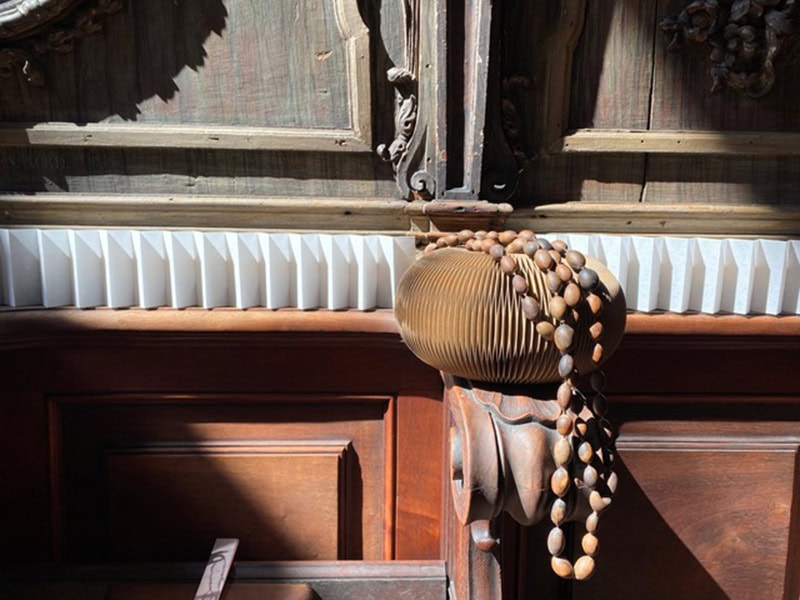
Four exhibitions occupied the Church of Our Lady of Mercy. In its Upper Choir Room, Nacre and the Grain presented seven Scotland-based artists exploring connections between vulnerable landscapes and contemporary jewelry. For curator Kristin Beeler, the church became another landscape for the pieces, with shifting sunlight changing their readings throughout the day.
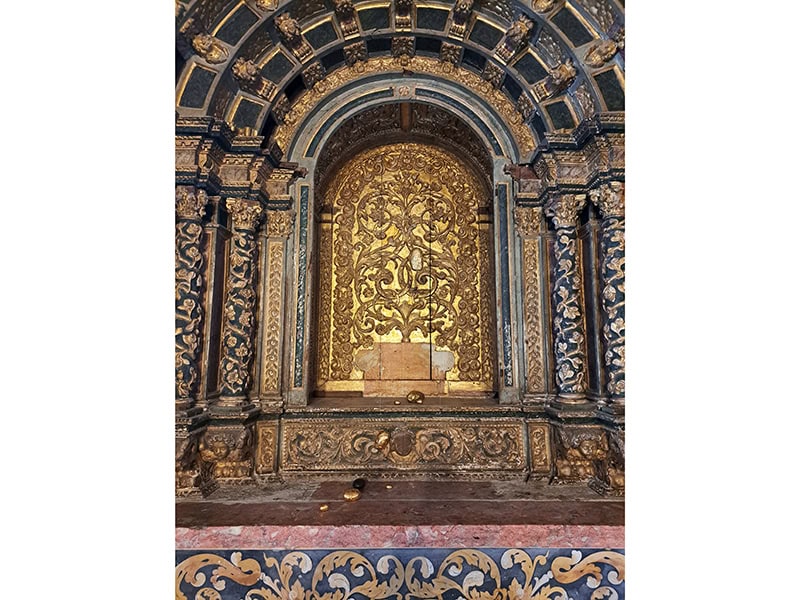
In Our Lady of Mercy’s Ante-Choir Room, Take Place featured Elin Flognman, Lena Birgitsdotter, and Staffan Jonsson. Initially, I overlooked Flognman’s golden potatoes floating above the altar! During installation, she explained, the brooches seemed drawn toward the altar’s gold. Although she’s from a secular country, she said she had to “work up some courage to ask the priest if the altar space was possible to use for the exhibition.” Permission granted. For Flognman, potatoes are more than food: they connect people across social classes. The humble tuber became something precious, sacred enough to occupy an altar, however briefly.
During the exhibition period, churches sometimes closed for baptisms, weddings, or funerals. This frustrated some biennial visitors, but such interruptions were part of coexisting with active religious institutions. Jonsson enthusiastically described the serendipity of a funeral held while Take Place remained open. “Throughout my student years, I worked in a cemetery every summer!” His pieces addressed symbols of farewell and death.
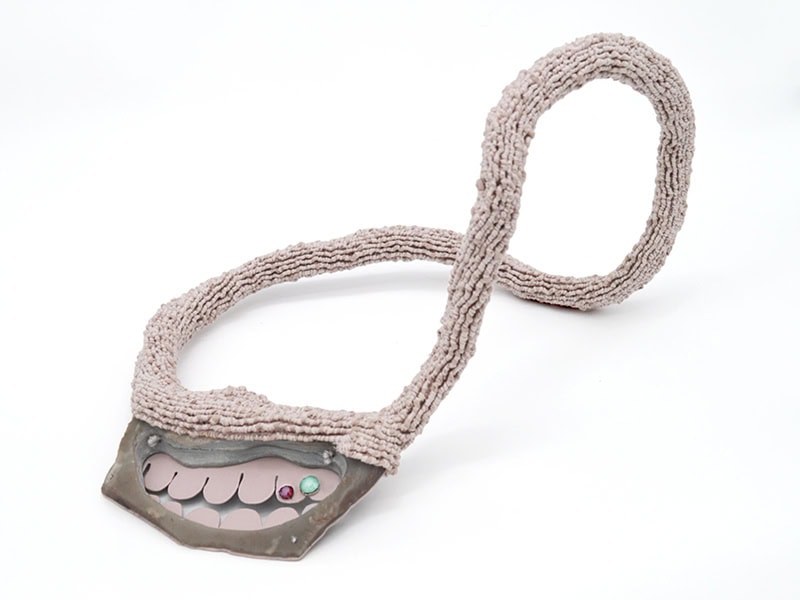
Another memorable exhibition was Stuck. Three longtime acquaintances, unable to settle on a biennial project, made their creative impasse productive. Each selected two unfinished pieces and sent them to the others in turn, allowing successive interventions. “The greatest responsibility fell on the last person, who had to decide what the piece would become and how it would function,” explained Caio Mahin. The process recalls the Surrealists’ exquisite corpse, devised a century ago. I drew on the same principle for my La Joaillerie Exquise project, inviting jewelers to draw successive sections of an imagined ornament without seeing what previous participants had contributed.
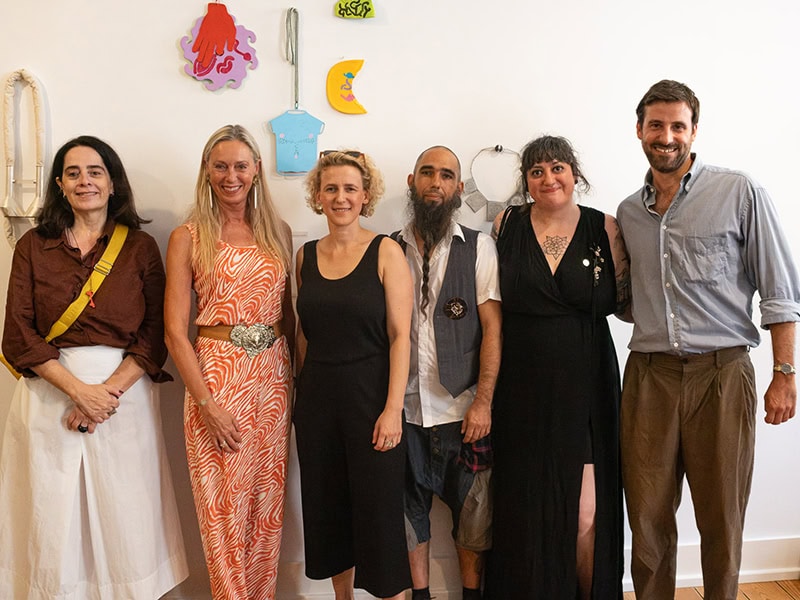
Shared Grounds—Contemporary Jewellery from Austria was on view in a recording studio. Supported by the Austrian Embassy in Lisbon, it included emerging artists alongside Manfred Nissmüller and Peter Skubic. “What is Austria known for?” Ulrike Ritzinger, Austria’s ambassador to Portugal, asked rhetorically at the exhibition opening. “Arnold Schwarzenegger … but everyone already knows him! So we decided to support an event that reveals a different, new side of Austria.”
The program also included a two-day colloquium at MUDE, where rapporteur Mònica Gaspar offered an intriguing observation: most invited speakers represented a new generation of jewelry artists with PhDs—a relatively new phenomenon she described as “the new kid on the block.”
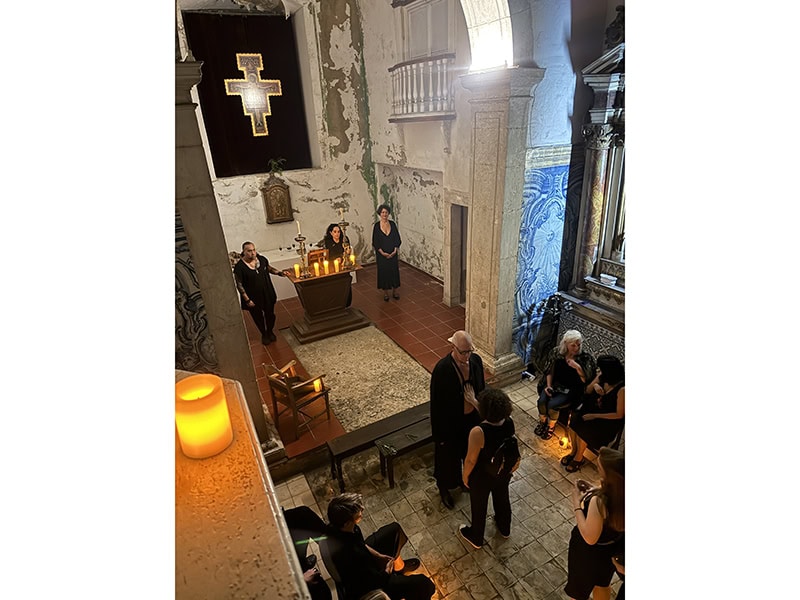
Performances were another part of the program. In Under Many Suns, Camilla Prey moved three-foot-long black candles she had made herself through the air, creating graphic compositions as wax dripped onto paper and demonstrating how light can be “translated” into movement and drawing. At night, a chapel in central Lisbon hosted Black Moon, an experience I co-curated with Ruudt Peters in which five jewelers explored their practices through actions ranging from mysterious incantations and songs to an invitation to touch Peters’s heart as an audience of some 55 looked on. Ana Escobar’s meditative Findings examined how found objects can communicate information between people. Meanwhile, Tamia Dellinger transferred the recurring faces from her jewelry onto visitors’ bodies through hand-poked tattoos.
The biennial extended well beyond exhibitions—a welcome dimension that brought different disciplines into conversation and situated jewelry within a broader cultural context. In this way, the biennial demonstrated how contemporary jewelry can coexist with other art forms.
The opinions stated here do not necessarily express those of AJF.
We welcome your comments on our publishing, and will publish letters that engage with our articles in a thoughtful and polite manner. Please submit letters to the editor electronically; do so here. The page on which we publish Letters to the Editor is here.
© 2026 Art Jewelry Forum. All rights reserved. Content may not be reproduced in whole or in part without permission. For reprint permission, contact info (at) artjewelryforum (dot) org