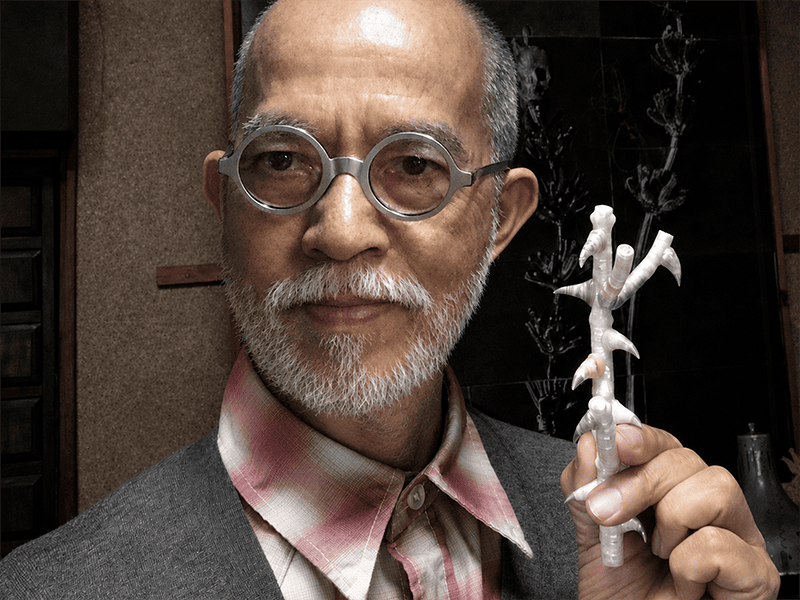
 As a young man, Shinji Nakaba tried more than 20 different jobs in his search for a profession. “Most I quit on the first day,” he recalls. He worked for a time as a dressmaker, and he was once a hair stylist. But it was his job painting flames and other designs on custom cars that paved the way for him to become a jewelry artist.
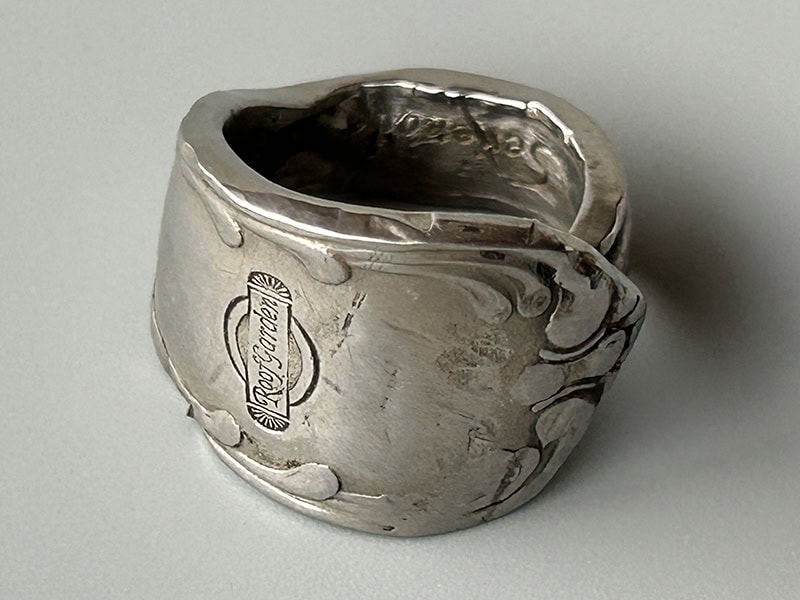
It was 1973, and the car company’s president returned to Japan from a trip to the United States with jewelry made from antique spoons and forks. The moment Nakaba saw the pieces, he felt deeply inspired. He bought an old silver spoon, heated it with a torch he found at the company’s workshop, hammered it into shape, and made a ring.
“I became completely absorbed in the process, and an overwhelming feeling arose within me: This was the profession I was meant to pursue,” he says.
He quit that job and signed up for a basic course at Hiko Mizuno College of Jewelry in Tokyo. “At last, I had found the profession to which I wanted to devote my entire life,” he says.
Today, Nakaba is known for his incredibly intricate, stunning carvings of gemstones, seashells, and pearls. He practices glyptic art, the carving of semiprecious stones and gems. Cameos and intaglios are examples of this ancient art. In his hands, pearls transform into skulls, shells become elegant feet and breasts, and aluminum beer cans bloom into enchanting flowers.
Nakaba doesn’t own many pieces of jewelry made by other designers. But throughout his life, he has collected items “that deeply inspired me,” he says. “Objects, designs, even books. Each of them tells a story that somehow connects to how I see beauty, time, and materials. I believe there’s an essence of beauty that can be acquired by acquiring and living with these things for a period of time. Even broken pieces of sculptures have great meaning.”
Nakaba, who lives in the countryside outside Tokyo, shared five objects that, he says, “have shaped my way of thinking as an artist.”
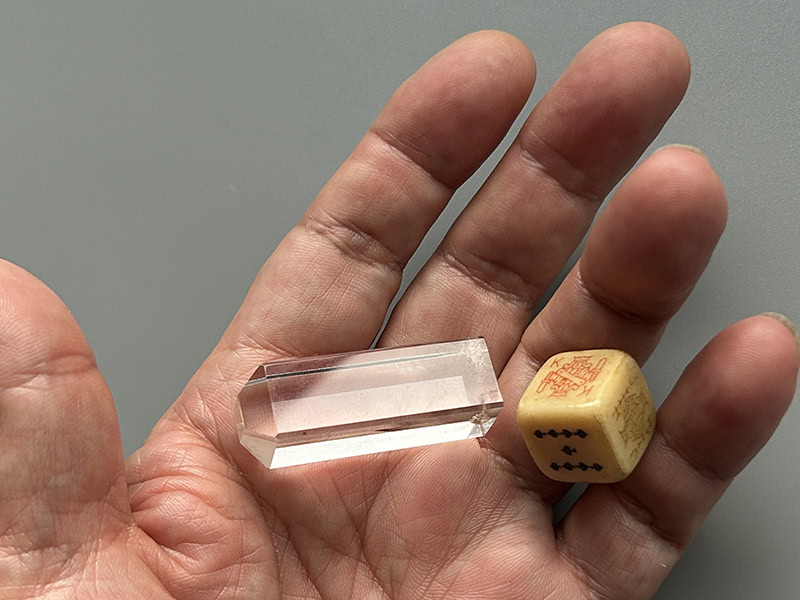
This rock crystal seal and single ivory die are “the first precious objects I ever saw,” Nakaba says. They were kept in the top drawer of his father’s chest, which, as a boy, Nakaba could not reach. “The drawer seemed like a mysterious and very special place,” he recalls.
When he was older Nakaba would sneak into his father’s office and open the drawer to admire these pieces.
“These are cold materials, but full of warmth,” Nakaba says. “They connect me to memory. I think they taught me that objects can hold time inside them—like a quiet spirit living in matter.”
He believes that his fascination with rock crystal began with his admiration for the seal, which he inherited, along with the die, after his father’s death in 1997.
Rock crystal’s “transparent, dignified presence possesses a beauty unlike that of any other gemstone,” he says. “My original purpose in pursuing glyptic carving was rooted in my belief that figurative sculpture was the finest way to reveal the full beauty of rock crystal. Over the years, I have carved the faces of many people in crystal and transformed them into jewelry.”
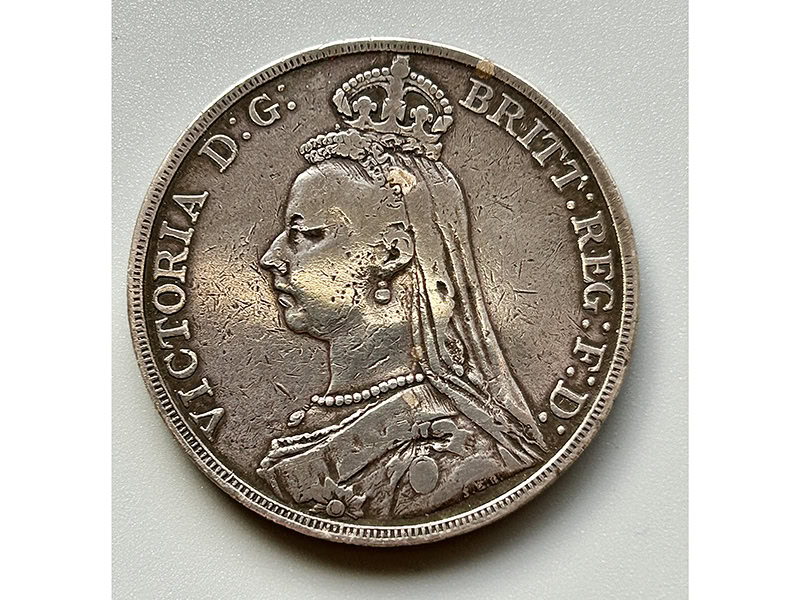
In 1995, Nakaba spent two weeks in London searching for reference materials to teach himself cameo carving. Hunting through antique markets to find old coins, wax impressions, and casts taken from historic masterpieces, he discovered this silver coin bearing a portrait of Queen Victoria. Benedetto Pistrucci, a renowned Italian-born cameo carver who once worked for the British Royal Mint, designed it. The reverse of the coin shows Saint George slaying a dragon.
The coin “became an exceptional teacher,” Nakaba says. “I studied how the movements and depth of the human figure, horse, and dragon could be expressed within such a limited thickness; how tension could be created through composition; and how light and shadow could bring the forms vividly to life. By holding the actual coin in my hand and repeatedly examining it from different angles, I was able to understand essential aspects of relief carving that photographs alone could never reveal.” It was as if Pistrucci was guiding him across the centuries.
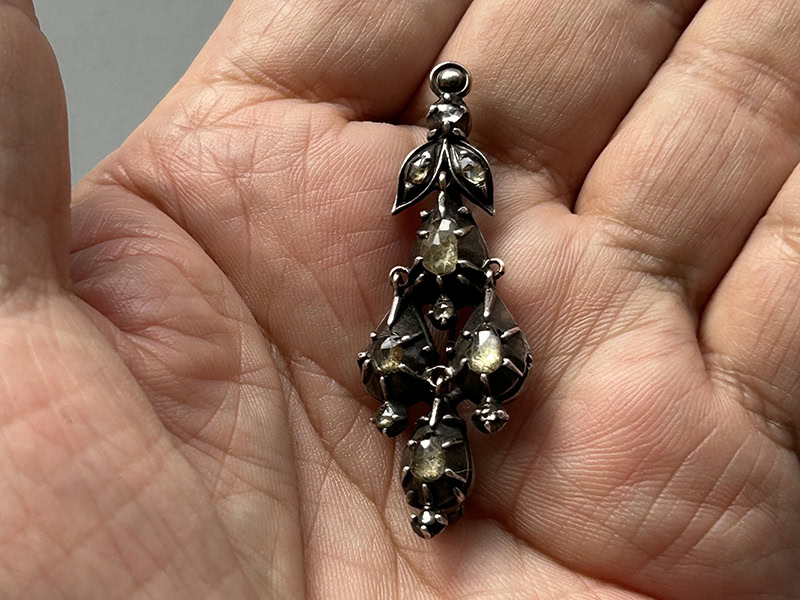
Nakaba bought this diamond earring at the Vanves flea market in Paris in 1999.
“I found it early in the morning, while it was still dark, searching by flashlight,” he recalls. “It was the greatest treasure I discovered that day!”
He also came across an Art Nouveau-style relief of a woman made by René Lalique, whose work has served as an essential reference for Nakaba’s own carving.
Nakaba believes the earring comes from the Georgian period in 18th-century Britain, when classical design was in vogue. “Pieces from this era possess a special elegance, and imagining the time in which it was made filled me with wonder,” he says.
Nakaba attached a brooch fitting to the back of the earring and gave it to his wife as a gift.
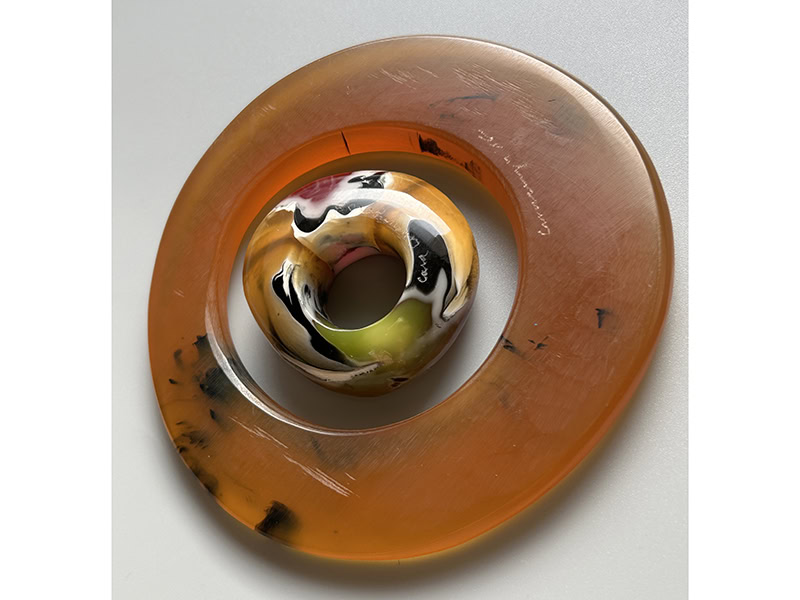
Nakaba met jewelry artist Cara Croninger in 2003 while visiting Julie: Artisans’ Gallery in New York City. The legendary gallery, which closed in 2013, was the first one in the United States to show Nakaba’s work.
Croninger, who died in 2019, was known for her bold, large-scale works in resin, polyester, and acrylic. “Cara was one of the leading figures who truly embodied the ideas of ‘wearable sculpture’ and ‘wearing art,’” Nakaba says. Her work is in the permanent collections of the Museum of Arts and Design, in New York City, and the Museum of Fine Arts, Boston.
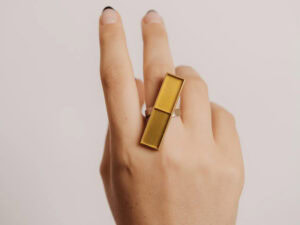
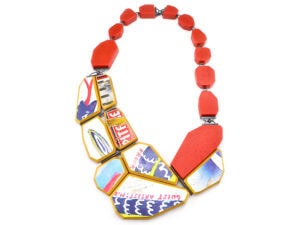
Nakaba bought this hand-carved resin bangle and ring on a trip to Croninger’s Brooklyn studio. “I have always loved resin and acrylic myself, and her studio was full of things that fascinated me and that I wished I could have owned,” he says. “She was a pioneer in elevating resin to the art level. I greatly admired her.”

Formula 1 cars and racing motorcycles are, to Nakaba, “the pinnacle of functional beauty. The design is pure performance. Every part has meaning.”
The Yamaha TZ-250 motorcycle that Nakaba once owned was built for racing, so it could not travel on public roads. He drove it on racetracks and private roads in the mountains.
“Starting the engine required me to push the machine myself and, once it had gathered enough speed, engage the gear to bring the engine to life,” he recalls. “The noise was tremendous, and everything became engulfed in smoke. Nothing could have been more exhilarating. I rode it only a few times a year, as a way of refreshing myself after completing a major piece of work.”
The motorcycle taught him “that true beauty can come from structure, from precision. Even in jewelry, I like when the construction itself becomes part of the aesthetic.”
Owning the motorcycle, if only for a few years, helped him to “truly absorb its essence,” he says. He needed to “live with it, and take it apart with my own hands.”
The same is true, he believes, for a work of art: Artists need to hold it in their hands to fully understand it. But possessing the entire object is not necessary, he says: “A broken fragment can communicate something profound to us. Studying works in museums is important, but I also believe there is real meaning in making something one’s own, even if only for three months before letting it go.”
The opinions stated here do not necessarily express those of AJF.
We welcome your comments on our publishing, and we will publish letters that engage with our articles in a thoughtful and polite manner. Please submit letters to the editor electronically; do so here. The page on which we publish Letters to the Editor is here.
© 2026 Art Jewelry Forum. All rights reserved. Content may not be reproduced in whole or in part without permission. For reprint permission, contact info (at) artjewelryforum (dot) org