A head of lettuce in a hotel sink; a vitrine tipped on its side, spilling red, yellow, and black beads across the floor; 20 robotic vacuum cleaners carrying jewelry through a gallery, indifferent to the visitors trying to catch them. What does any of this have to do with how jewelry is displayed?
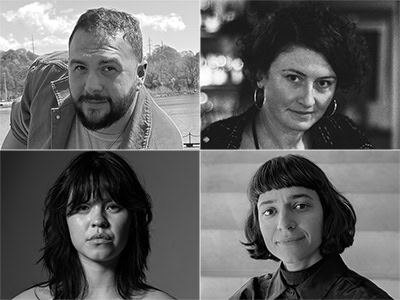
Everything, argue the four writers below—critics, curators, educators, and practicing artists—who each moved through Munich Jewellery Week 2026 unable to look away from display itself. They observe how one artist’s work can dominate a room, making everything else background; how an exhibition built from cinderblocks carries weight, literally and otherwise; how a funeral gallery does half the curatorial work on its own.
“On Display” is part of a series of essay collections responding to Schmuck and Munich Jewellery Week 2026. It stays with the work in the room—and everything around it, while the other volumes take up questions of commerce and ephemera. The writers here don’t always see the same things. But they share a conviction that display is never neutral. How a field shows its work says as much as the work itself. Even a head of lettuce in a sink. —Aaron Decker
By Elena Karpilova
In every project and exhibition, I am most interested in experimentation and in new—or at least attempted—ways of seeing an object, when curatorial work produces a fresh reading of what is on display. In reality, there are often quiet battles behind these seemingly conventional display cases—decisions and proposals we never get to see. For example, when Ruudt Peters curated Schmuck in 2006, he proposed lining the vitrines with textiles in different colors to create contextual backgrounds for the jewelry. The organizers declined, and the idea was never realized.
I would highlight the consistently experimental exhibition concepts of Prof. Karen Pontoppidan’s class at the AkademieGalerie, inside the Universität U-Bahn station. Past themes have included It’s the economy, stupid! (2025)—a paraphrase from Bill Clinton’s presidential campaign, used here to reflect on the value of artistic labor; Mystic Cubicles: Crafted Whispers (2024), co-curated with ChatGPT; and Elefant (2023), its floor covered with broken plates, like a smashed china shop.
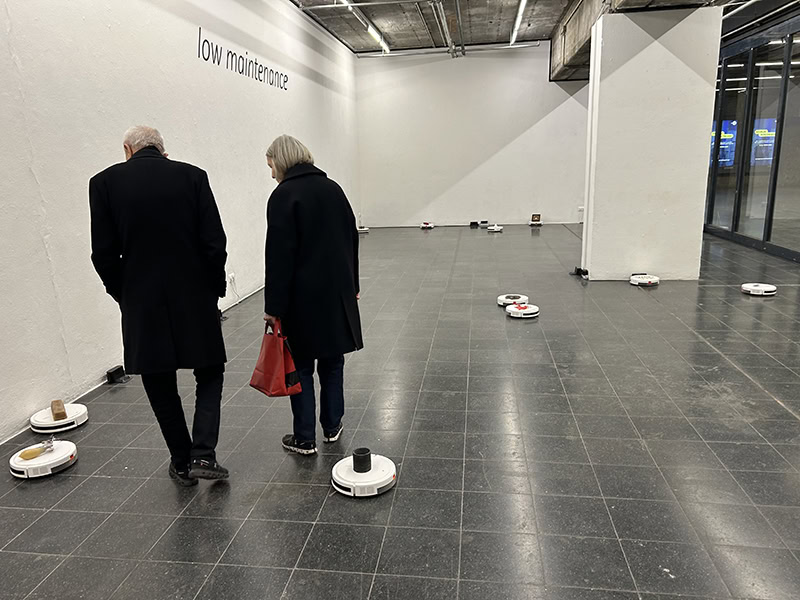
This year, the class exhibited Low Maintenance. There were no pedestals, tables, or vitrines. Twenty robotic vacuum cleaners moved autonomously through the space, each carrying a student’s work. Visitors could try to catch a piece—or dodge the erratic machines. Viewing the works closely, let alone trying them on, was nearly impossible. Although the devices detected obstacles, as a group they appeared chaotic, almost comically helpless. Perhaps this is what a world shaped by technology looks like. Tony Cragg[1] remarks, “Digitalizing everything is a kind of way of accelerating entropy.”
Sigurd Bronger has attended Munich since 2009. He notes that there used to be more solo exhibitions, which he found more satisfying and engaging. Such formats made it easier to grasp an artist’s approach, presentation, and the quality and ideas behind the work.
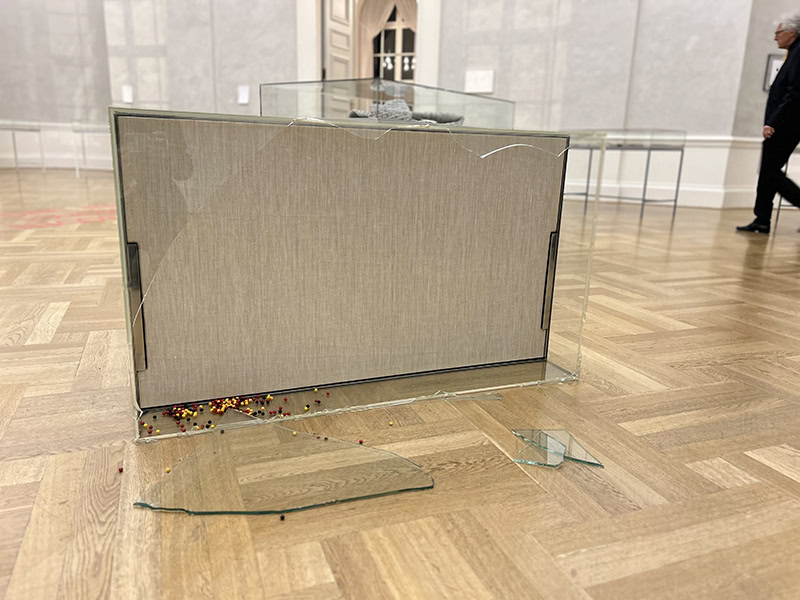
A compelling example of a distinctive solo exhibition this year was Suska Mackert’s Fugen (Joints). The show moved beyond jewelry as object. We see here interpretations of artifacts—everything from magazines to T-shirts—and virtually no jewelry. What strikes the viewer right away is the inverted display case at the entrance. It spilled red, yellow, and black beads—the colors of the German flag. Within the orderly neoclassical interior of the Bavarian Academy of Fine Arts, this gesture read as a rupture. “It addresses upheaval—a sense of being ‘out of joint,’” Mackert explained.
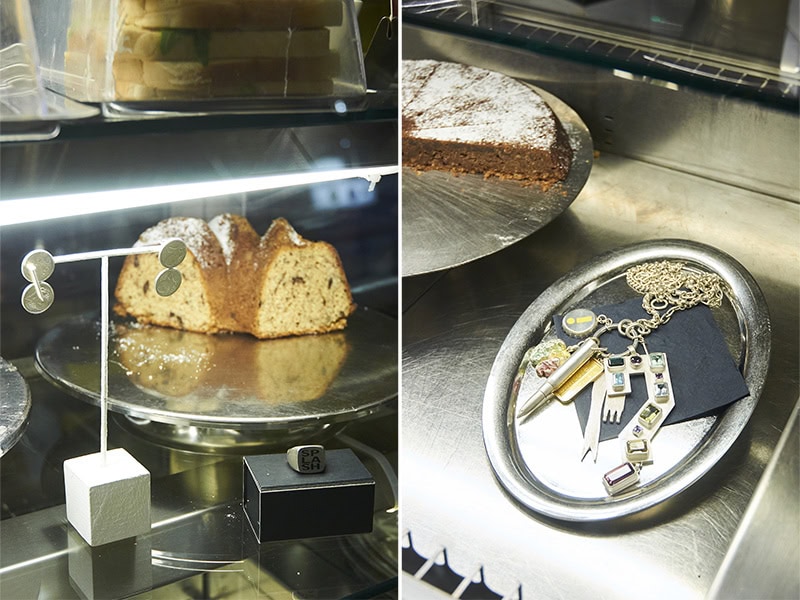
I was moved by the lyrical, open quality of the one-day exhibition Gabi Dziuba and friends… The Long Tomorrow, at Baader Cafe.2 The artist’s earrings and pendants nestled among cakes and pastries in the display case. Dziuba had been a regular at the café since 1985; it served as a meeting place for friends and colleagues. On the day of the exhibition, she sat at the bar, greeting visitors, having a drink, and sorting through colorful embroidered pouches for jewelry she had purchased at an Indian shop across the street.
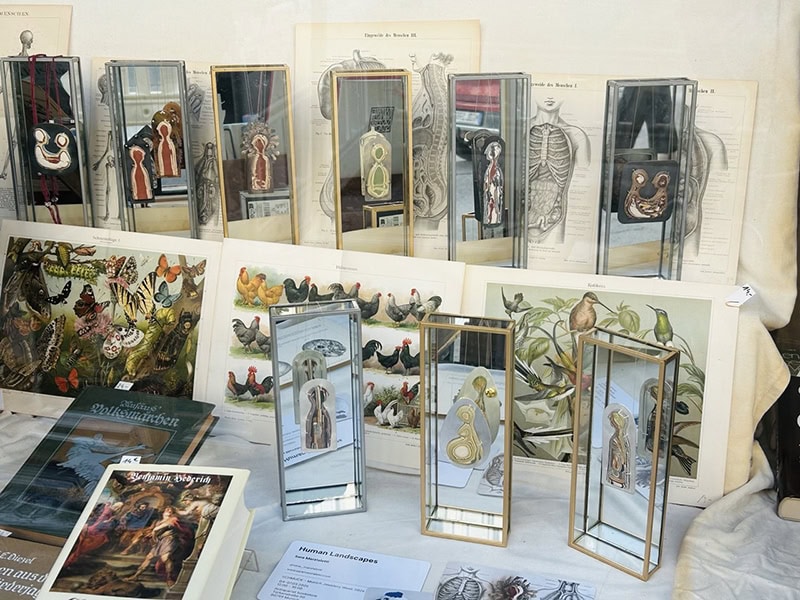
A deep connection to place also shaped Sara Marzialetti’s intimate solo show Human Landscapes, at Antiquariat Hans Hammerstein. Twelve brooches were placed throughout the shop, among the books. They were inspired by chromolithographs of the human body. Marzialetti, who holds a PhD in marine ecology, first discovered the bookstore 12 years ago during her initial visit to Munich Jewelry Week as a student. She frequently purchased anatomical prints there. For the Human Landscapes series, she returned to them as guides for carving the backs of the brooches—the inner organs affected by life experiences just as much as our outer shells.
Three exhibitions I planned to visit were closed during their stated hours. This raises questions about how audiences are treated. Ludwig Mies van der Rohe said, “Less is more.” Sigurd Bronger radically suggested that maybe a professional jury/curator team should pick out 20 good shows for jewelry week. Is quantity detrimental to quality? The eternal question. What you believe depends largely on how you choose to approach everything that takes place in Munich.
Munich’s events now resemble a postmodern text: open to multiple readings, layered with references, and offering varied exhibition formats. Each visitor must decide whether this is primarily a sales fair, an art event, or a global networking platform. ■
By Steven KP
Being asked to focus on just three exhibitions feels nearly impossible given how many I visited. On this, my second trip to Munich Jewelry Week, what stayed with me most was the pace, the constant movement across neighborhoods and venues. The week could feel scattered, yet that disorientation created a deeper immersion in the city. With so many pop-ups, institutional shows, talks, and events, having a reliable starting point, a kind of north star, became essential.
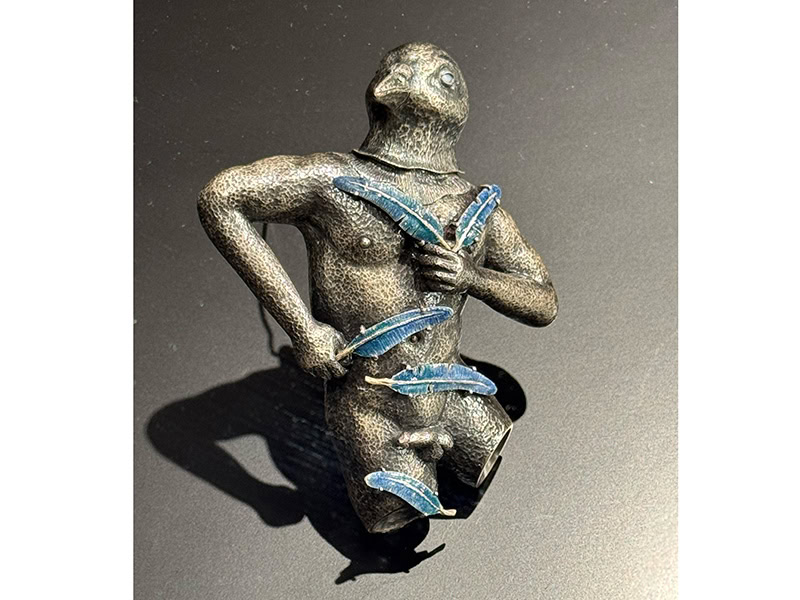
Galerie Handwerk’s annual exhibition serves exactly that role. It anchors the week, drawing a critical mass of visitors on opening night and sustaining that energy. Jet-lagged but energized, I entered this year’s Among Friends exhibition ready to be overwhelmed and to reconnect with artists, collectors, and gallerists from around the world.
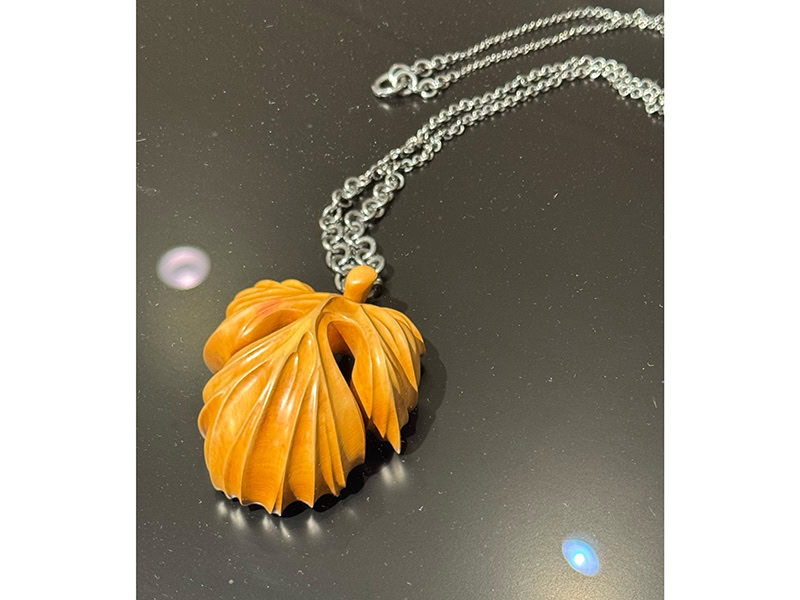
Curated from the collection of American collector and gallerist Helen Drutt, the exhibition presented exemplary works by German and American jewelers across generations. Upstairs, glass vitrines displayed American pieces; downstairs offered a survey of German art jewelry from postwar pioneers to contemporary makers. Each work strongly represented its maker’s practice, so much so that any single piece could merit extended discussion. However, the spatial separation between the two groups felt like a missed opportunity. Rather than emphasizing dialogue and exchange, the exhibition maintained a clear divide—Americans above, Germans below—limiting the potential for deeper cross-cultural conversation.
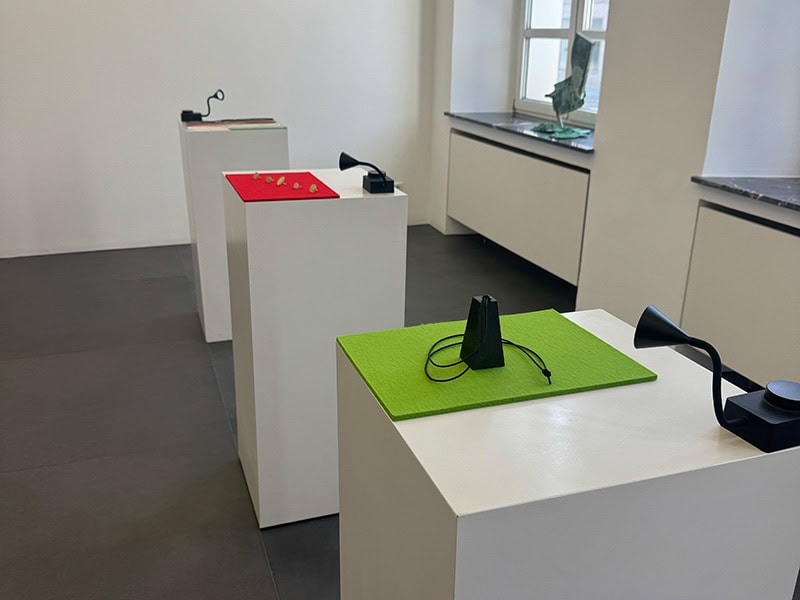
Another anchor in the city center is Galerie Wittenbrink, which once again presented Wittenbrink Zeigt Schmuck. The exhibition opened with works by Marianne Anselin, Florian Weichsberger, Reinhold Ziegler, Mirei Takeuchi, Henriette Schuster, and Benedikt Haener, each displayed on individual plinths with distinct color backdrops. Beyond this initial grouping, a dividing wall led into a second space dominated by Otto Künzli’s Gold Makes Blind, placed centrally and flanked by two of his flag works.
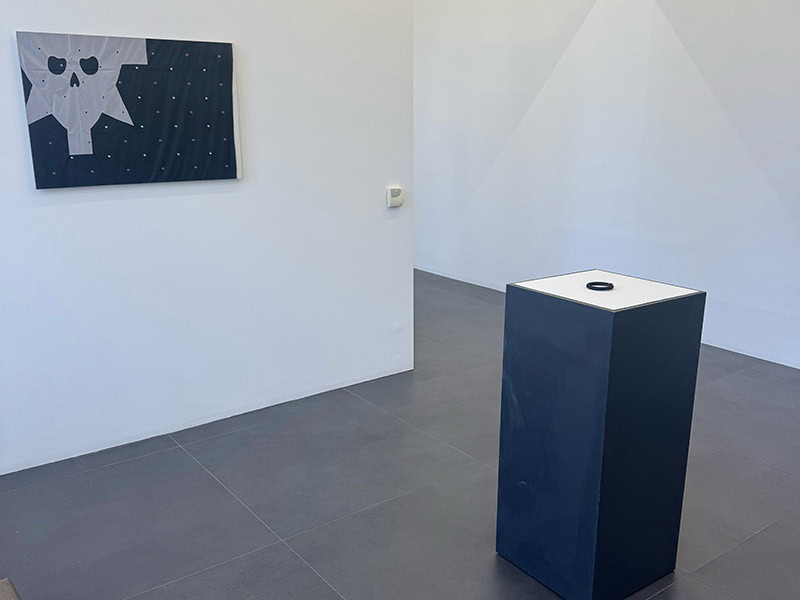
This curatorial decision reframed the preceding pieces in relation to Künzli’s work, effectively recentering the exhibition around it. In doing so, it diminished the autonomy of the other works, positioning them in orbit around Künzli’s legacy rather than allowing them to stand independently. Gold Makes Blind has been a touchstone in art jewelry’s critique of value for nearly half a century, but its continued centrality raises a question: Has this once radical gesture become its own kind of convention? If so, the exhibition suggests a field still grappling with how to move beyond it.
What excites me most about Munich Jewelry Week is encountering jewelry outside commercial or purely digital contexts. Exhibitions create immersive environments that situate work more meaningfully. The standout for me was Manon van Kouswijk’s exhibition at Tiger Room Galerie. Bringing together works from across her career, the show wove different series into a cohesive whole.
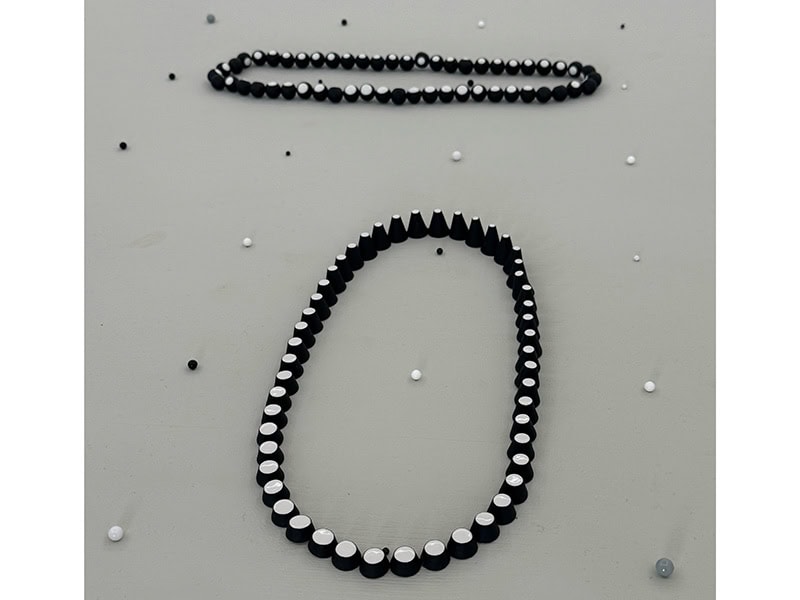
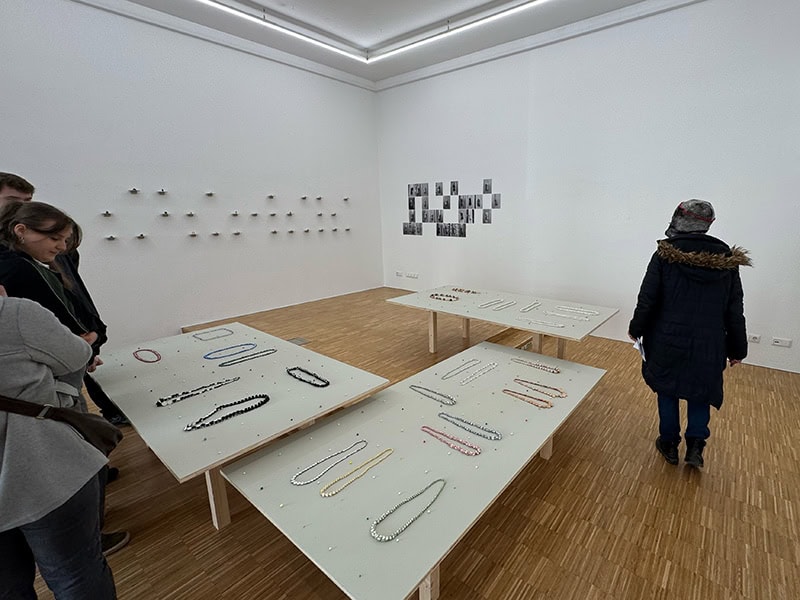
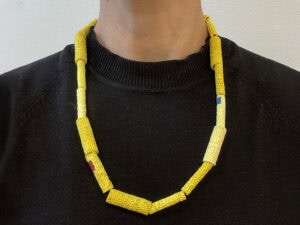
Beaded strands formed an abstract map across one wall, echoed by gestural pendants on another. At the center, a platform of necklaces unified the space, each piece marked by clusters of colored spheres that created a visual rhythm. The installation revealed a compelling balance between consistency and variation, allowing each work to resonate within the larger composition. It presented van Kouswijk’s practice as a fully realized world, offering a depth of understanding that no single piece could achieve. I left with a renewed appreciation for her work and its quiet but powerful coherence. ■
By Anneleen Swillen
I was curious to dive into Recover, while also feeling “phew, heavy.” I have little affinity for cinderblocks (can’t shake their construction-site connotations, seen a hundred times, too little character, and too much). A prejudice, before I’d even looked around: “another scenography built from whatever available.” (Resourcefulness, though, is one of MJW’s most interesting aspects.) Yet these blocks seemed different, strange. Some were partly wrapped in glossy, black cushions, others carried ornamental ceramic pieces. My first impressions turned out entirely accurate and completely wrong.
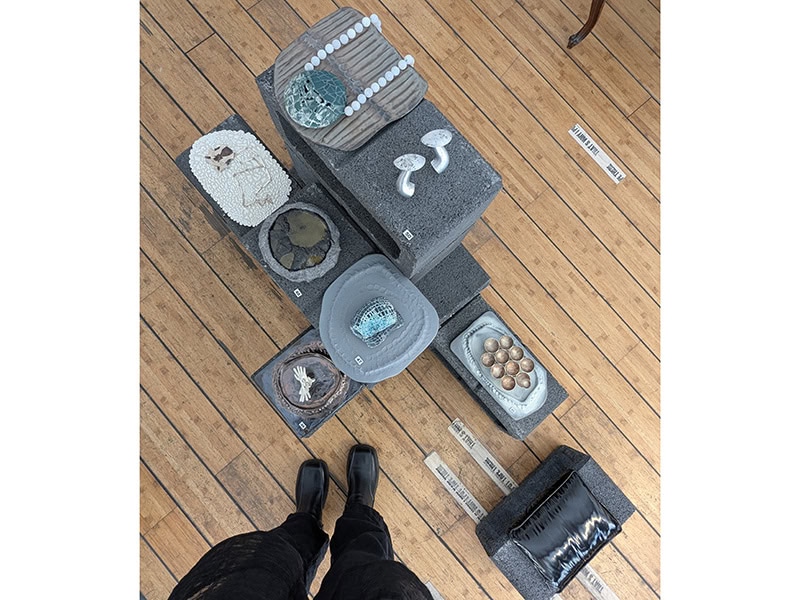
Starting from the idea that we all carry weight (environmental, political, personal, or other), Jana Brevick, Franziska M. Langheinrich, and Theresa Wingert, curators of Recover, set out to create a supportive, healing, elevating space. They explored what it means to tend to and recover something, and how upholstery, as practice, object, and metaphor, could do exactly that. Wingert’s ceramics and Langheinrich’s cushions are sculptural pieces that function both as adornment and platform, meant to hold space for the artists’ works, as Wingert explains. Rather than designing these pieces for a specific jewel, the artist-curators played with textures between hard and soft, heavy and light, utility and beauty to honor each piece. The show developed organically as the curators built on each other’s ideas, much like upholstery. “Not just an exhibition of work, but a conceptual container,” says Wingert.
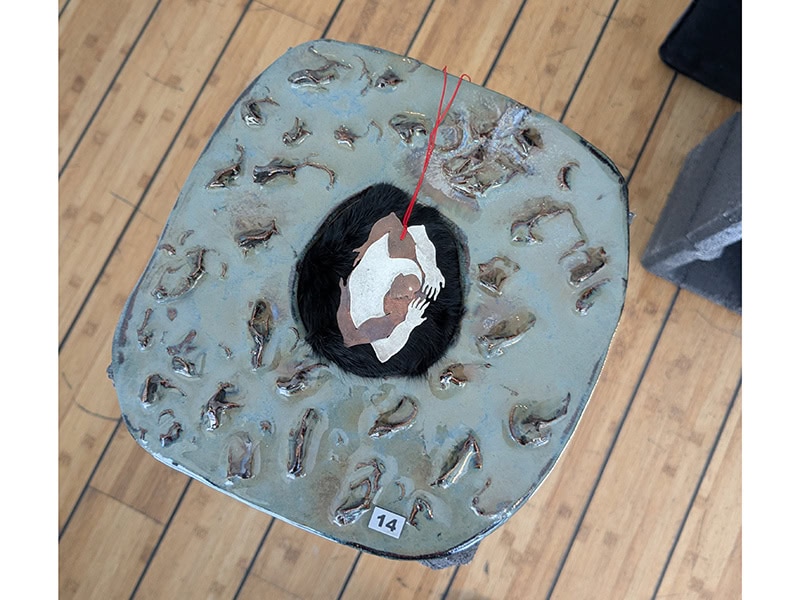
My attention lingered at the constellations of blocks, upholstery, and jewelry; and whether these become, together, a new work. Although I find that prospect genuinely interesting, I also wonder how the dozen other participating artists might feel, as one looked at the jewelry largely in relation to everything else. But isn’t one of jewelry’s most fascinating features that it always enters into dialogue with all kinds of bodies, human or otherwise? The upholstery is a bold and careful curatorial choice. A quietly powerful message for MJW more broadly.
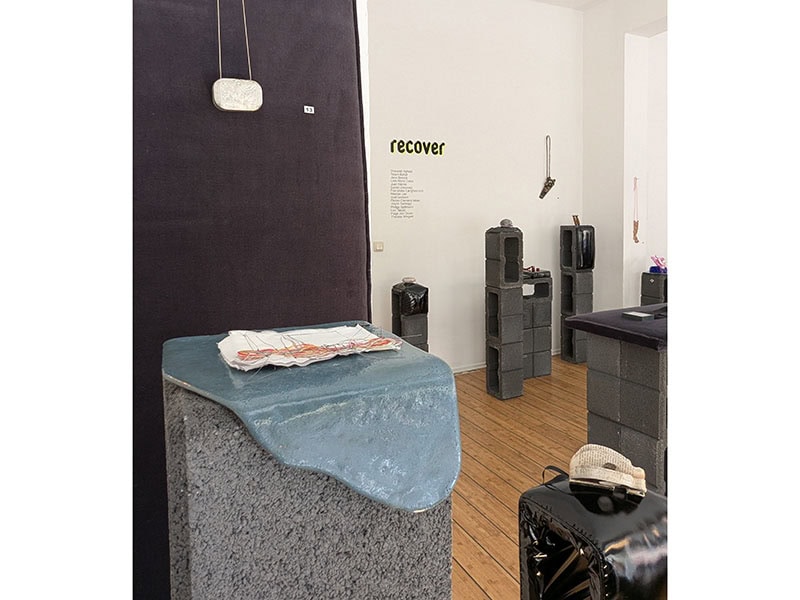
Walking through Recover, I feel the weight, but also the tenderness and awareness that run through the installation. A dialogue between heaviness and relief, embedded in the unseen gestures. Like carrying and placing 80 concrete blocks. “We do the labor, and somebody else can float away lighter,” as Wingert puts it. When does a show actually begin? And what do you carry with you, long after? Each walk-through enriched the exhibition, and my experience of it. First glances and lasting impressions are rarely the same. Slow down. Let an exhibition unfold and resonate. An attentive visitor co-carries the exhibition, just as the exhibition carries the work.
Foreign Bodies was sharp.
A black pedestal, with a triangular surface, pointed directly at the visitor upon entering. An immediate embodiment of the exhibition’s theme.
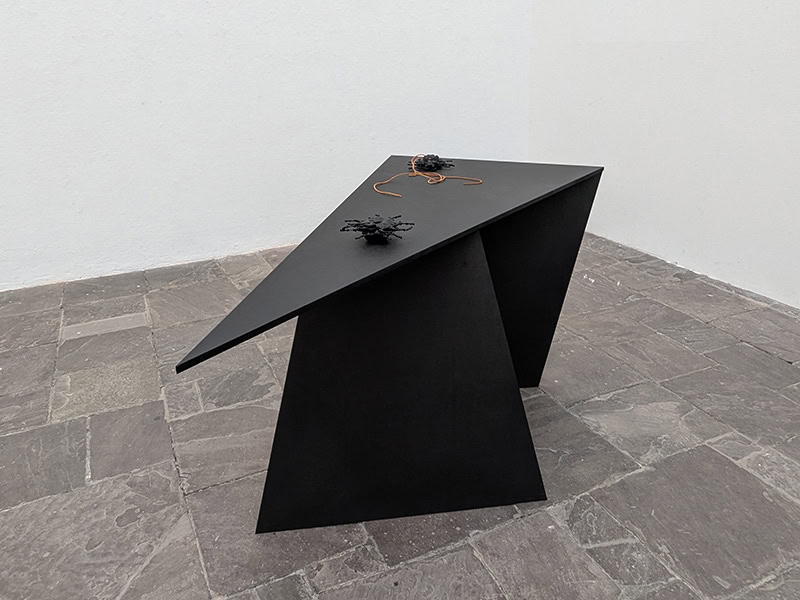
Sculptural plinths constructed from flat planes stand firmly yet mysteriously, like materialized shadows, throughout the Kunstpavillon’s expansive space. Graphic and angular, their forms reveal different silhouettes with the viewer’s movement.
A group of all-female artists, brought together by Jianling Zhang, had been working on the theme of “foreign bodies” for several months. A medical term, yes, and possibly threatening or uncanny, but also something cherished, nurtured. Their research culminated in an exhibition, a website, and a book. The latter, created by Hyewon Jang, is an index of poetic texts written by the artists throughout the project’s duration. A triangular shape that, when opened, unfolds from a spike into a circle.
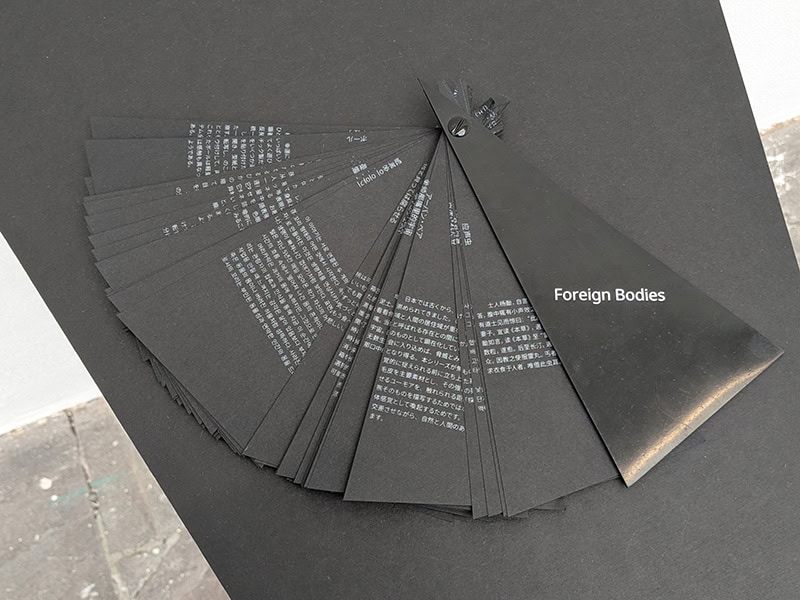
The displays were designed in response to the book, and assembled on-site by the group. The combination of installation, webpage, and book, and the commitment of people who have genuinely spent time with a question together, all carried the work with quiet force, contributing to a sense of “doorleefdheid.”[2]
This is the second edition of Foreign Bodies, revisiting the theme with a new group. It will be interesting to follow where it goes from here.
Going through my photos, I notice that the one I made just before visiting the show was a tray of pearls overflowing in a shop window. Foreign bodies can, indeed, be tremendously beautiful. ■
By isabel wang pontoppidan
To me, the most appealing part of Munich Jewellery Week is seeing the different types of locations turned exhibition space. The event boasts over a hundred exhibitions, and most of the shows will not take place in traditional gallery spaces. The norm in Munich is to see jewelry installed in cafes, hotel lobbies, pharmacies, furniture shops, the list goes on. The audience does not expect the false neutrality of the white cube. Instead we are curious to see how jewelry and space will interact.
Certainly, some shows make the best of the Munich exhibition model while others make you long to see the work in a plain white box.
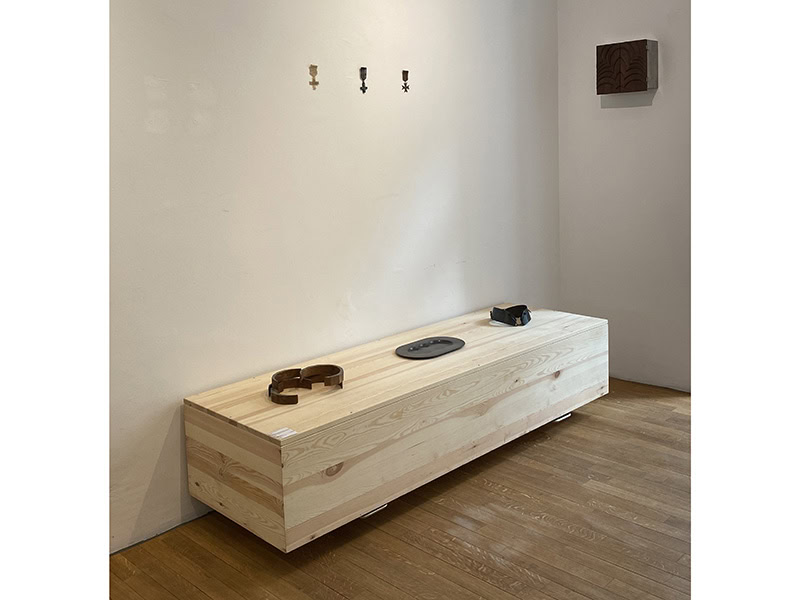
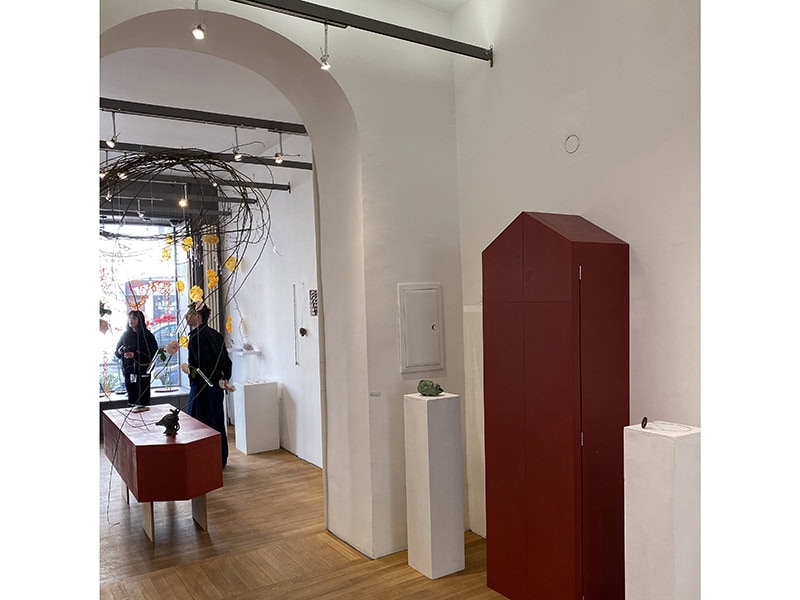
Although it feels incestuous to write about an exhibition I was participating in myself, I do nonetheless want to mention the show CONTENTS. Featuring jewelry and objects by 10 emerging makers, the exhibition was curated by Miles Robinson, Lili Barglowska, Zoe Clark, and Bette Nunneley, and shown in Weiss über den Tod Hinaus, a funeral gallery. The catalog featured black and white oval-shaped photos of each artist, reminiscent of obituary images. This playful embrace of the space, with the work commingling with caskets and surrounded by elaborate floral decorations, allowed for a subtle exchange between the objects and the weight of their context. Death, materiality, and beauty are all ideas that undergird this exhibition without needing to be explicitly stated.
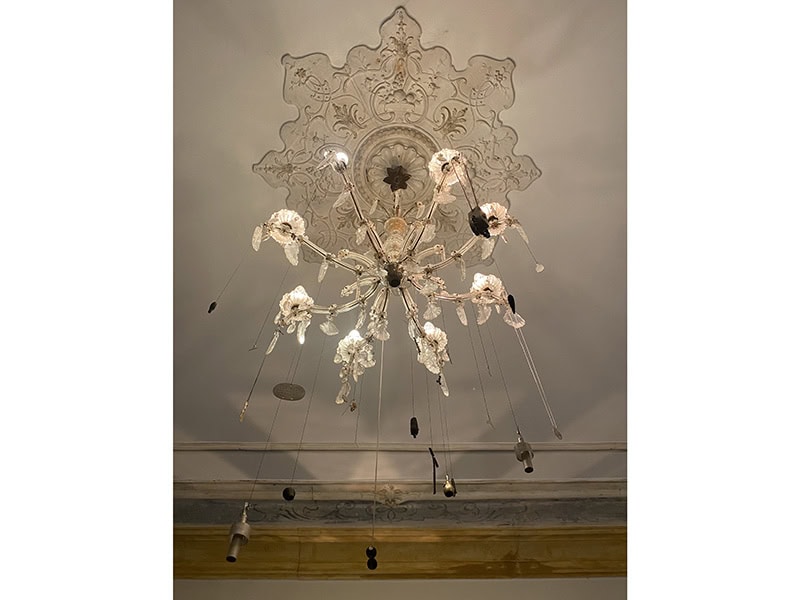
An extremely charming location highlight was Room No. 13 + Associates, exhibited in hotel rooms in Hotel Mariandl, showing work by Julika Müller, Ludwig Menzel, Helmut Menzel, Bruna Hauert, and Moritz Ganzoni. Built in the early 20th century, Hotel Mariandl is protected with its aesthetics and materials intact in all of their Belle Époque glory. Think stucco frills, worn-down herringbone parquet, antique furniture, and chandeliers everywhere. Each of the five artists was allocated one room, in which they organized the presentation of their work amongst its furnishings, creating an otherworldly and strange atmosphere.
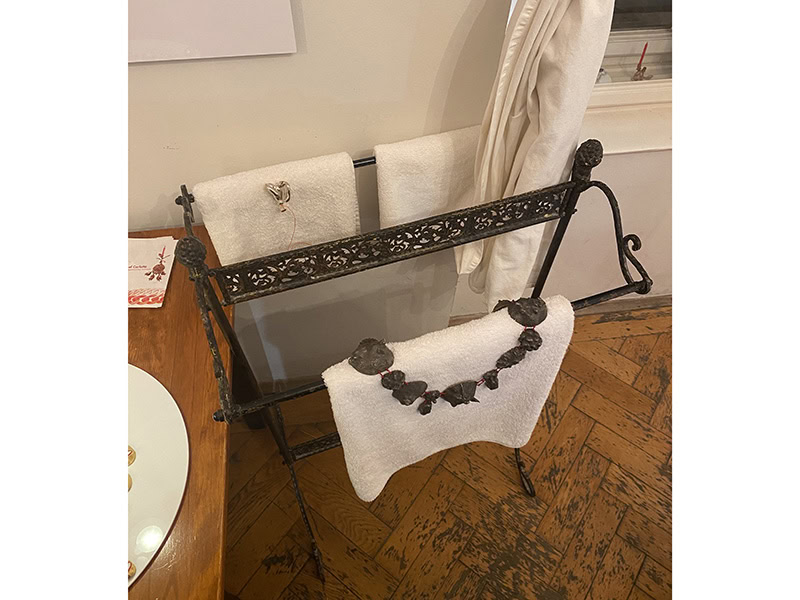
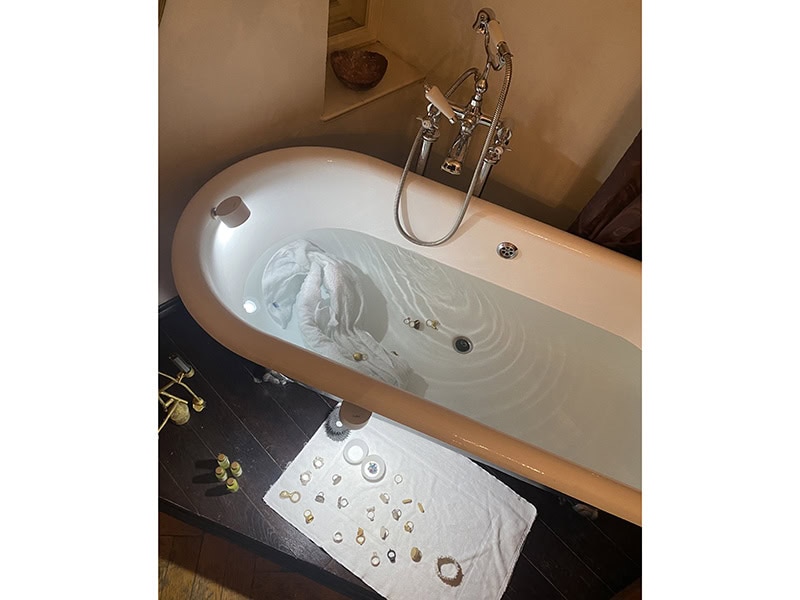
The result contained many surprising elements: a head of lettuce in the sink, a dripping bath tub, stuffed sheep-headed creatures in matching tracksuit jackets in the bed. There was jewelry lying on beds, sitting in cupcake liners on a tray, hanging from chandeliers, draped across an antique towel rack, and soaking in the tub. Certain arrangements gave them a surprising anthropomorphic quality, as if the jewelry itself had become the hotel guest. The artists were not just using the rooms as exhibition spaces, but also staying in them throughout the week. At night, they would take down their work and crawl into the beds, only to get up the next day and rearrange everything. Truly a phenomenon that feels unique to MJW.
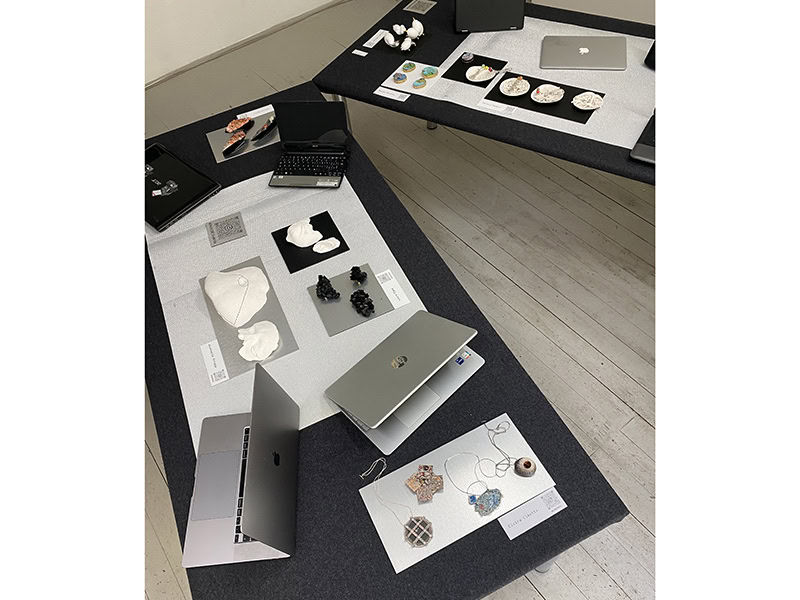
In Werkschau-Galerie für Objekte und Bilder, I found the exhibition truth.exe, curated by Raquel Bessudo and Letizia Maggio. A group exhibition collating the work of eight jewelers, it showed the work displayed on tables amongst an array of laptops, brands varying. I spoke to the curators, and after listening patiently to their musings on fiction and post-truth, I finally ventured to ask about the laptops on display—what was their function? The response was something along the lines of “.exe is a file extension used in computers … and truth is like a file: it can be opened, transferred, and it can be corrupted.” A salient reminder that jewelers are not exhibition designers or art historians. We’re all working with what we’ve got. ■
[1] An Anglo-German sculptor known for his contemporary works: https://en.wikipedia.org/wiki/Tony_Cragg.
[2] This Dutch term has no direct English equivalent that captures its multiple meanings. It speaks to lived experience and embodied knowledge. A kind of deep, inner, wisdom that grows over time, through repeated and personal encounter.
The opinions stated here do not necessarily express those of AJF.
We welcome your comments on our publishing, and will publish letters that engage with our articles in a thoughtful and polite manner. Please submit letters to the editor electronically; do so here. The page on which we publish Letters to the Editor is here.
© 2026 Art Jewelry Forum. All rights reserved. Content may not be reproduced in whole or in part without permission. For reprint permission, contact info (at) artjewelryforum (dot) org