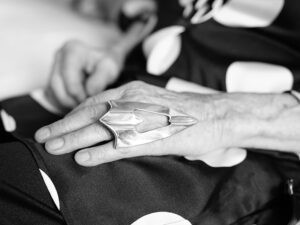
Luca Adie loves words.
As a professional translator, he hunts for just the right one when translating books from French to English, or into one of the many other languages he speaks.
As a jeweler, Adie carves words into rings, brooches and other pieces. A series of chunky, colorful rings carry messages such as “Leave Now,” “WTF,” and “I ❤️ Dick.”
“I want to work against convention. I want to poke, to be provocative,” says Adie, who grew up in Glasgow, Scotland, and now lives in Munich. He formerly was known as Paul Adie, but recently changed his first name to Luca.
The sentiments on his jewelry come from many sources, from pop culture to nostalgic memories of his life. He made a necklace that says “Abracadabra” (from the Lady Gaga song) and adorned another with the words “Ding Dong,” from a reality TV show in the UK. His work raises questions about masculinity, sex, and power structures.
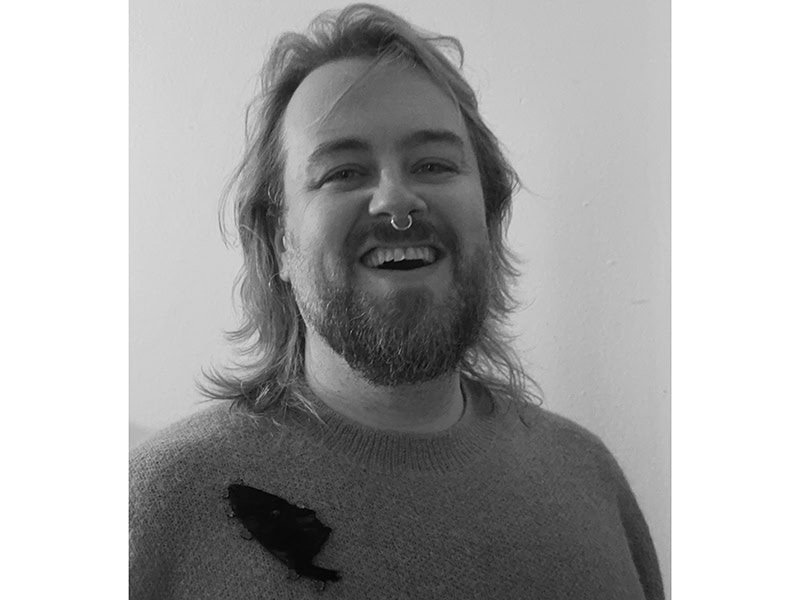
As a teenager, Adie wanted to attend art school, but a “B” in art design (alongside “A”s in his other subjects) led him to study Russian and Spanish at the University of Strathclyde, in Glasgow. While working as a translator in Barcelona, he discovered the contemporary jewelry program at Escola Massana and thought, “I have to do it now.” He later completed his studies at Munich’s Academy of Fine Arts. In 2025, he was an artist in residence at the renowned Idar-Oberstein campus of Trier University of Applied Sciences.
Unlike some makers, Adie loves to wear jewelry.
“It’s this small thing that makes you feel better,” he says. “When you put it on, you smile.”
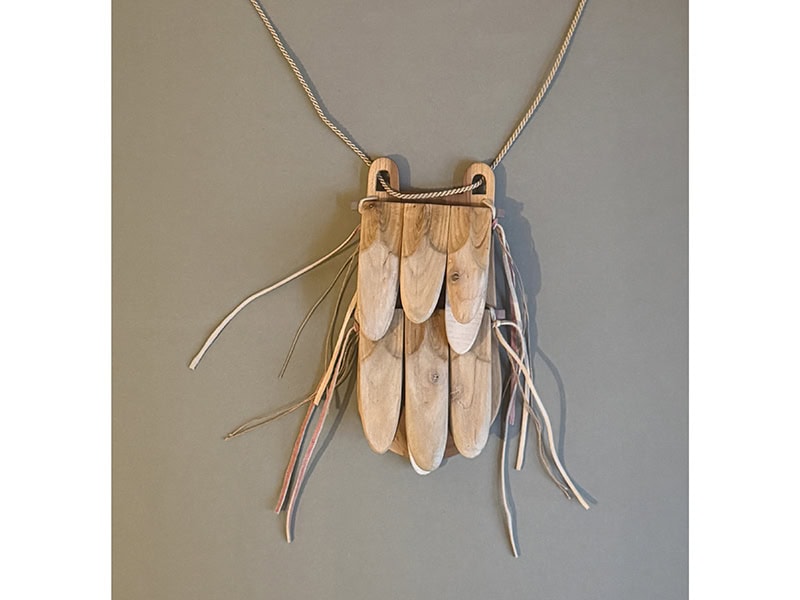
Much of the jewelry created by Estonian artist Ketli Tiitsar is made from wood gathered at her childhood home and from her great-grandparents’ garden. Preparing wood with her hands harkens back to her childhood in a suburb of Tallinn, where her daily chores included collecting wood and stripping its bark to make kindling for the wood-fired stove that heated her home.
Today, after she collects wood, she dries, saws, sands, and assembles it for use in her necklaces, brooches, and other pieces. The process helps her connect with memories of her childhood and with the spirit of her community.
OTHER ARTICLES IN THIS SERIES
A Peek into the Collection of Helen Britton
A Peek into the Collection of Tanya Crane
A Peek into the Collection of Atty Tantivit
A Peek into the Collection of Steven KP
“I love the idea that the eyes of my relatives or people dear to me have witnessed the growth of these trees,” she says. “They have taken care of this material.” And when the life of the trees ends, the wood gets another life in her jewelry, says Tiitsar, who won the Annual Prize of the Cultural Endowment of Estonia in 2018.
Adie’s necklace, from the series Shelter, is composed of apple and lilac wood, leather, paint, and silver. He adores how the elements move as he wears it. For Tiitsar, the sound the necklace makes recalls overgrown lilacs beating against an old home, or clothespins knocking against a sauna house.
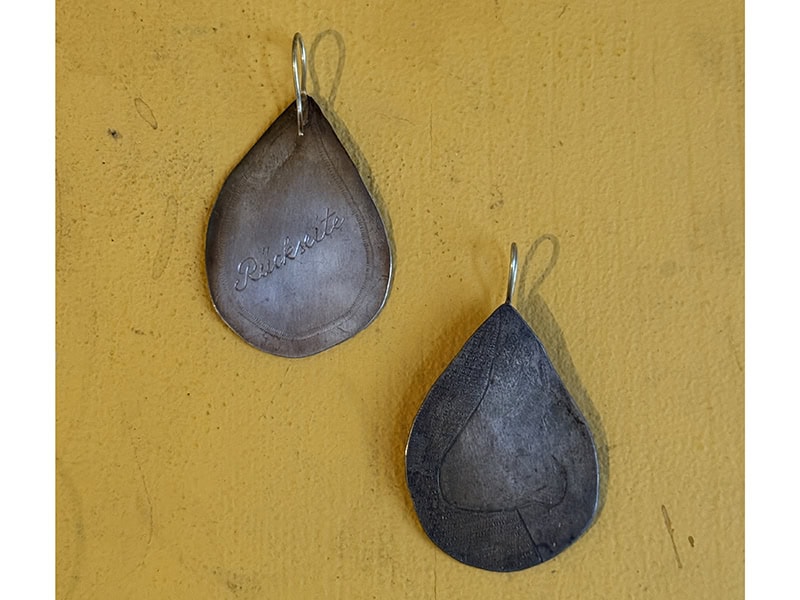
Adie studied with the Danish artist Karen Pontoppidan at the Academy of Fine Arts in Munich, where she has been the head of the jewelry and hollowware department since 2015. These silver earrings are among the first earrings that Pontoppidan ever made, Adie says.
The earrings are carved with the outline of a nose. Written on the back are the words “the backside” in German. “They make me laugh,” he says. “It’s just kind of stupid to put a nose on an ear. It’s kind of daft.”
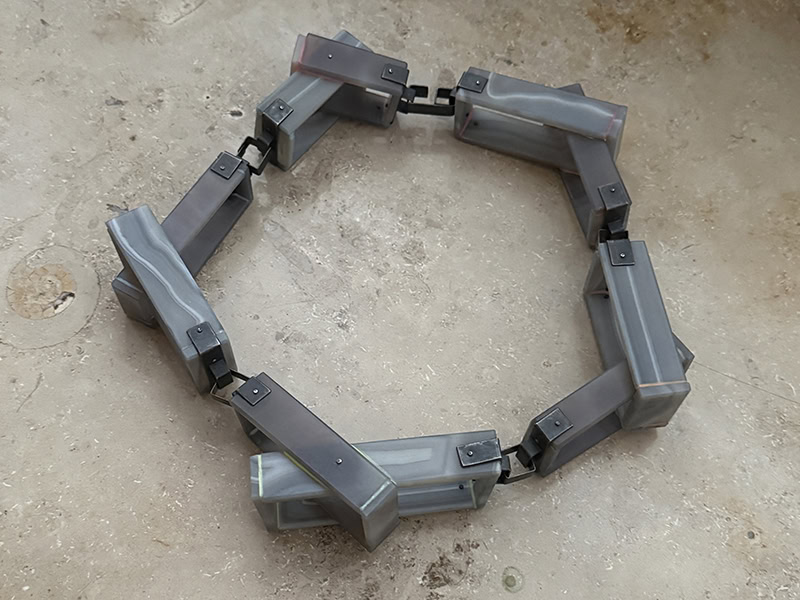
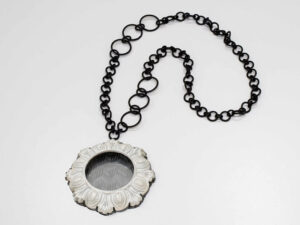
“It’s a piece I would wear to the opera,” Adie says of the necklace above. “It really makes you stand upright. You’re aware of your body.”
The necklace’s chains, which are agate, were carved by German jeweler Julia Obermaier and are connected with silver. Obermaier is known for her work as a lapidary artist, revealing the beauty of stones such as agate and rock crystal. She recently received the “Young Ambassador” award from Homo Faber and the gold prize at the Cheongju Craft Biennale.
Adie selected this piece during a visit to Obermaier’s studio in Kempten, Germany, swapping it for a large pendant in mild steel he made, one of three works presented when he was a finalist for the Loewe Craft Prize in 2018. Adie later painted over it in shades of rose, white, and green and titled it In with the New.
The agate necklace, which is made out of two different stones, has shades of red, green and yellow from resin and pigment. “It’s very heavy,” Adie notes. “You can’t wear it for dancing at a club, but I love this piece.”
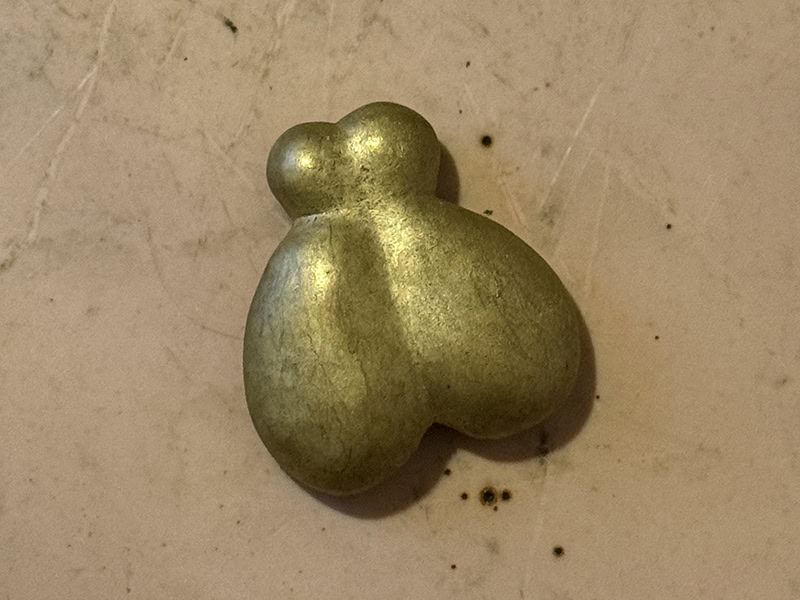
“I shouldn’t have bought this piece because I had a budget, but I just said it’s now or never,” Adie recalls of purchasing this Peter Bauhuis brooch from Galerie Biro, in Munich.
Adie wanted a work by “a master of the craft,” he says, and this was “the largest gold-colored piece that I could get.” It is made of yellow bronze, an alloy of copper, tin, and zinc that is also known as orichalcum.
The artist, who is German, used wax casting to make this piece and many others, which have a rough surface to reveal the ghosts of the wax models they came from. Bauhuis was awarded the Danner Foundation Prize of Honor in Munich in 2020, and the Bavarian State Award for Design and Craftsmanship in 2023.
To Adie, the brooch’s shape depicts “testicles or bosoms, but I have not had a conversation with Peter about what it means.”
Bauhuis describes the piece as “a very abstract fly.” His previous work depicted “prehistoric Venus figurines and their voluptuous forms. Some see a connection,” he says. Adie’s piece is part of the series Flies, which Bauhuis created during the Covid pandemic.
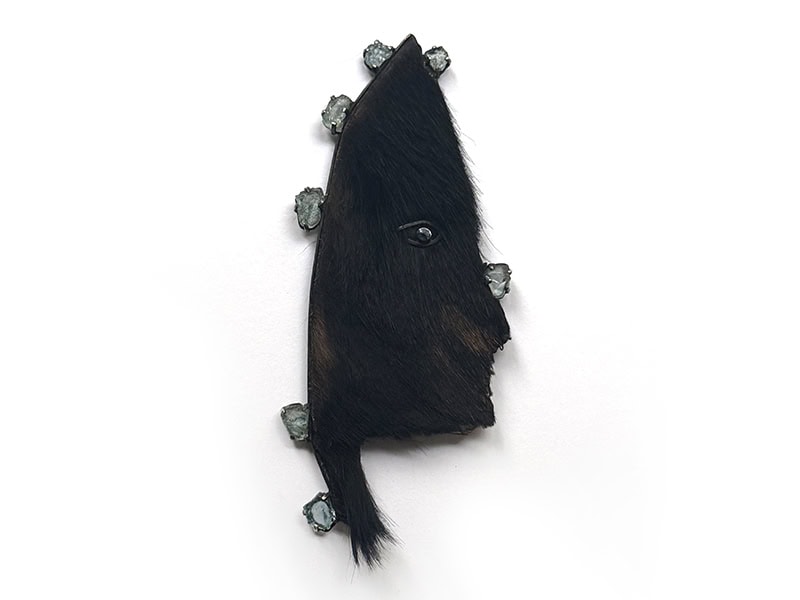
Lord is the title of this piece by Estonian artist Kadri Mälk, which is made from moleskin. “There was a burglary in her workshop,” Adie says. “They took all the precious material, but they left the moleskin coat from her grandmother.” Mälk used a piece of the coat to make this brooch, which has a sapphire eye and aquamarine stones set around its border.
“It’s a very precious piece,” Adie says. “It’s mystical, like Kadri.”
Mälk, who was a professor in the jewelry department at the Estonian Academy of Arts, died in 2023. In a 2021 interview with Klimt02, she said, “From a rational point of view, jewelry is totally pointless, just an expense. Just like monuments, precious stones. The rational world is not going to collapse if we did not have jewelry. But we nevertheless need it. Its radiance changes our mood.”
The opinions stated here do not necessarily express those of AJF.
We welcome your comments on our publishing, and will publish letters that engage with our articles in a thoughtful and polite manner. Please submit letters to the editor electronically; do so here. The page on which we publish Letters to the Editor is here.
© 2026 Art Jewelry Forum. All rights reserved. Content may not be reproduced in whole or in part without permission. For reprint permission, contact info (at) artjewelryforum (dot) org