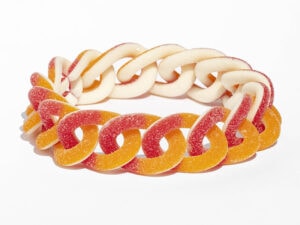
Throughout history, jewelry has played a clear role in communication. Necklaces, rings, and brooches helped show someone’s place in a group, their social class, or religion. Jewelry, in other words, has always helped express identity. Ethnographic museums have collected and shown jewelry as part of the material culture of different people.
But there is another story. After World War II, a new kind of jewelry appeared in Europe. Cities had been destroyed, and workshops were gone. The meaning of luxury had changed. In schools, fine arts and crafts were brought together. Artists were now both thinkers and makers. While other crafts moved toward design or concept, jewelry stayed close to the body—it still had to be worn. In the 1950s, jewelry became a new kind of art.
At the same time, scholars and curators started to separate artist-made jewelry from traditional or ethnographic jewelry. This division could be seen in museum displays and writings. Contemporary jewelers wanted to be part of the art world. To do that, they distanced themselves from decorative or “primitive” jewelry. In Western views, jewelry had long been seen as less important than painting or sculpture. The history of contemporary jewelry began by fighting that idea.
Today, museums like the Victoria & Albert, in London, include contemporary jewelry. But they often show it as part of a timeline, placing it next to ethnographic pieces instead of in conversation with art.
Even now, artist-made jewelry is young in the world of art and collectors. Because it’s still outside the mainstream, it can keep a sense of freedom. This freedom gives it space to hold onto what Walter Benjamin[1] called an “aura.” In the essay “The Work of Art in the Age of Mechanical Reproduction,” he wrote:
“The uniqueness of a work of art is inseparable from its being embedded in the fabric of tradition… An ancient statue of Venus stood in a different traditional context with the Greeks, who made it an object of veneration, than with the clerics of the Middle Ages, who viewed it as an ominous idol. Both of them, however, were equally confronted with its uniqueness—that is, its aura.” (Benjamin, 1969)
Rethinking “Ethnographic”
The word “ethnographic” is often associated with objects from the past or from distant cultures. However, since the mid-20th century, ethnography has also evolved into a method for studying present-day communities and cultural practices. When we speak of “ethnographic jewelry,” we refer not only to traditional artifacts, but also to works created by contemporary Indigenous artists. These categories are not in opposition; rather, they exist along a continuum of cultural expression.
Many writers have talked about contemporary jewelry. Some write its short history. Others try to connect it to art or design. But maybe we can look at it another way—not as a timeline, but as a network, as a space where it can meet with historic and ethnographic jewelry. They all deal with identity, ritual, material, and function. They can grow together.
My appreciation for ethnographic jewelry doesn’t stem from a desire to romanticize or exoticize it, but rather from its inherent meaning. These pieces are created to be worn and used; they carry symbolic value. They aren’t shaped by trends or commercial markets, nor were they ever intended for sale in galleries.
As Ticio Escobar[2] writes:
“A portion of art production is attributed a certain aura because of its position in the already established circuits, and another part gets an aura by belonging to other cultural systems such as the Indigenous ones, which make some objects and events exceptional as they are associated with diverse social practices, beliefs, and values.” (Escobar, 2021)

New Dialogues in Old Spaces
Many universities offer jewelry programs. Exhibitions and biennials are common across Europe and the Americas. But most of the audience is still made up of jewelers and students. The field hasn’t fully reached the larger art world.
Jewelry is usually shown in spaces for crafts, not in main museum galleries. It’s rarely shown next to painting or sculpture. The gap between “fine art” and “applied arts” remains.
But what if we changed that?
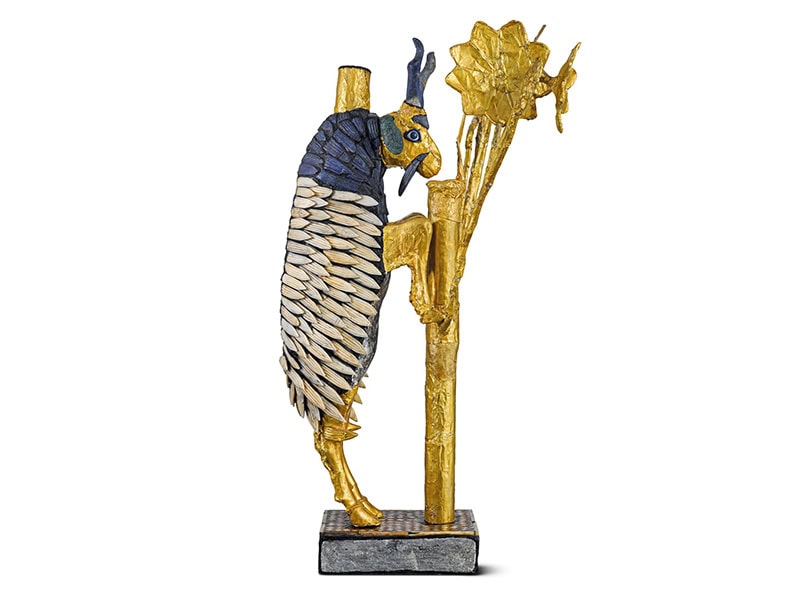
Imagine the Middle East gallery at the Penn Museum, in Philadelphia. There, you’ll find gold jewelry from the Royal Cemetery of Ur, including a piece called Ram in the Thicket, made in 2450 BCE.

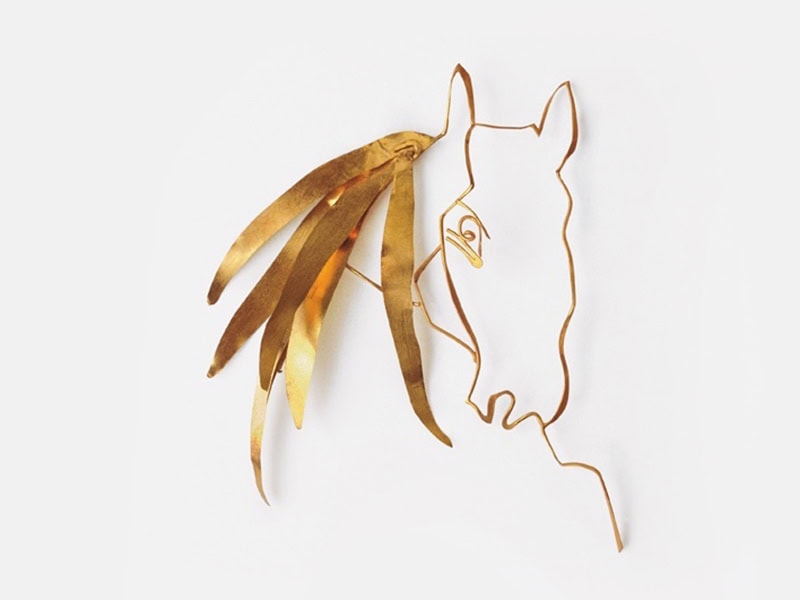
Across the same city, in a private home, Helen Drutt has a large collection of contemporary jewelry. Many pieces are by Manfred Bischoff. What would happen if these two collections met?
Could the ancient goldsmiths speak to Bischoff? Could their shared material—gold—open new understanding?
Bischoff once said:
“Everyone who is creative should search for his adequate material. And in my case it’s … high precious gold. … All the shit you see in the world that is called gold is 18K. The dealers of the jewellery industry are making their money by calling it gold. … I cannot use pure gold, because I need [a] certain kind of rigidness for being able to work with it. So I have to come down to 22K gold. That is my sacrifice. Gold for me is much to do with the past, with older generations, and one should not make money from this.” (Bischoff, 2011)
He respected the material, just as ancient jewelers did. For both, gold was not just valuable—it was full of meaning.

Contemporary Voices, Ancient Threads
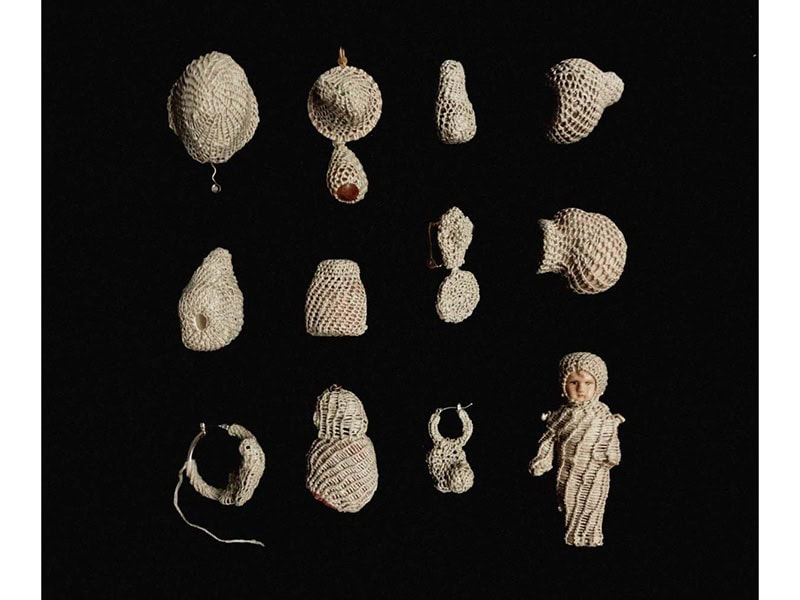
Juliana García Bello, an artist from Argentina, grew up in Tierra del Fuego. She learned basket-making as a child. Now she uses that technique to wrap inherited objects with thread. Her jewelry connects memory and place.
Célio Braga, a Brazilian artist living in the Netherlands, made a series of ex-votos between 2006 and 2007. Made of porcelain and textile, they reflect the AIDS crisis. They are tied to Brazil’s tradition of offering devotional objects. His work links personal and cultural memory.
Both artists show how jewelry can carry emotion, history, and care. Their work belongs to the same human need to give shape to what matters.

Toward a Shared Future
Contemporary jewelry is ready to have real conversations with ethnographic and historical jewelry. This is not about deciding which is better. It’s about seeing how they all express something poetic and political.
The German art historian Aby Warburg created the Mnemosyne Atlas, a project that placed images from different times and cultures side by side. He believed artists must either distance themselves from the past or give it new life.
“The Mnemosyne Atlas does not intend to be anything other than an inventory of preexisting forms, which demanded from the artist either distancing or reanimation.” (Warburg, 1929)
Let’s imagine a map like that, but for jewelry. A way to trace gestures, uses, and meanings across time and culture. A space where contemporary and ethnographic pieces meet as equals.
If we could turn this idea into something real, we might draw an open map—a way to see how jewelry speaks across time and cultures, from the ethnographic museum to the world of contemporary art. Including pieces considered ethnographic into exhibitions of contemporary jewelry and into its academic discourse would enrich the conversation. This new perspective would also generate academic writings to help educate new jewelers with broader references.
Ethnographic or historical museums are undergoing significant changes. Decolonization is on the political and cultural agenda in many parts of the world. Why not take advantage of this change to display ethnographic and contemporary jewelry together in exhibitions, creating a coexistence between them? Now that we have secured a place of belonging in artistic circuits, it is time to question the analytical perspective, the references in which we frame jewelry made by artists, and the ways in which we display these objects.
Bringing these objects together would open new conversations, connecting what has been made by many hands before us with what we create today. It would also help new jewelers understand their practice within a larger story—one that includes many voices, materials, and traditions. Displaying ethnographic and contemporary jewelry together would give the field historical significance. It would expand the references that jewelers, especially jewelry students, draw from. It would bring a new audience to contemporary jewelry.
Bibliography
Benjamin, Walter. The Work of Art in the Age of Mechanical Reproduction. Translated by Harry Zohn. New York: Schocken Books, 1969.
Bischoff, Manfred. “Manfred Bischoff.” Current Obsession, 2011. https://current-obsession.com/manfred-bischoff/.
Escobar, Ticio. The Invention of Distance. Translated by Erica Segre and Oscar Guardiola-Rivera. London: Bloomsbury, 2021.
Warburg, Aby. Der Bilderatlas Mnemosyne. Edited by Martin Warnke and Claudia Brink. Berlin: Akademie Verlag, 2000. (Original project, 1929.)
[1] Benjamin (1892–1940) was a German philosopher, cultural critic, media theorist, and essayist.
[2] Escobar is a Paraguayan museum director, former Minister of Culture, academic, author, and lawyer.
The opinions expressed here are the writer’s alone, and do not necessarily express those of AJF.
We welcome your comments on our publishing, and will publish letters that engage with our articles in a thoughtful and polite manner. Please submit letters to the editor electronically; do so here. The page on which we publish Letters to the Editor is here.
© 2025 Art Jewelry Forum. All rights reserved. Content may not be reproduced in whole or in part without permission. For reprint permission, contact info (at) artjewelryforum (dot) org