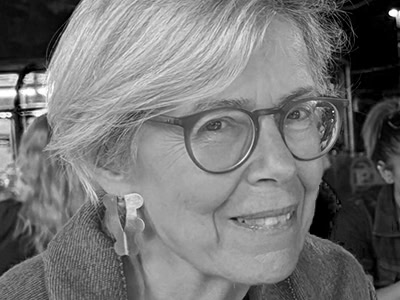
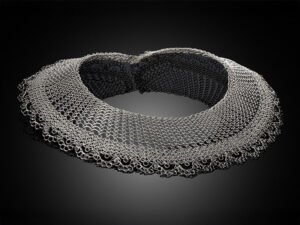
Jürgen Eickhoff’s recent exhibition Netzwerke/Networks, at Galerie V&V, has barely faded from memory, yet now only his works and our recollections remain. The exhibition’s subtitle, Boundaries: top and bottom, inside and outside, now resonates as an exploration of the possible. Jürgen has since crossed an irreversible boundary.
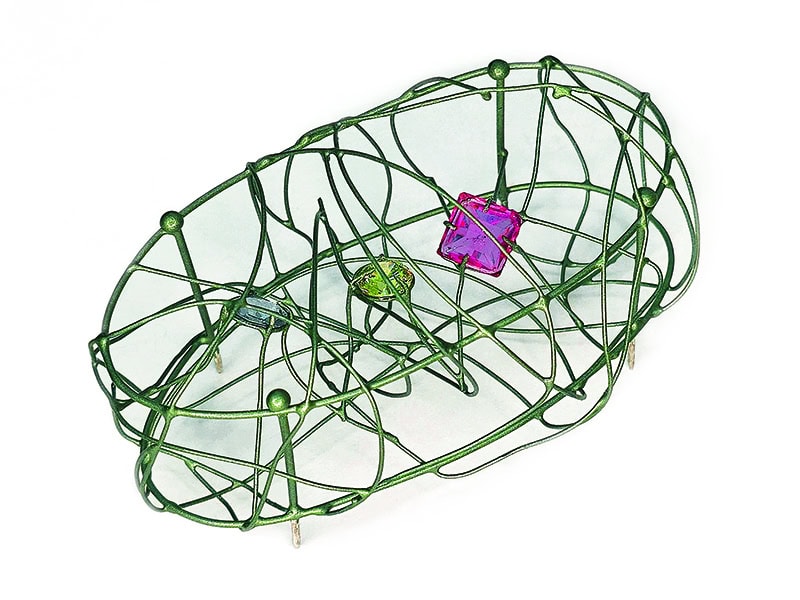
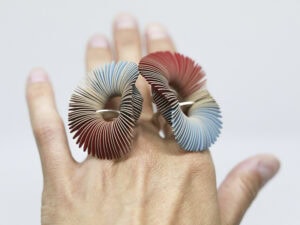
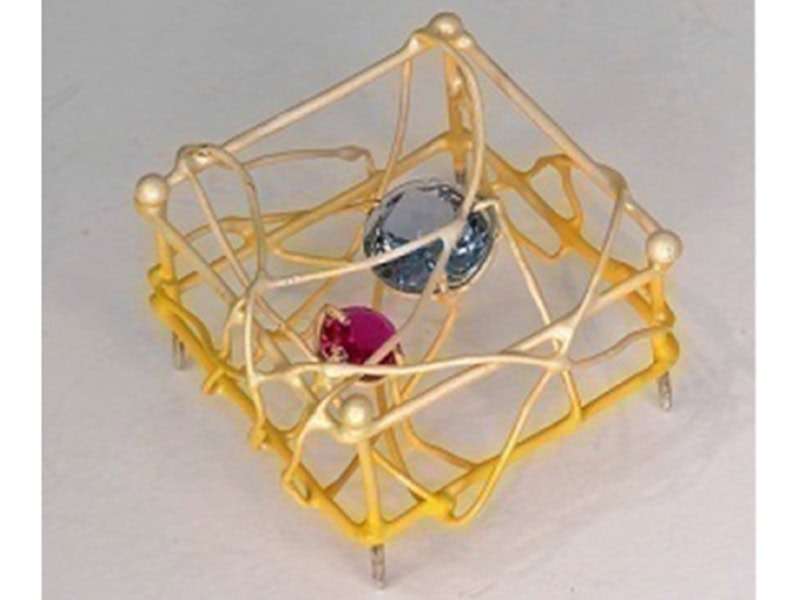
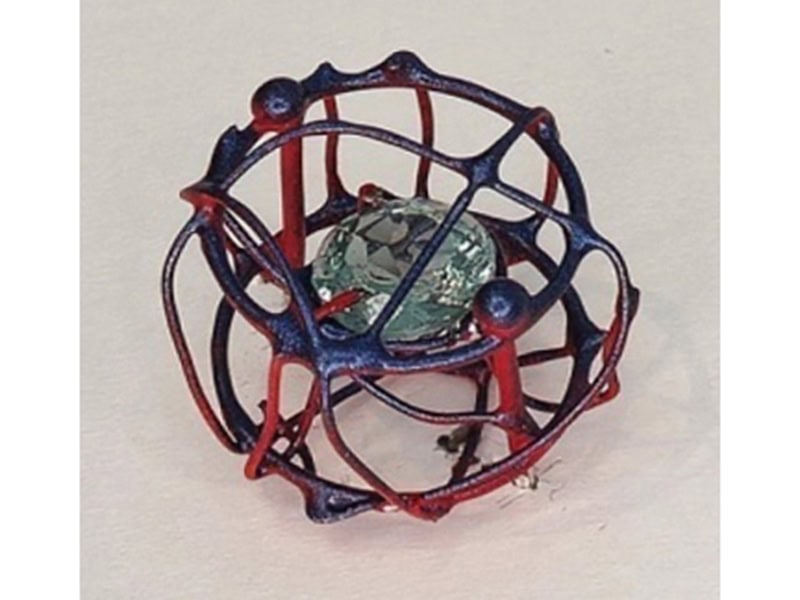
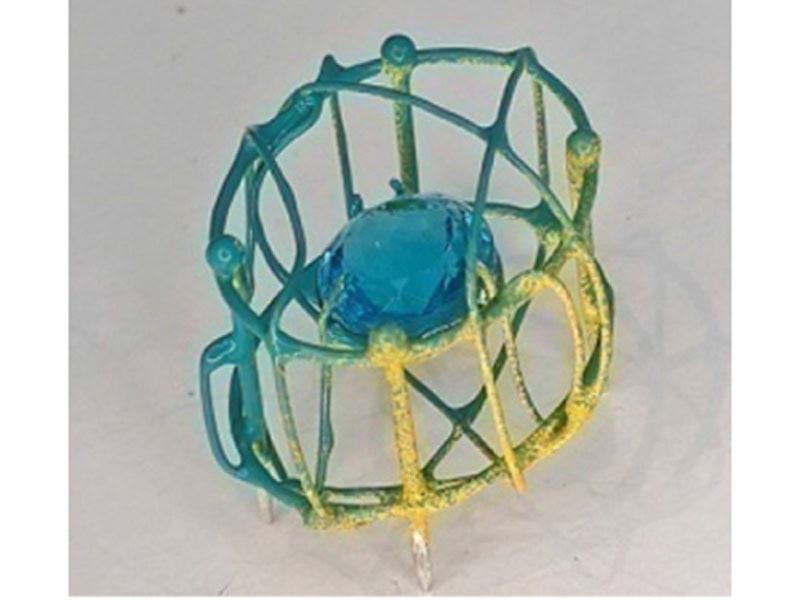
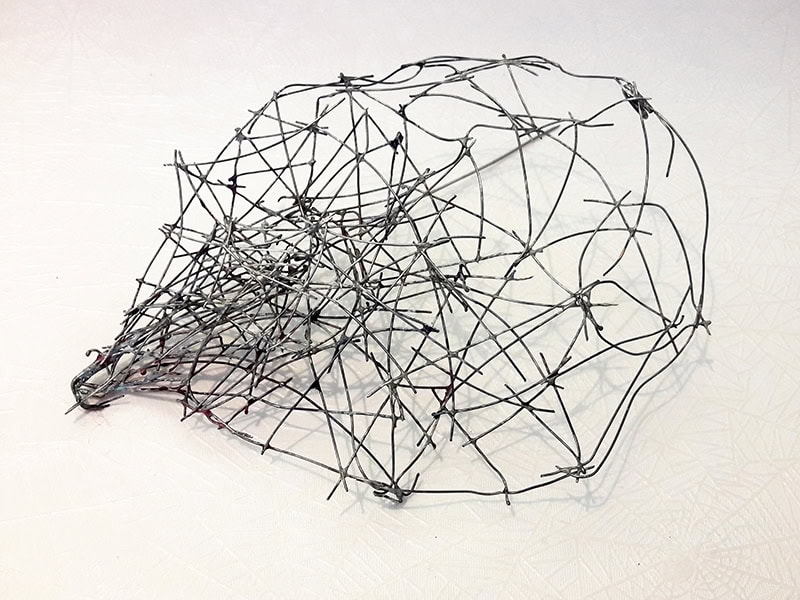
Jürgen described his work in these words: “My jewelry is characterized by a system of apparent chaos and fragile order. Free forms with a defined exterior evolved from concrete, architecture-inspired shapes. Inside, the wires intertwine, connecting and crossing one another like synapses. Various found objects—such as wire fragments, nails, reflector parts, and the like—were integrated and found a new home within the pieces.
“Later, I supplemented or replaced them with synthetic stones. They possess defined colors, which opens up a wide spectrum of possibilities for me.
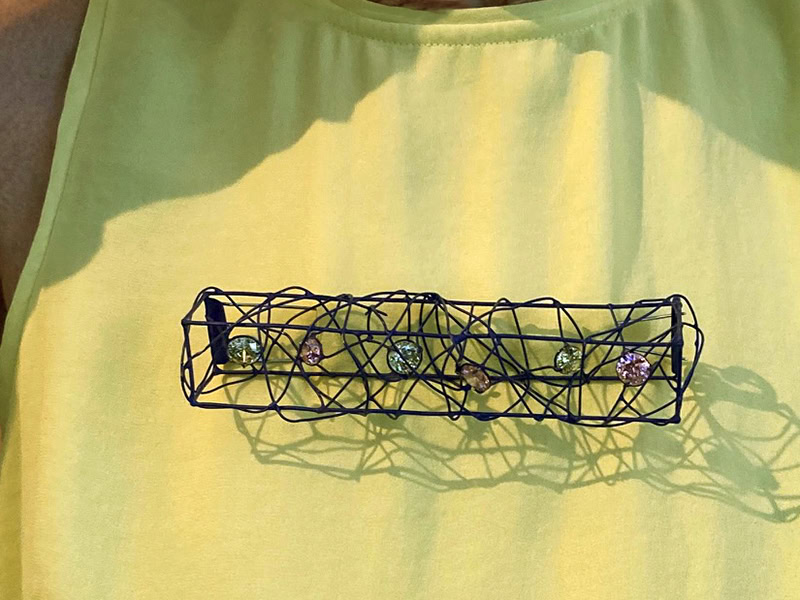
“At times,” he continued, “I lacquer the silver wires, creating a contrast and interplay between the stone and the metal body. This strips the precious metal—silver—of its mystical significance, focusing attention more strongly toward the work’s actual message.”
Jürgen’s collegiality knew no bounds, and his energy seemed inexhaustible. Throughout the many, many years—44 in total—that I have known him as an artist, a fellow gallerist, and a good friend, the concept of boundaries never really played a role.
He always wanted the best for his friends. For instance, when we had adjacent booths at Eunique (the International Fair for Applied Arts & Design 2012), in Karlsruhe, Jürgen offered me not only great professional support and hospitality but also a large jar of the most delicious honey. It had been produced by his father, a hobbyist beekeeper who had already passed away by then.
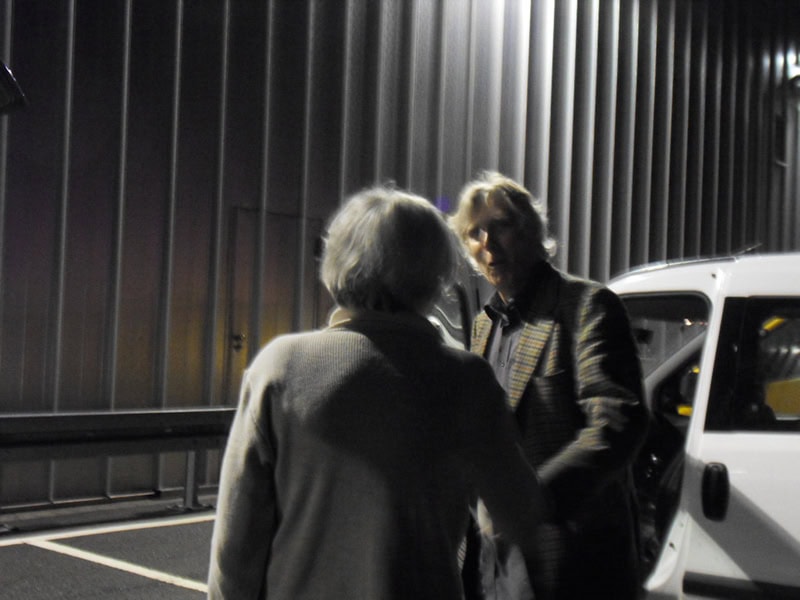
In 1981, as a newcomer to the world of art jewelry—his wife, Marianne Schliwinski, had awakened in him not just love but a true passion for this field—he pursued studies in jewelry at the Gerrit Rietveld Academie, in Amsterdam, having previously studied geology. At the same time, he launched his career as a gallerist alongside Marianne.
My studies in Amsterdam forged a bond between Jürgen and me regarding a shared perspective on art jewelry. In the Netherlands, one quickly learns that creating the work is only one side of the coin. The art must also be shown to the world. Consequently, both Jürgen and I dedicated a significant portion of our careers to running a gallery.
Jürgen was the creative, technical, and administrative heart of Galerie Spektrum. Together with Marianne, he handled artist representation and sales.
The gallery occupied five different locations in Munich and Karlsruhe over the years, and Jürgen was always responsible for the interior design—handling not just the concepts but the actual craftsmanship as well. He tirelessly produced small catalogs for almost every exhibition while simultaneously creating new pieces of jewelry. Jürgen was fast—very fast. While I was still thinking about something or deliberating, he had already finished the work.
Jürgen shared a love for Italy with Marianne. It all began in an Italian café on Munich’s Türkenstraße, where—over good coffee and gelato—they dreamed of Italy and planned their trips, particularly to Venice. Later they were able to create their jewelry in a house with a studio overlooking Lake Garda, in northern Italy. It was during this period that Jürgen produced his first series of works, which I had the privilege of exhibiting at Galerie V&V in 2010.
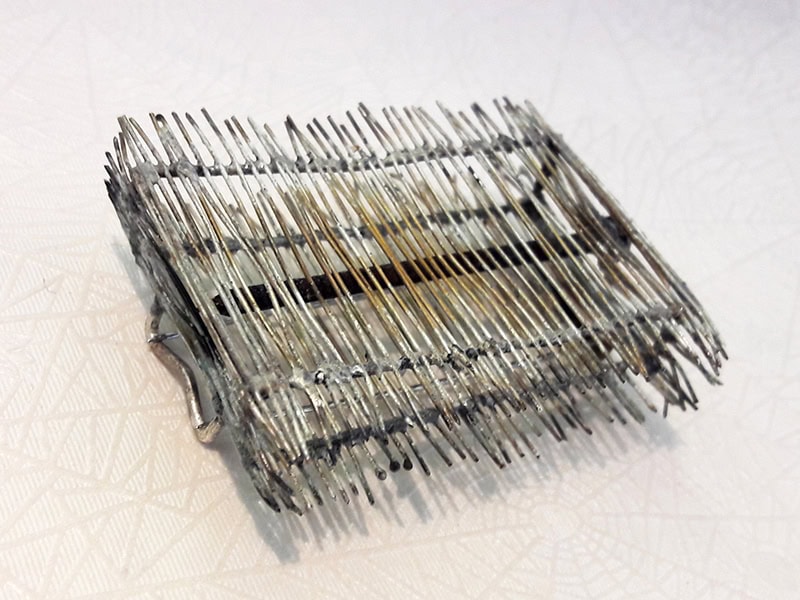
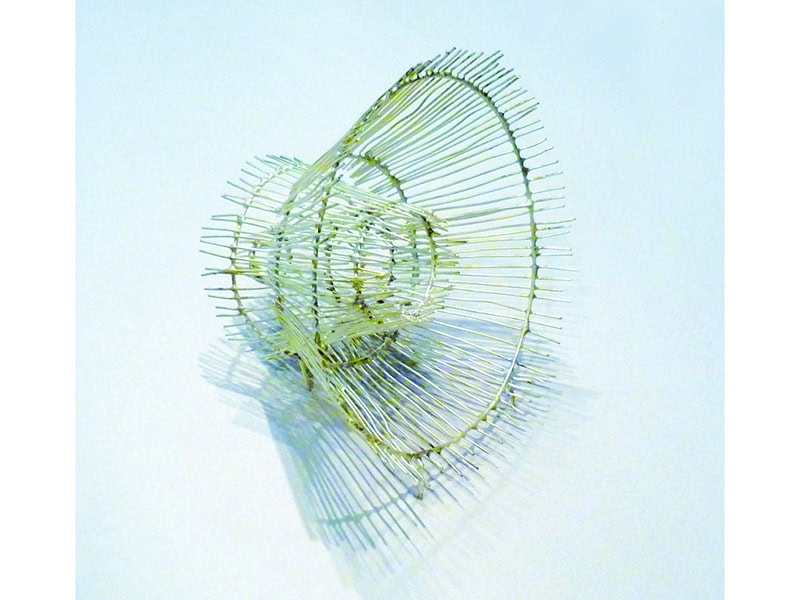
These pieces are brooches made of thin silver wire; their arrangement evokes the form of fish traps and the structures used to anchor them in the water. Some are not easily wearable; they hover on the boundary of free-standing sculpture. The way the wire is manipulated gives the works the appearance of sketched, hatched drawings—reminiscent of travel drawings from the Venetian Lagoon.
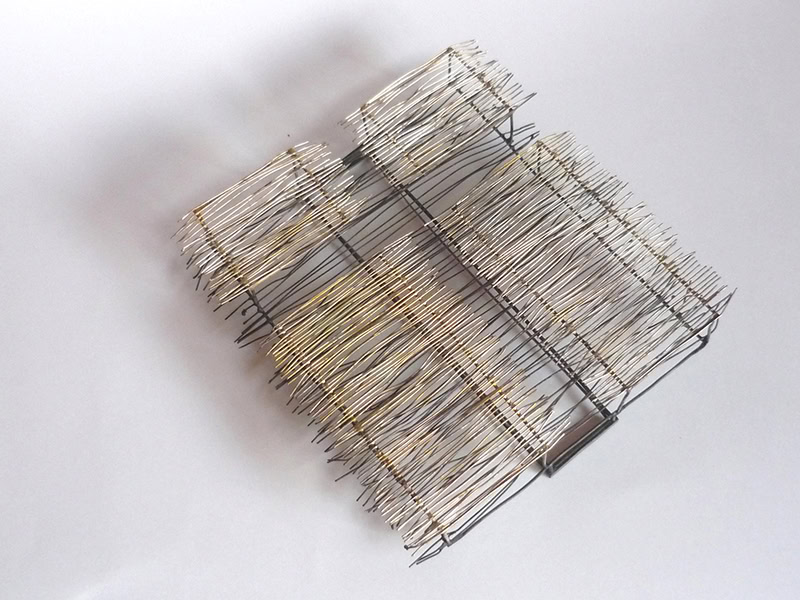
A line from a poem by Raoul Schrott captures the essence perfectly: “…it is said, echoing on, that you brought beauty to the world and gave substance to the everyday…”
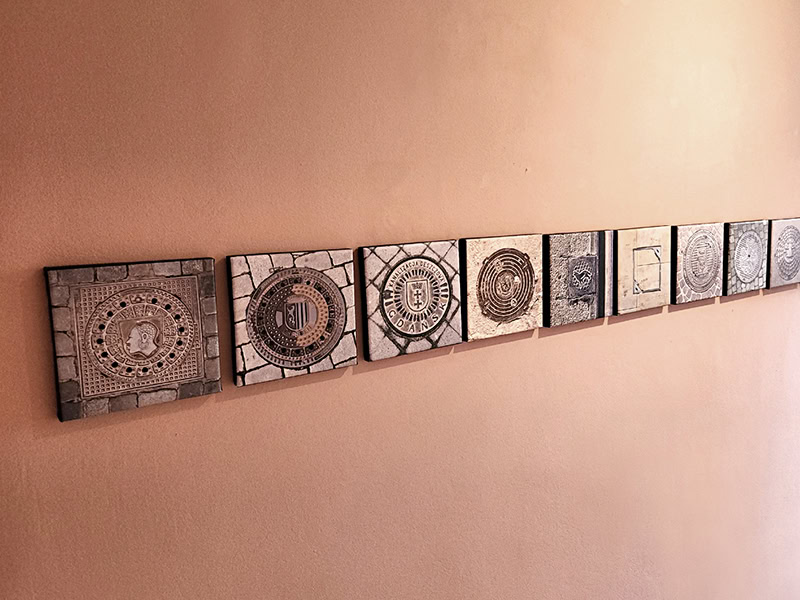
Jürgen’s photographic series should be viewed in this context. “For years, I have been photographing things that people simply walk past. Beneath these lids, covers, and manhole covers—whatever one chooses to call them—lies the nervous system of our civilization. So far, I have gathered nearly 900 images. I have since had about 44 of them printed on 20 x 20-cm canvases. Amidst the apparent monotony, one discovers a surprising variety and richness of color. Moreover, many of these covers serve as elements of the corporate identity of cities and municipalities, and are therefore impressively designed.”
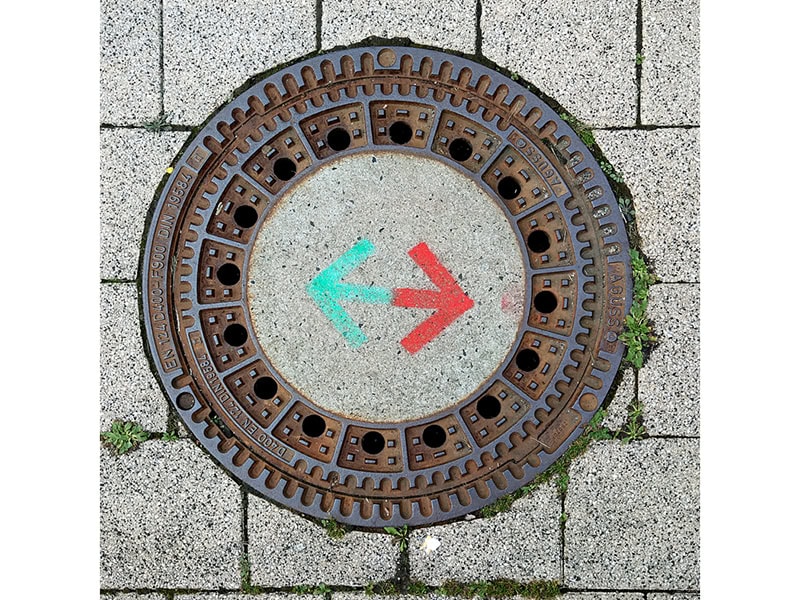
This body of work vividly demonstrates Jürgen’s international presence. The photographs of manhole covers were taken around the world among other occasions, during lectures, guest professorships, and exhibitions. Jürgen held these lectures and guest professorships at HAWK (Hildesheim, Germany); RISD (Providence, RI, USA); Pforzheim (Germany); the Academy of Fine Arts Munich; Grey Area (Mexico City, Mexico); the Bezalel Academy of Arts and Design (Jerusalem, Israel); and Shenkar College (Tel Aviv, Israel).
As the curator and organizer of the *Chronos* exhibition, Jürgen traveled to Padua. This year, his exhibitions and participation in shows took him to Sweden, Vienna, and, most recently, Cagnes-sur-Mer, France. That exhibition, at the Espace Solidor, runs until September 20, 2026.
Eickhoff’s works are held in public and private collections including the Stadtmuseum (Munich, Germany); Kunstgewerbemuseum (Berlin, Germany); Dallas Museum of Art (Dallas, TX, USA); Badisches Landesmuseum (Karlsruhe, Germany); Württembergisches Landesmuseum (Stuttgart, Germany); Pinakothek der Moderne/Die Neue Sammlung (Munich); Schmuckmuseum (Pforzheim, Germany); CODA (Apeldoorn, Netherlands); Bröhan Design Collection (Berlin); Bollmann Collection (Vienna, Austria); and the V&V Collection (Vienna).
The opinions stated here do not necessarily express those of AJF.
We welcome your comments on our publishing, and will publish letters that engage with our articles in a thoughtful and polite manner. Please submit letters to the editor electronically; do so here. The page on which we publish Letters to the Editor is here.
© 2026 Art Jewelry Forum. All rights reserved. Content may not be reproduced in whole or in part without permission. For reprint permission, contact info (at) artjewelryforum (dot) org