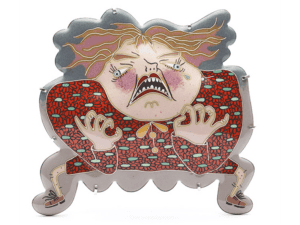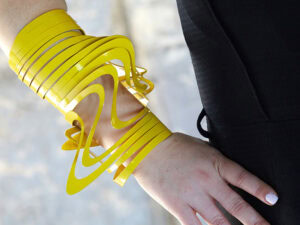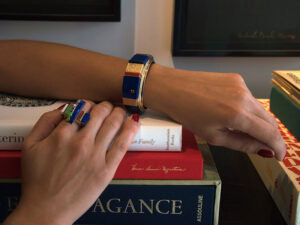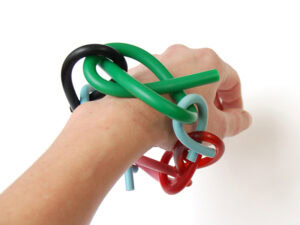
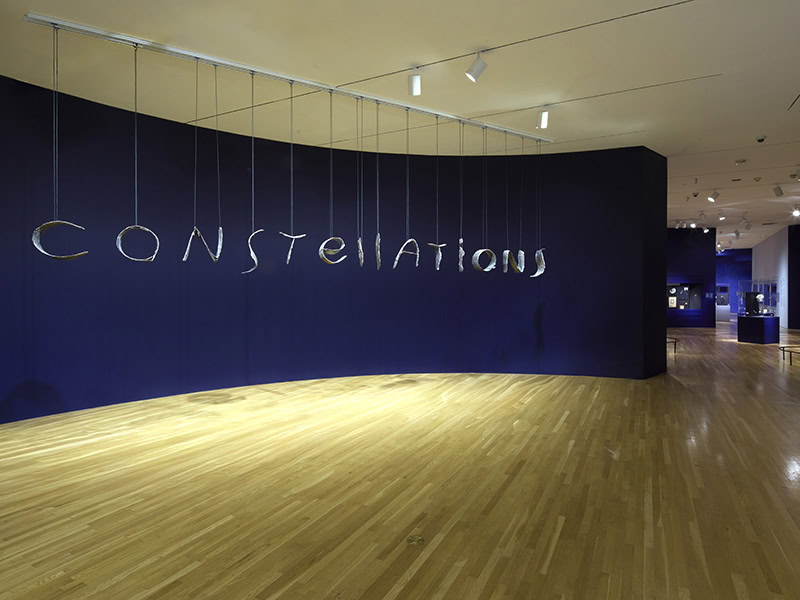
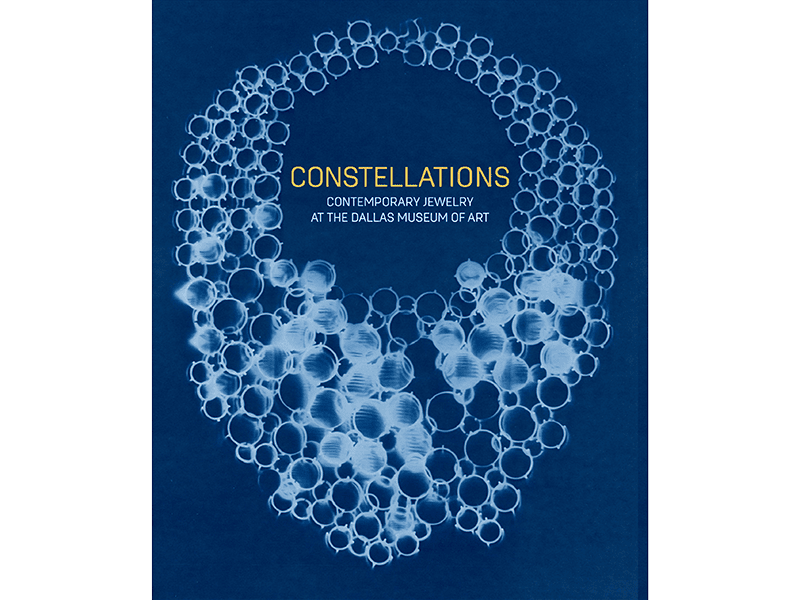
Large exhibitions of contemporary jewelry are rare. A well-stocked bookshelf might include dozens of books that present generous selections of lavishly photographed jewelry from the 1940s to the present (the period that the term “contemporary jewelry” covers). But seeing a lot of contemporary jewelry in person is an uncommon experience, which makes Constellations: Contemporary Jewelry at the Dallas Museum of Art, with its 393 pieces of jewelry, an unmissable opportunity for anyone interested in the field. The exhibition and accompanying book are the work of Sarah Schleuning, the Margot B. Perot Senior Curator of Design and Decorative Arts at the Dallas Museum of Art (DMA). The title Constellations refers to the process of making connections, finding stories that can link and map the museum’s collection of contemporary jewelry. Damian Skinner sat down with Schleuning and collector and patron Deedie Potter Rose, the driving force behind the DMA’s extraordinary collection of contemporary jewelry, to find out more about how this project came about.
Damian Skinner: What’s the history of this exhibition and book?
Deedie Rose: I don’t think there would ever have been an exhibition and book of this material, except certain people cared about it, and one of them was me. I remember Susan Cummins visiting me in Dallas and talking about the importance of publishing about contemporary jewelry, because if you don’t it disappears from history. From that moment I started looking at interesting books, to see what might differentiate a new book from all the other jewelry books on my shelves.
Sarah Schleuning: The exhibition really evolved out of trying to understand what the bigger collection of the museum was. When I came to the DMA as a curator, research was underway on the Inge Asenbaum collection, which Deedie had purchased and donated to the Museum. Still, no one had explored the DMA’s contemporary jewelry holdings as a whole, and what was possible by borrowing from collections in the community, and which works we could acquire to explore new areas.
Deedie Rose: When Sarah came, we talked about the importance of individuals to museums and that if you care about these great institutions, individuals have to be involved. That’s true of collectors and donors like me, but also curators like Sarah. Without Sarah, I would have kept collecting jewelry because I can’t not do it. I just love the stuff. But I wouldn’t have gone about it in nearly as intelligent a way. I have had a collaborator in Sarah who provided another set of experienced and intelligent eyes, with a background that I don’t have.
Sarah Schleuning: Deedie and I frequently discussed the projects that preceded this one and how we might approach the exhibition and publication in a different way. Since Constellations would be the first exhibition dedicated to contemporary jewelry at the Dallas Museum of Art, I decided to take a broad view, highlighting all the treasures the museum has acquired during its 75 years of collecting. I was eager to explore the ideas that united the DMA’s diverse works. This approach was possible not only because of Deedie’s support, but also because the museum really encouraged us to go bigger and better. Projects like this only happen with the marriage of human and financial resources that come from institutions and donors working together.
Deedie, do you think your fellow donors to the DMA understand or appreciate your passion for including contemporary jewelry in the museum collections?
Deedie Rose: I watch people when they come on a tour of my house and they can’t believe the jewelry on display. As expected, people are really engaged with the art, but the jewelry is such a surprise, something they never thought they would be interested in. But they are. Very sophisticated people with great art collections are fascinated. They start with the art but end up asking about the jewelry.
What are the collections that have been featured in this project, and was it complicated to merge them?
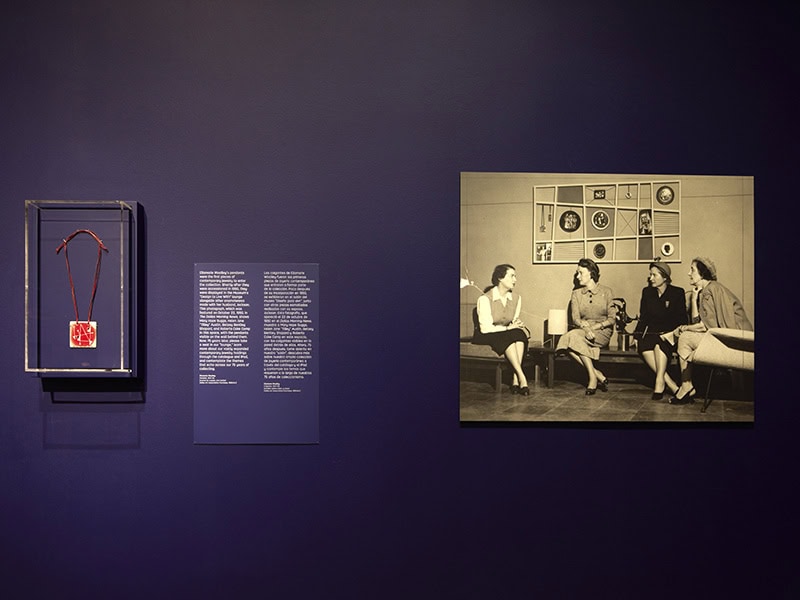
Sarah Schleuning: The history begins with a collection of Texas regional jewelry, which the museum had started in the 1950s. And then the shift came in 2010, when Deedie donated a number of pieces to the museum, followed by the arrival of the Asenbaum collection. At that point the collection grew exponentially, bolstered by commissions and donations from local collectors as well as those who are further afield, such as the Rotasa Trust, in the Bay Area, and the Eibers, in Miami. When you build a collection from diverse sources, you end up with areas of strength and weakness. So we began to systematically find ways to build up the collection to make it more representative. One of the reasons we wanted works from the Eiber collection was to strengthen the museum’s holdings of American studio jewelry. Commissions allowed the museum to support artists exploring new territory in their work and further enrich the collection.
Deedie, why did you buy the Asenbaum collection?
Deedie Rose: It was happenstance. I’ve never had a grand plan. My husband, Rusty, and I were on a trip to Vienna with friends, and we ended up at the gallery of Paul Asenbaum. He is a highly respected dealer of Wiener Werkstätte furniture. It was late in the afternoon, I was tired from the flight over, and I knew I wasn’t going to buy anything as it is not my area of interest. Suddenly I saw a bracelet in a cabinet and next to it was a brooch. Then I started paying attention. When he finished talking to the group, I asked him to tell me about the jewelry. It turns out the bracelet was by the famous artist Gustav Klimt, made for one of his mistresses. I can’t remember the details now, but I definitely remember wishing I could have bought it. At this point we were late for dinner, and everyone was anxious to leave. Paul hurried me back to a cabinet in the storeroom and pulled out a drawer filled with Anton Cepka jewelry. I didn’t know who that artist was, but the pieces were beautiful and fascinating. We spent maybe a maximum of five minutes looking through the drawers, but it was breathtaking to me.
The next day I sat next to Paul at lunch, and we talked about his mother’s jewelry collection. About six weeks later, he emailed me and said that his mother, Inge Asenbaum, would be interested in my acquiring her collection. I returned to Vienna with Kevin Tucker, the DMA’s decorative arts and design curator at the time. Paul had put the whole collection out on display, and the experience was staggering. Not just the jewelry but the archival material as well. It was amazing.
So you purchased the Asenbaum collection for the museum, rather than yourself?
Deedie Rose: The collection was delivered to the museum and I picked out a few of the pieces that I wanted to keep for a while, and perhaps wear. Ultimately they were all going to the DMA.
Photo of exhibition view
Let’s return to Constellations. Sarah, how did you approach the task of curating the DMA collection and then writing about it?
Sarah Schleuning: I knew immediately that it couldn’t just be a history of jewelry. The challenge of doing a show in a city museum like the DMA is that you are trying to attract multiple audiences. The connoisseur is important, and you need to showcase the strengths of the collection. Yet you also have to appeal to a general audience that is just engaging with the ideas the works convey. So I was trying to build a show that could have multiple points of entry. That was the challenge and the opportunity.
Our title, Constellations, reflects this aim. Just as one can draw lines between the stars and create infinite patterns, there are many ways to link the treasures in our collection. I organized the works into four large groupings, but I wanted the visitor to feel free to make their own connections regardless of their expertise.
How did you approach the challenge of displaying contemporary jewelry in the museum?
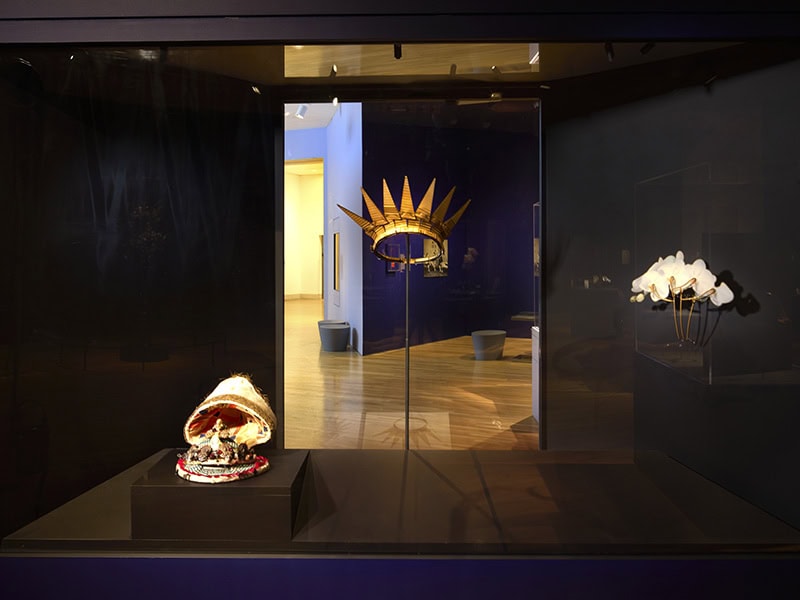
Sarah Schleuning: We knew we wanted to show a lot of jewelry, but we also knew we had a fixed budget to spend on exhibition design. The presentation needed to be visually dynamic. In the exhibition, we have tried to provide opportunities where you see through the jewelry, or around it. Jarrod Beck, our exhibition designer, created trapezoidal cases for the show that allow pieces to be seen from three-quarter angles. I think function is part of what makes jewelry so fascinating. How is a brooch thought about from the back? How do you start to see the total conception of the maker?
One of the interesting things about the show is how it acknowledges the body. Why was that important to you?
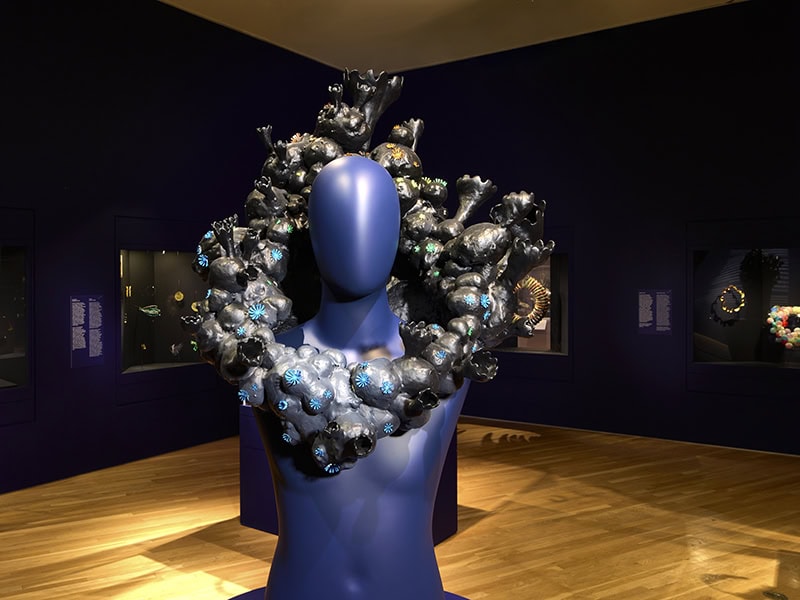
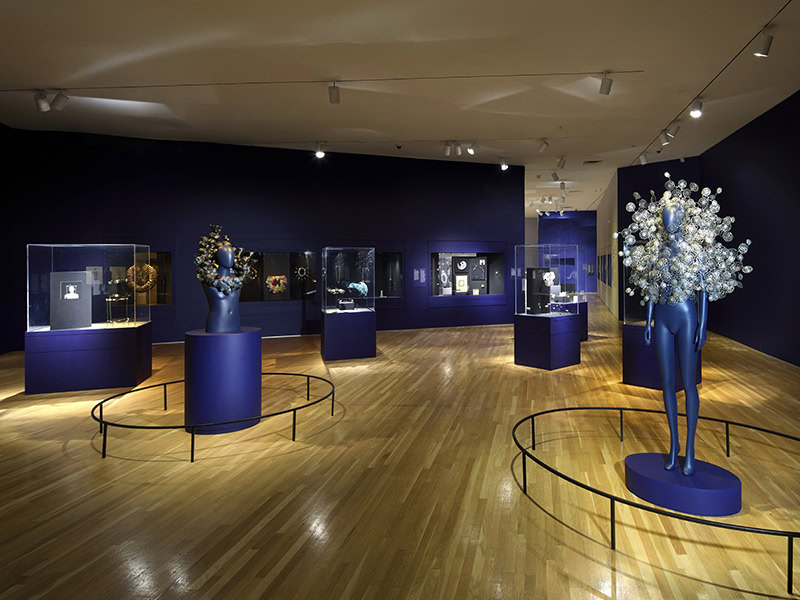
Sarah Schleuning: When fashion or jewelry is in a museum, you study the detail, the craftsmanship, but you lose function and motion. It was important to me to recognize the body, but in the end, the object is the work of art. I wanted to be very clear that this is art, in an art museum, and this work should be shown in a way that is appropriate to this context. For me, the solution was to open the show with two pieces on mannequins, but then they disappear for the rest of the exhibition. I wanted to start with the body and make people understand what the function is, and then show how function becomes secondary to the ideas and the aesthetics.
It would be a disservice to immerse visitors into a show like this and imply that it is art and never talk about the important fact that the artist has to think about how this kind of object functions on the body, and whether they intend their work to be worn or not. I also think it would be highly confusing for a public who doesn’t know what they are looking at, who isn’t familiar with the idea of contemporary jewelry. But I also didn’t want visitors to think this is a show of bangles and bracelets and rings and tiaras. I wanted the experience to be more conceptual. It is a dance. These objects seem familiar, but then you start to realize they are not familiar. It is comfort and discomfort. The show starts with the body, emphasizes that it is really important, and then proceeds to move on and not talk about the body again.
Deedie, has the exhibition and book matched your intentions as a collector?
Deedie Rose: I have cried four times in the exhibition, and not from sadness. It means so much to me. And then to see the idea of a book realized in physical form, after thinking about it for so many years. It has been an amazing journey.
Photo of Bernard Schobinger’s necklace/ring
I wonder if you could both tell me what your favorite piece is from the DMA collection. And would it be the same as the most important piece?
Deedie Rose: There’s no way I could name my favorite piece. I have many favorites for different reasons. And I have no idea what’s the most important to the collection.
Sarah Schleuning: To me, the beauty of being a curator is that I can focus on the ideas expressed by the artist or the works themselves. A piece’s historical significance or market value is not always what is most interesting within the context of an exhibition, publication, or collection.
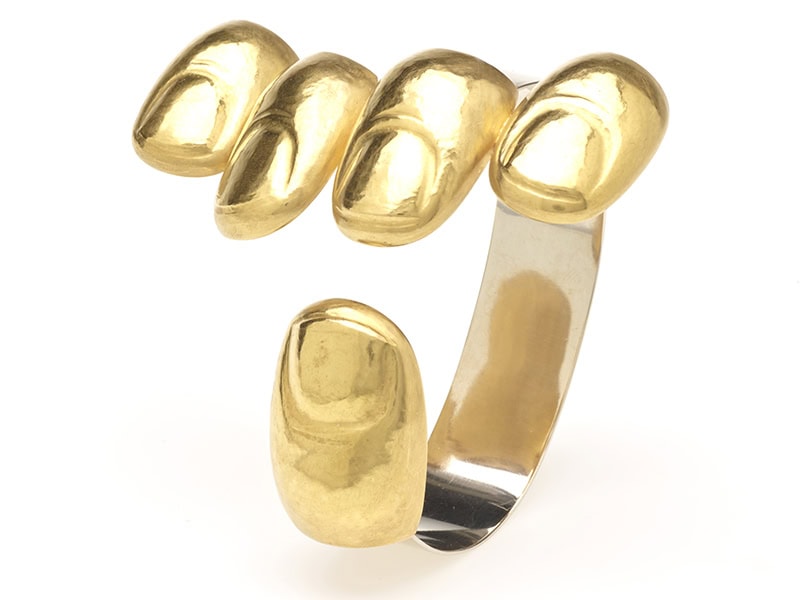
One work that I love is Bernard Schobinger’s necklace and ring made from a toy vanity. I love the magic of how simple it is, and yet it evokes all these incredible ideas. As I have watched this project evolve, I love that people seem to be arguing about what their favorites are, or what is most important. The works and the installation have sparked curiosity. I hope that the show is not a quiet show, but one filled with visitors who are noisily engaged with that they are seeing.
The opinions stated here do not necessarily express those of AJF.
We welcome your comments on our publishing, and will publish letters that engage with our articles in a thoughtful and polite manner. Please submit letters to the editor electronically; do so here. The page on which we publish Letters to the Editor is here.
© 2026 Art Jewelry Forum. All rights reserved. Content may not be reproduced in whole or in part without permission. For reprint permission, contact info (at) artjewelryforum (dot) org