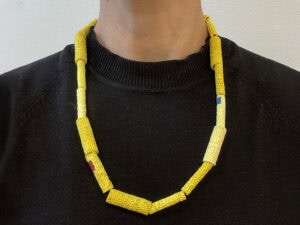
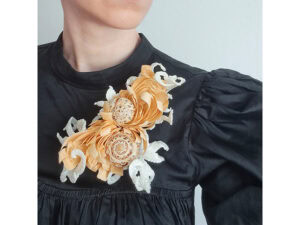
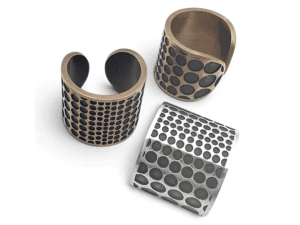
 Geraldine Fenn was born on a diamond mine in Namibia, where her father worked as an engineer for the De Beers diamond company. Today, as a contemporary jeweler and co-owner of Tinsel Gallery in South Africa, Fenn loves “the whole spectrum” of jewelry, from antique to costume to contemporary.
“Jewelry has an element of thinking about and commenting on the world, and there’s a playfulness with materials that I’ve always loved—anything is fair game. I really like that freedom,” she says.
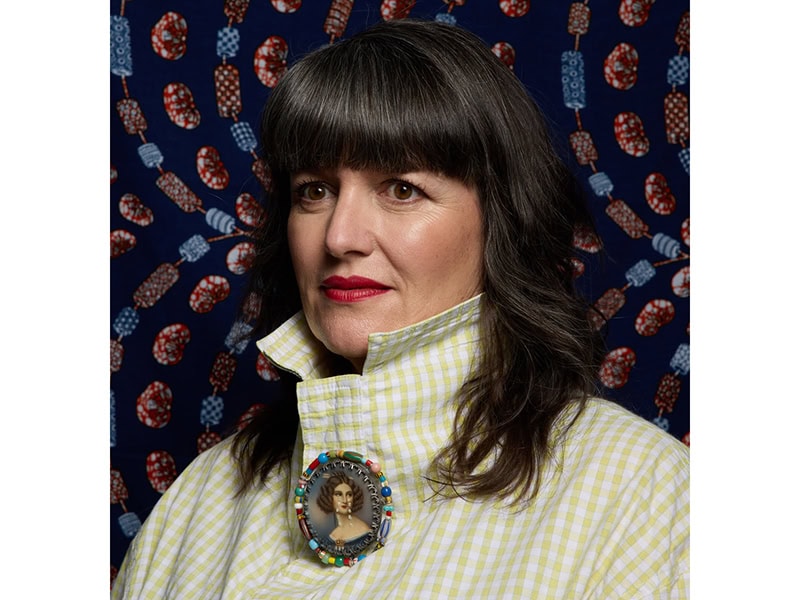
Fenn’s work is inspired by everything from archeology to anatomical models, but she has a special fondness for cameos and portrait miniatures. In 2025, she won the inaugural AJF Solo Exhibition Award, which recognized her series of brooches that reinterpret historical portrait jewelry in silver and trade beads. The resulting solo exhibition, Dispatch from the Colonies, opens this week at Galerie Noel Guyomarc’h, in Montreal. Fenn’s work has also appeared twice in the Schmuck special exhibition, the juried show in Munich that is the premier event in contemporary jewelry.
“I’m a huge sentimentalist when it comes to jewelry,” she says. “I’m not good at drawing, so portraiture feels like this incredible skill, to capture the essence of a person. And works in miniature—the technical challenge—are even more amazing to me. I love that they were doing this 2,000 years ago. Romans were carving shells.”
Tinsel Gallery, which is in Johannesburg, exhibits the work of South African contemporary jewelry artists. The gallery, which Fenn runs with her husband, jewelry maker Eric Loubser, celebrates its 20th anniversary in 2026.
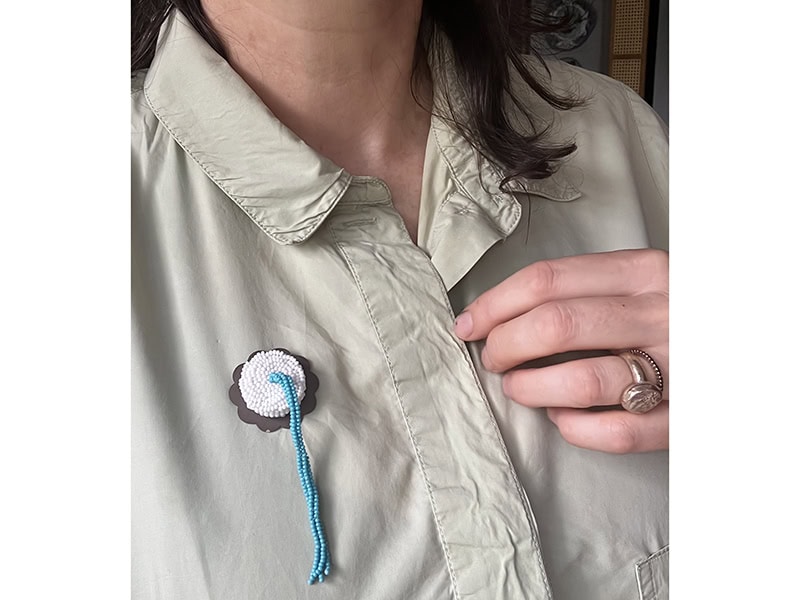
Contemporary jewelry artist Samantha Vincent conquers the taboo subject of menstruation with this brooch. A base of white beads is mounted on an oxidized silver backing, a string of blue beads descending from it. “It’s still a subject that people are not comfortable with, but I love the fact that the brooch is a tampon,” Fenn says.
Vincent is largely self-taught in beadwork, a skill rooted in the traditional practices of Zulu craftspeople. The Zulus live in the South African province of KwaZulu-Natal, home to the Durban University of Technology, where Vincent is a lecturer in the jewelry design and manufacture program. The brooch is part of a series that draws attention to subjects that are often invisible in public discourse.
“There is a long tradition of beadwork in South Africa, but not many people are making contemporary jewelry with beadwork,” Fenn emphasizes.
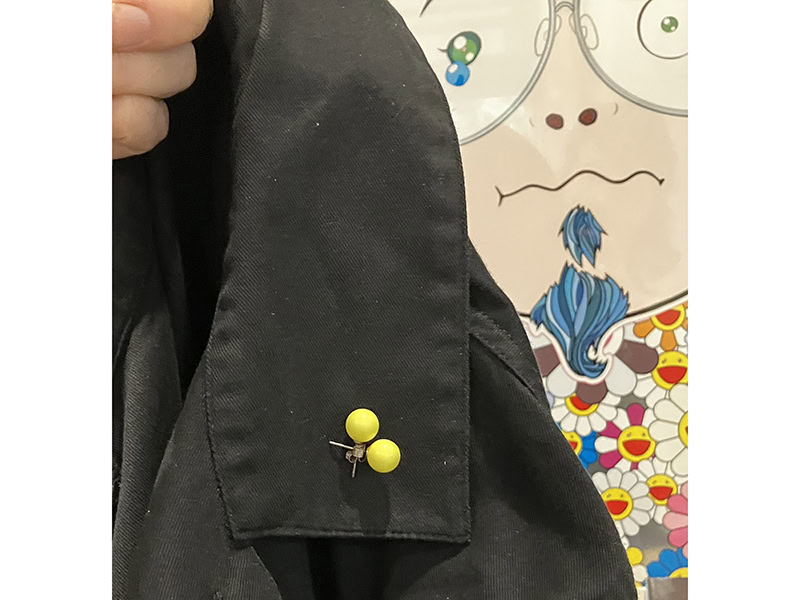
This piece looks like a pair of earrings, but it is, in fact, a brooch pin. The yellow balls atop the earring backs are attached to each other. The piece re-creates the way many people lock their earrings together to store them.
“You no longer have a pair of earrings—you can’t undo them,” Cheung explains. The piece is part of the series Keep, which explores how we store precious items. Cheung’s jewelry often comments on and reinvents familiar jewelry norms to reflect on the meaning and relevance of wearing jewelry today.
Cheung, who is based in London, is known for her pieces carved from rose quartz, lapis lazuli, rock crystal, and other stones, as well as a series carved from freshwater pearls. She received the Herbert Hofmann Prize, considered the highest honor in contemporary jewelry, in 2018. Fenn loves the work’s spare elegance and its commentary on jewelry.
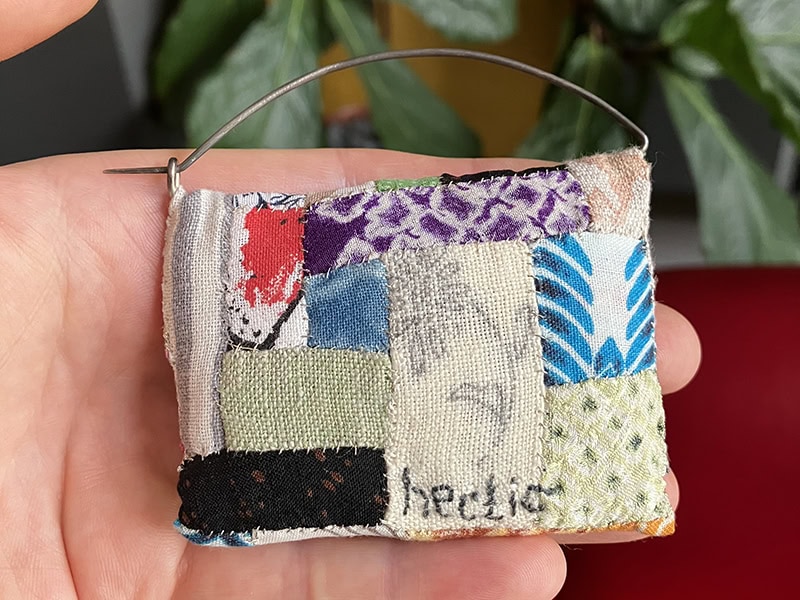
This embroidered brooch—which is “like a little pillow,” Fenn says—is sewn together like a patchwork. Its maker, Helen Clara Hemsley, often uses threads and textile fragments that belonged to her mother, who died when she was a teenager, as a means of staying connected to her.
The word “hectic” is embroidered on the brooch. “It’s a very South Africa thing—we say ‘hectic’ a lot,” says Fenn.
Hemsley, who grew up in South Africa and now lives in Copenhagen, works mostly with embroidery and found objects. Her neckpiece It Didn’t Work, presented alongside a piece by artist Mette Saabye, was featured in the 2025 edition of Schmuck.
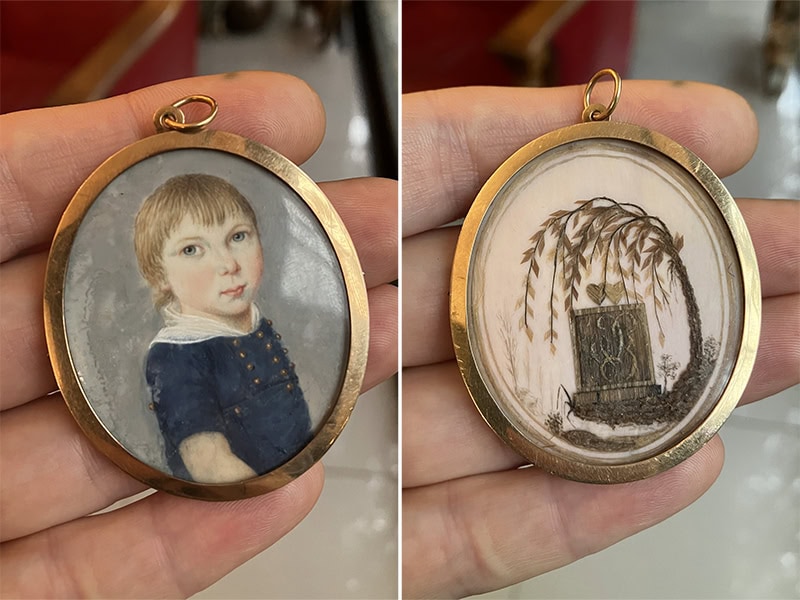
Partly because Fenn is fascinated by portraiture, one of her most prized possessions is a 19th-century pendant that was passed down to her by her mother’s family. The hand-painted portrait depicts a sandy-haired boy in a sailor’s shirt, his wide blue eyes gazing out at the viewer. The boy died in childhood.
“I love pieces like this because they are so intensely personal and sentimental,” Fenn says. “The fact that it’s someone I’m distantly related to is so special to me.” The back shows the boy’s grave with a willow tree’s branches bowed over it, a classic motif of mourning jewelry. The tree is made from strands of hair.
Before photography became ubiquitous, a portrait was treasured, especially one you could carry with you. This pendant belonged to the boy’s mother.
The piece was an important influence on Fenn’s brooch series, Colonial Comeuppance, which features vintage painted miniatures, mostly of European women from the 19th century.
Fenn imagines them as colonialists who have come to Africa and are now the subject of an African gaze. She hopes to spur viewers to think about colonialism and the debate about the restitution of cultural artifacts in many Western museum collections.
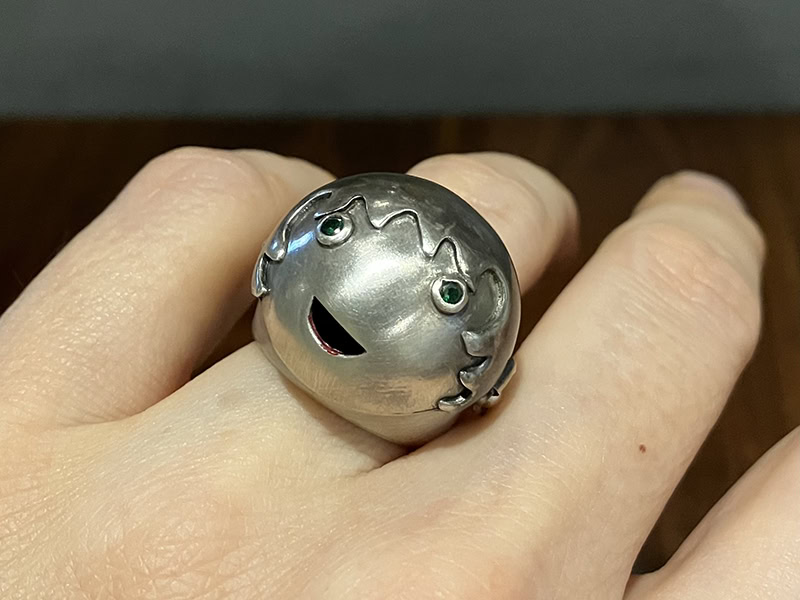
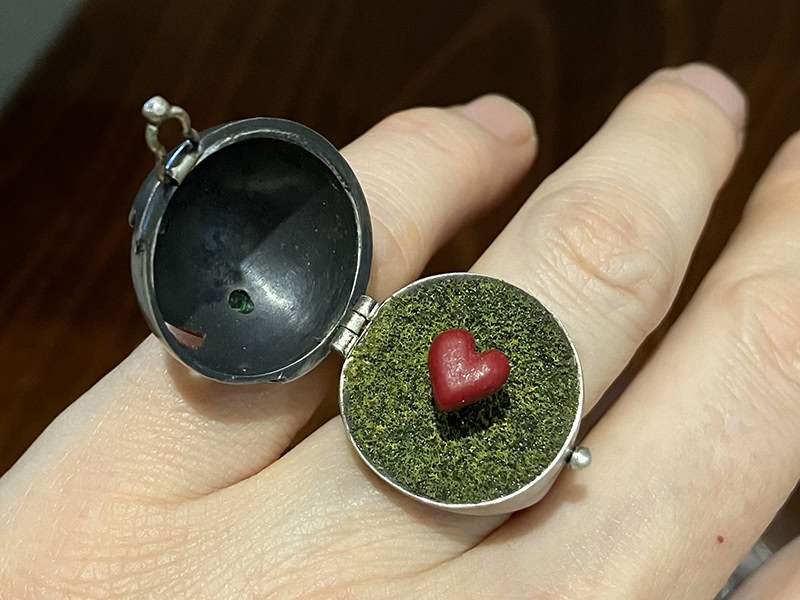
This ring was the first piece that Loubser, Fenn’s husband, made for her when they began dating. The ring opens like a locket. Its front depicts a face that is based on a Playmobil toy, with eyes made of green tourmaline and a mouth painted red. Inside the ring is a red heart surrounded by artificial grass.
Loubser is a South African native whose work was included in Schmuck in 2023. The ring is an example of his playful style. He enjoys tweaking popular culture with pieces that bring a smile to one’s face.
Fenn says she reserves the ring for special occasions: “It’s quite precious to me.”
The opinions stated here do not necessarily express those of AJF.
We welcome your comments on our publishing, and we will publish letters that engage with our articles in a thoughtful and polite manner. Please submit letters to the editor electronically; do so here. The page on which we publish Letters to the Editor is here.
© 2026 Art Jewelry Forum. All rights reserved. Content may not be reproduced in whole or in part without permission. For reprint permission, contact info (at) artjewelryforum (dot) org