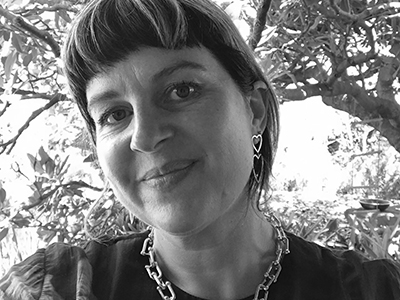
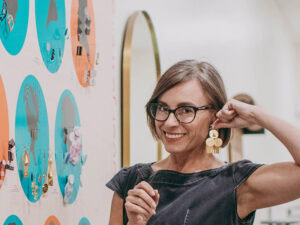
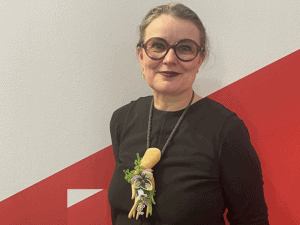
Espace Borax, in Vevey, Switzerland, was founded in 2021 by the Einzweidrei collective. Contemporary jewelry is a shared, self-taught passion for the nonprofit’s gallerists, Nicolas Christol and Mélane Zumbrunnen, who came to the field with backgrounds in photography and arts management.
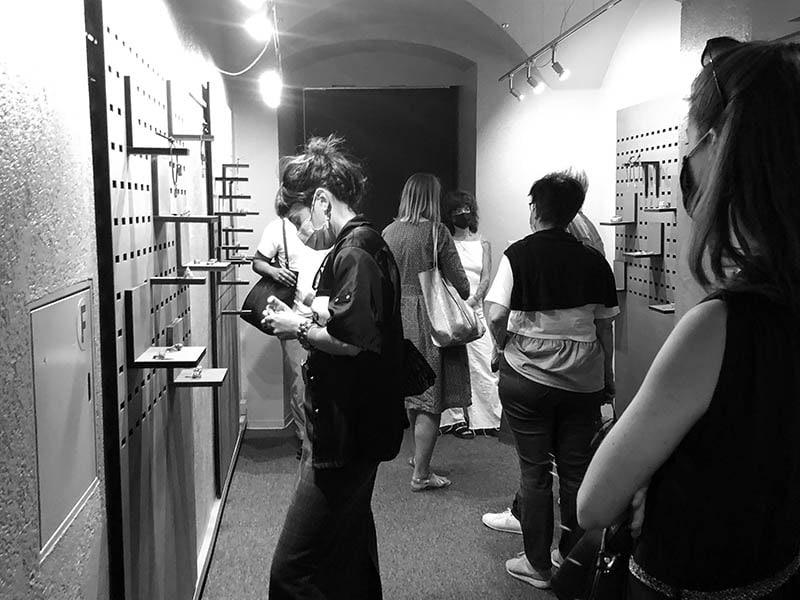
The 12th-century building housing Borax is unique and idiosyncratic. It formerly served as not only a convent, but as a granary and a prison. The gallery’s interior design and display modalities very much lean into the history and context of the site. For Christol and Zumbrunnen, who also exhibit beyond art jewelry, the space offers a place for experimentation and dialogue.
Meredith Turnbull: The gallery has evolved from your first large-scale exhibitions in 2006 at this site, as part of the Einzweidrei collective, to its current iteration as Espace Borax in 2021. Why this shift in scale, both in relation to the site but also the scale of artworks you present and engage with?
Mélane Zumbrunnen: It all began with this very particular site, marked by a long religious and secular history. Originally a convent, it became the bailiff’s court in 1536, then a granary in 1720, and was finally transformed into a prison in 1865, which closed in 2004.
We were looking for a place to stage our first exhibition when we discovered the building, then abandoned. The city allowed us to organize our very first exhibition there, Hypocrite, in 2006. This project marked the beginning of our ongoing search for disused and vacant spaces for our exhibitions.
From the outset, we have invited both established artists and emerging ones. Exhibitions built around a shared theme, bringing together different sensibilities and backgrounds, is something we remain particularly attached to today. We have always adapted our exhibitions to the specificities of each site. Later, as abandoned spaces became harder to find, we opted to rent a space for five years—a former garage where we created Emergency. The exhibitions there were mainly solo shows, and more rarely small group exhibitions.
With COVID, and the fact that we were no longer producing our own work for the exhibitions, we felt the need to return to a more intimate scale and opened Borax—almost like returning to our original cell.
Our own artistic practice has also evolved over time. Both originally trained as photographers, we gradually moved toward installation. I began painting, and Nicolas introduced me to jewelry in 2018. It feels as though the spaces, the exhibitions, and we ourselves have evolved together.
Nicolas Christol: Our largest art show, Apo-calypse, was in a 1300-square-meter space, a former silverware factory. With 25 artists such as Erwin Wurm, Ai Weiwei, Hans Op de Beeck, Shilpa Gupta, and many others from the region as well. In 2014 we couldn’t find any available temporary space anymore, so we raised funds in order to rent one, a former car garage, and called it Emergency. For five years we organized five shows each year, again with local artists and international ones such as Jonathan Monk or Minerva Cuevas. In 2021, with COVID and exhaustion combined, we closed the space.
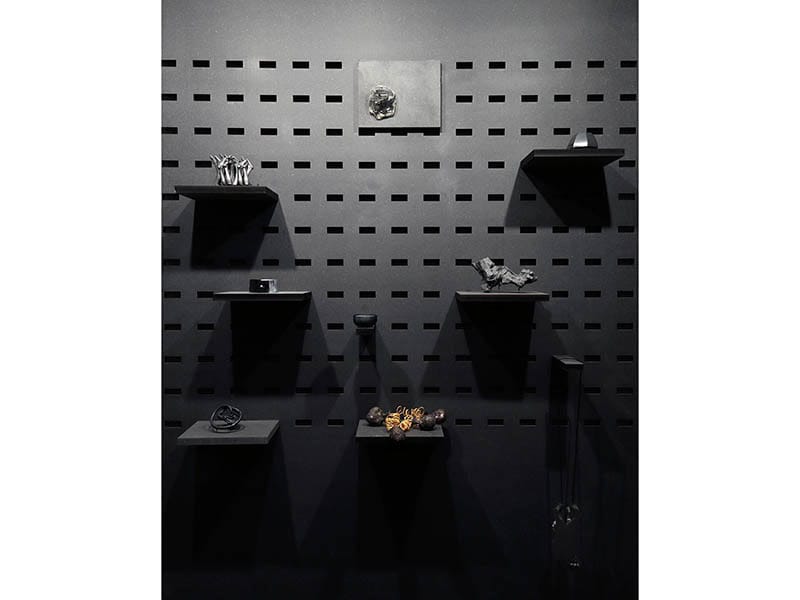
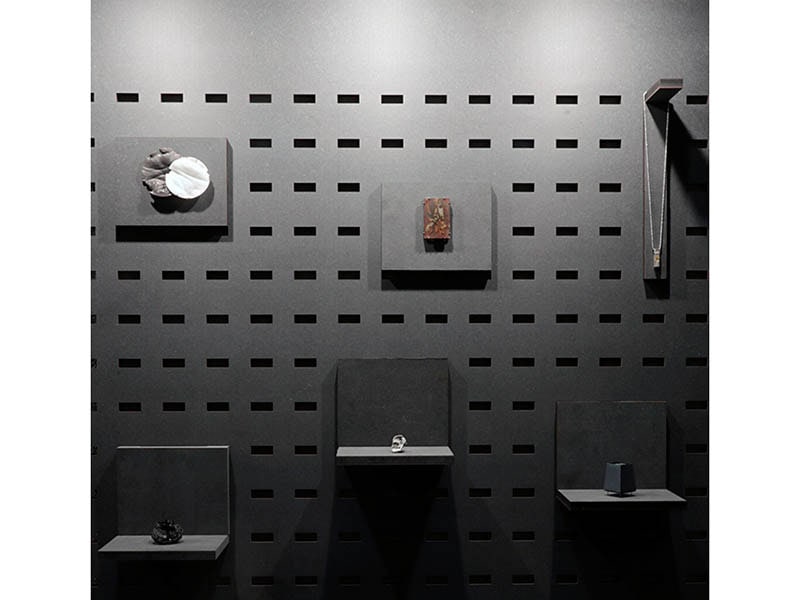
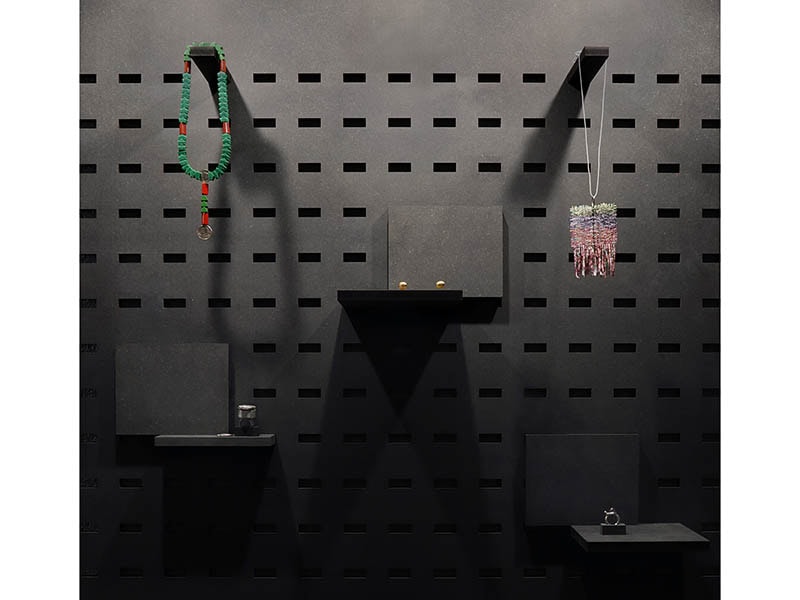
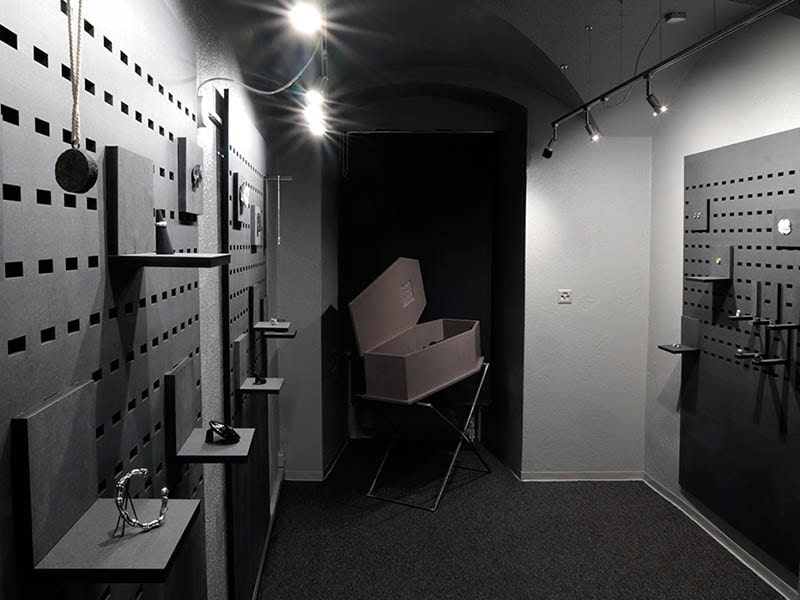
The interior design and display functionality of Borax very much leans into the history and context of the site. The controlled lighting, and the palette for the purpose-built wall panels, result in a dynamic and engaging way to present artworks. Tell us about the concept.
Nicolas Christol: The space is special as it was not built to be a prison, The ceilings in the rooms are vaulted and the walls are very thick. Laurent Pavy, from Atelier Gabarit, designed the display under the constraints of a very limited budget, a high degree of modularity, and the need to accommodate all type of artworks. The shelves are removable; we can cut new ones ourselves if needed, and the large wall panels can also be taken down when required. We wanted a rather dark space, in contrast to the usual white cube.
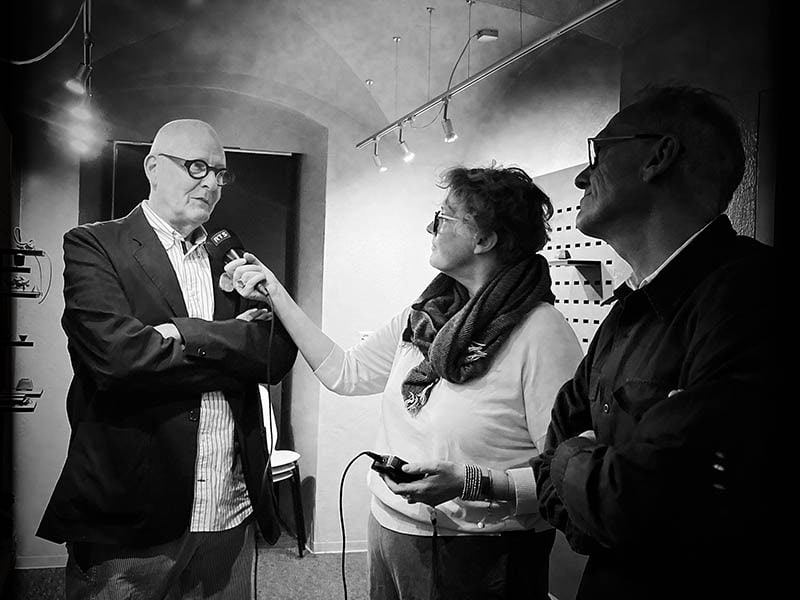
How does it feel to present work and make work in this unique heritage building?
Mélane Zumbrunnen: Back in 2006, I was slightly apprehensive about the heavy atmosphere of the prison. We had to clean the space ourselves before occupying it, as the cells had been left completely abandoned. During our first exhibition, some former prisoners even came back to visit the site, which created a very particular atmosphere. Now, after nearly 20 years, the place feels very different. The building carries a positive vibe, and the atmosphere tends toward introspection and calm. It feels as though the energy of the former convent has taken over 🙂
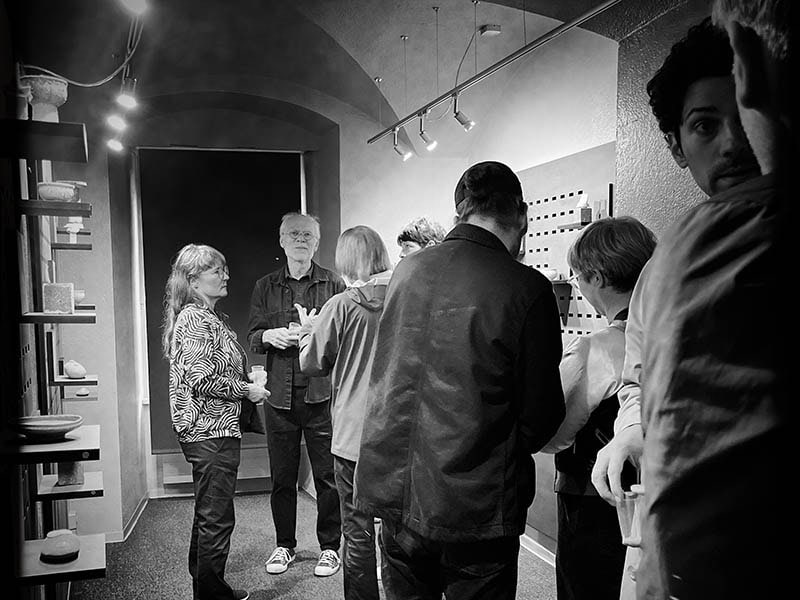
Borax curates around four exhibitions a year and is programmed at least 12 months in advance. Your 2027 program features a number of ceramic artists. How do you select the artists you present, as well as the conceptual arcs that are designed or revealed across the calendar year?
Mélane Zumbrunnen: From the beginning, our program has been shaped by a mix of encounters and personal curiosities. We discuss our proposals together—Nico usually has many more than I do—but when the interest is immediate, we invite the artist to participate. At the end of each year, we organize a group exhibition based on a given theme. For the rest of the program, artists are free to develop their own exhibition, as long as it can be adapted to our three display panels. As for ceramics, I personally had a real revelation during our 2012 exhibition Apocalypse, when we showed the Japanese ceramic artist Yohei Nishimura and his “cooked” books. It was my first strong resonance with the world of ceramics.
Nicolas Christol: I would say it’s more about having a “crush” on an artist and their work. We focus on art jewelry, but have a connection with ceramics as our art school had a good contemporary ceramics department.
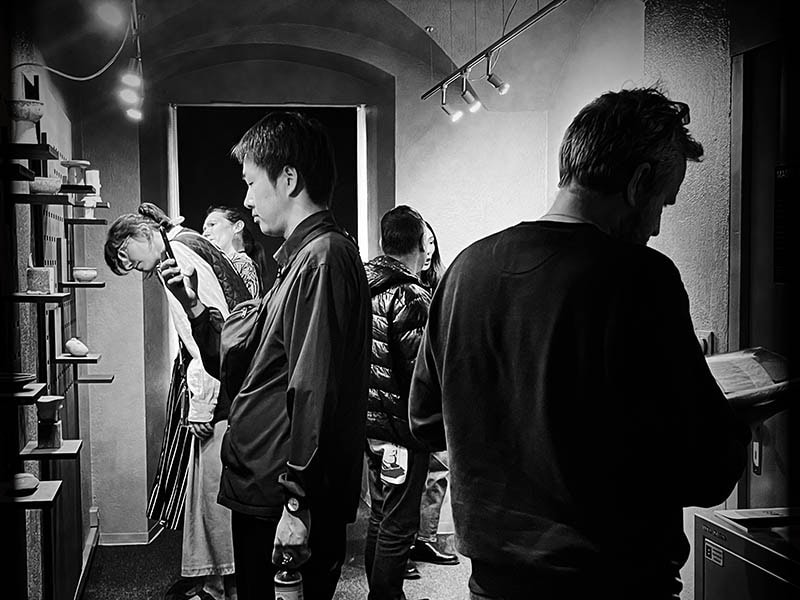
Tell us about the workshops adjacent to the exhibition space.
Mélane Zumbrunnen: The studios are part of the three rooms we have rented since 2006: the former infirmary, the former guards’ rest room, and the former offices. All three spaces are adjacent, which allowed us to install our photography and painting studios there, as well as our administrative office. Over time, we gradually transformed the space into both a studio and an exhibition venue. The studios are open by appointment during the week whenever possible, and of course during exhibitions. Visitors often enjoy spending time there to discover the “behind the scenes” of our practice and to better understand how we work.
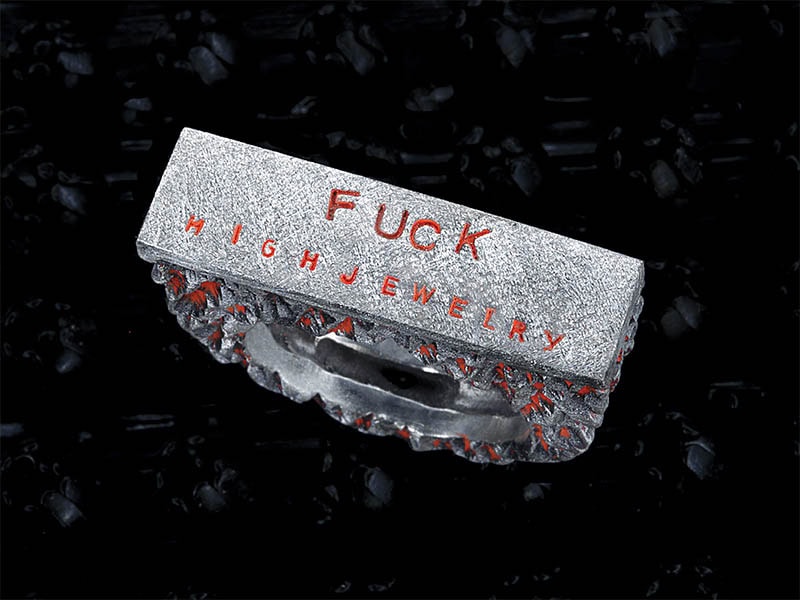
You both have a background in visual art with a focus in photography, and Mélane in arts management. You say contemporary jewelry is a shared, self-taught passion for you both. You have now made and exhibited jewelry work. Tell us a bit more about this shift in your respective practices.
Nicolas Christol: I realized some weeks ago that I made my first jewel in 2009, gluing a pin on a gold dental filling! But I first soldered during a trip to Colombia, visiting a Swiss friend who was making jewels there. Not getting proper training made me lose a lot of time and sleep, but also created interesting incidents.
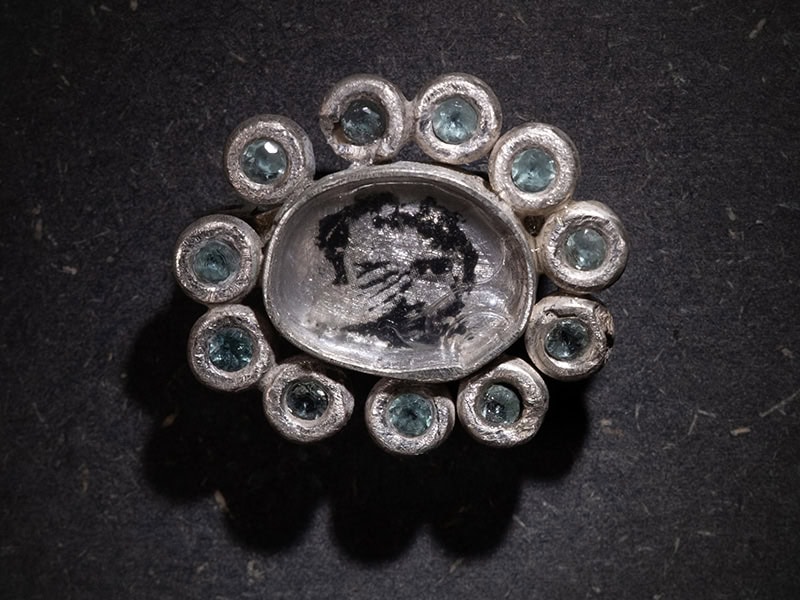
Mélane Zumbrunnen: I moved from photography to painting, and then one day, after returning from a trip, Nico told me he had learned how to solder a ring. I was instantly a bit jealous—jewelry had been on my “one day I’ll learn” list for years. So I basically took over his apartment so he could show me the basics. We both quickly became deeply engaged with jewelry, and we reorganized our cell to set up a workshop. Little by little, Borax was born.
It took time, but I actually appreciate not having academic training. I use silver as a medium, and my pieces are, for me, purely creative. I learn a lot on my own, often online or through Nico, who has a more technical approach than I do. I consider myself an artist who makes jewelry rather than a jeweler.
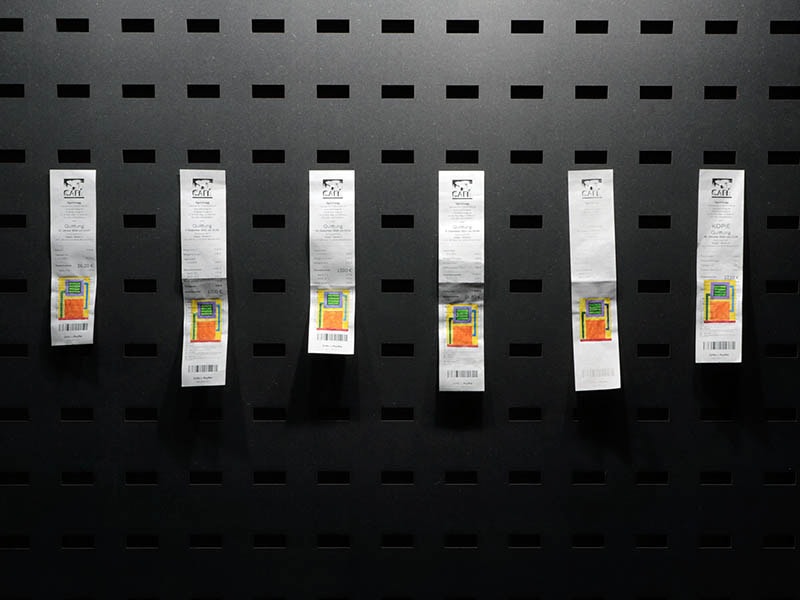
As artists running a nonprofit art space, how do you balance making art and the administrative and social requirements of running a gallery?
Nicolas Christol: Administrative tasks are far less heavy than when we were running Emergency. We still make no money, and have only one sponsor, the city, so it’s light. But we also have jobs, which is maybe the biggest constraint.
Mélane Zumbrunnen: The main challenge is still balancing our artistic practice with our day jobs. Moving from producing large-scale exhibitions with many artists to running a much smaller space, presenting one artist at a time, has made things considerably lighter.
We live and work in complex times, through global political and environmental instability. You’ve both worked with highly respected international artists, both in the context of the Einzweidrei collective and now Espace Borax. What are your thoughts on the current and future role of art spaces that present object-based and jewelry works in this climate?
Nicolas Christol: I am extremely concerned that the far-right has gotten in power in so many countries in recent years. Most international artists have remained silent about Israel, for fear of losing their galleries or collectors. Doing that, they support the ridiculous but political blend between Jews—historically victims of racism and persecutions—and the Israeli far-right committing colonial politics and a genocide.
In term of ornament, a historical event happened. A few members of the Israeli government started to wear a golden pin in the shape of a hangman’s knot, the first death jewelry from the 1930s, with no reaction from the art jewelry world. Jewelers love themes such as the body, memories, materials, but seem a bit shy (compared to non-wearable art) to address violence, capitalism, or military ornaments. Such works need the support of courageous collectors, aware of those problems and willing to assume positions. That’s tricky, but in the current context it is a necessity.
I wrote an article about gold in art jewelry, in which I tried to point out that making jewels without gold or metals will not solve any real problem. We have to address the structural violence of capitalism, much as the plastic arts tried, because art jewelry has more power.
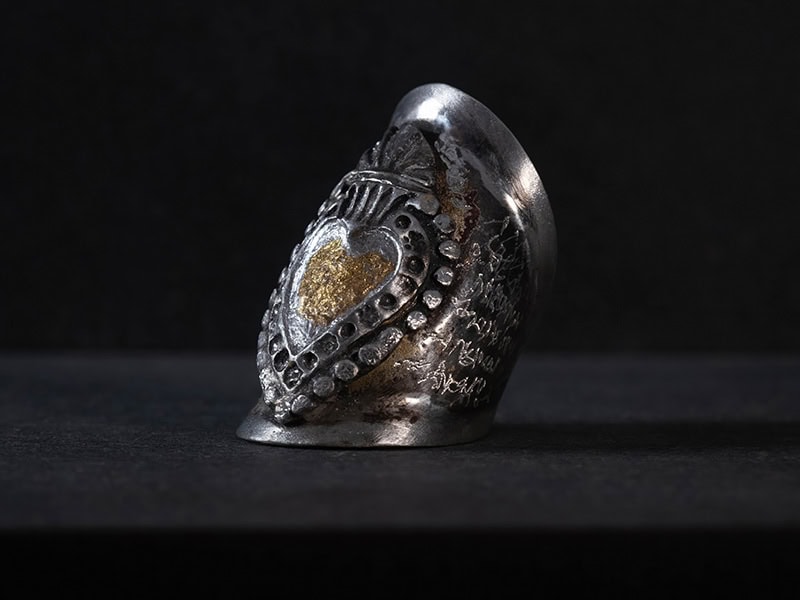
Mélane Zumbrunnen: Independent art spaces play an essential role today, perhaps more than ever. They can remain places of freedom where sensitive, critical, or simply poetic positions can exist without being immediately subjected to market or institutional pressures.
Object-based practices and jewelry hold a particular place within this reflection. These are forms that are close to the body, to intimacy, and to everyday life. They allow complex questions to be addressed on both a personal and political scale. Contemporary jewelry, in particular, can carry strong narratives while remaining discreet, wearable, almost embedded in daily life.
For us, a space like ours must remain a place for experimentation and dialogue. We try to invite artists from different generations, contexts, and backgrounds to create resonances rather than fixed positions. Looking ahead, I believe these spaces will likely need to remain modest, flexible, and independent in order to continue to exist—and that in itself is already a form of commitment.
The opinions stated here do not necessarily express those of AJF.
We welcome your comments on our publishing, and we will publish letters that engage with our articles in a thoughtful and polite manner. Please submit letters to the editor electronically; do so here. The page on which we publish Letters to the Editor is here.
© 2026 Art Jewelry Forum. All rights reserved. Content may not be reproduced in whole or in part without permission. For reprint permission, contact info (at) artjewelryforum (dot) org