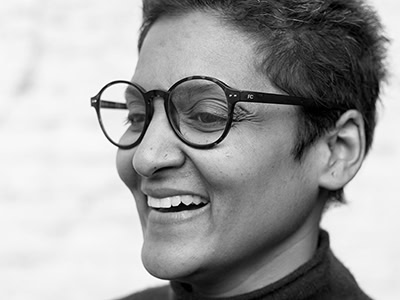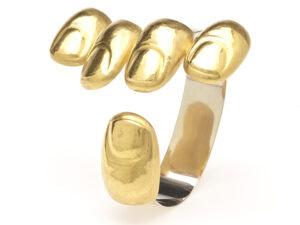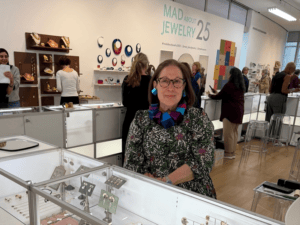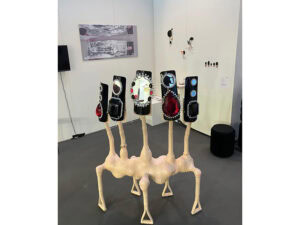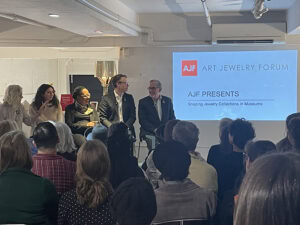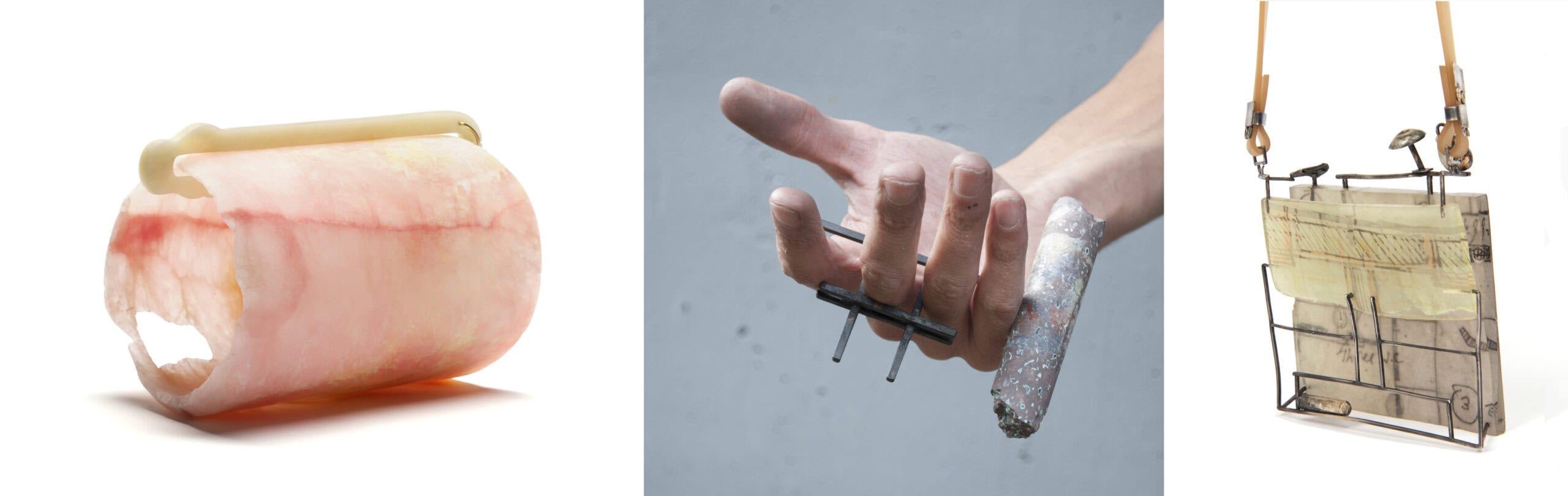
Project Bawra speaks with Aiza Mahmood, Mahvash Salim, and Dua Fatima Baig about their art jewelry practices since their graduation from the Gemstones and Jewellery program in Idar-Oberstein, Germany.
Project Bawra: Tell us a bit about your background and the main issues addressed in your work.
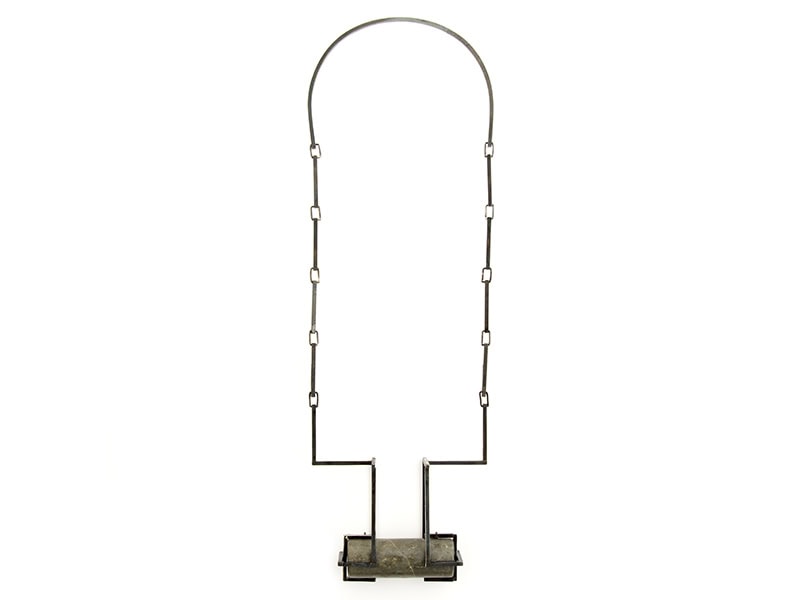
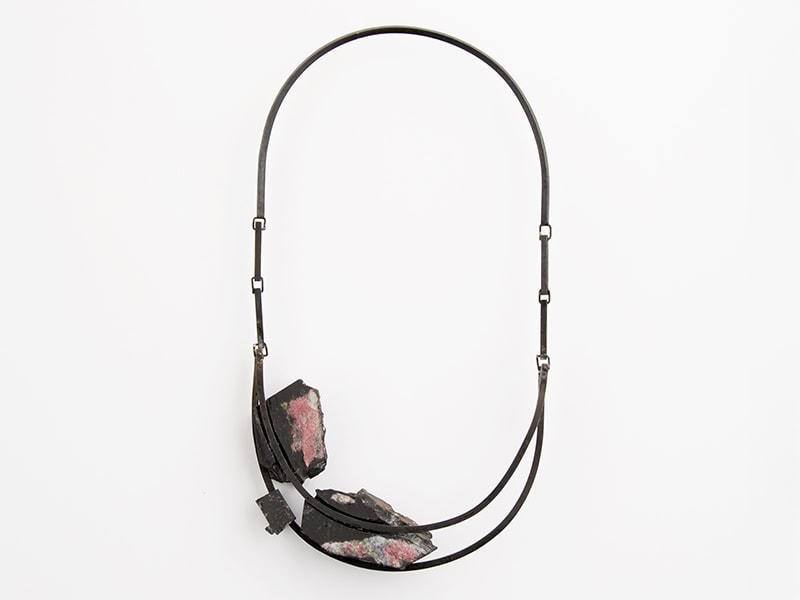
Aiza Mahmood: Since childhood, I have been fascinated by metal. Visiting factories with my father, I was captivated by its smell, weight, sound, and raw beauty, and loved working with my hands. As I grew, I noticed materials were gendered—knitting and beading for women, metalwork for men. Feeling out of place in “feminine” crafts, I was drawn to the physicality and challenge of metal. Jewelry attracted me not for design but for making—the transformation of hard matter into intimate objects. This led to bachelor’s and master’s degrees in jewelry.
Choosing iron became both rebellion and challenge, demanding full bodily engagement yet yielding delicate forms. My work embodies this tension: bold and raw, yet refined enough to wear.
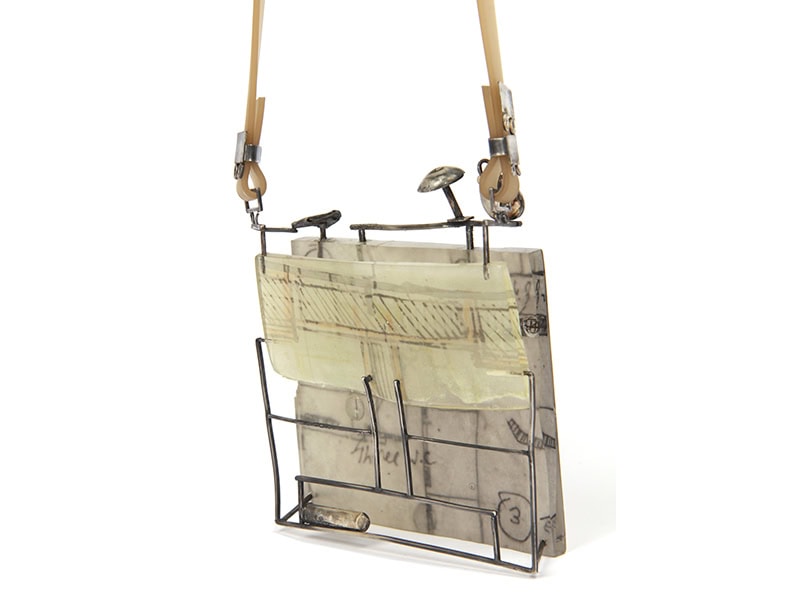
Mahvash Salim: My background bridges visual arts and design. I hold an MA in art and design from Beaconhouse National University (in Lahore, Pakistan) and an MFA in gemstones and jewelry from Hochschule Trier, in Idar-Oberstein. My practice explores storytelling through materials, focusing on memory, identity, and emotion. I see my work as a thread of narratives that revisits childhood spaces and fleeting moments. For me, jewelry is more than adornment—it is a vessel carrying personal and collective histories. Many of my pieces act as time capsules, preserving fragments of life and reflecting stories of home that continue to shape my sense of belonging.
Dua Fatima Baig: My work uses gender as a lens to examine how space, objects, and society intertwine in the hushed choreography of daily life—an order so ingrained it often escapes notice. Growing up in Pakistan, I witnessed how tradition and social norms shape women’s lives. With a bachelor’s in jewelry design and an MFA in gemstones and jewelry, I translate these experiences into contemporary adornment as a catalyst for social reflection.
How does your experience at Idar-Oberstein and living in Germany reflect in your work?
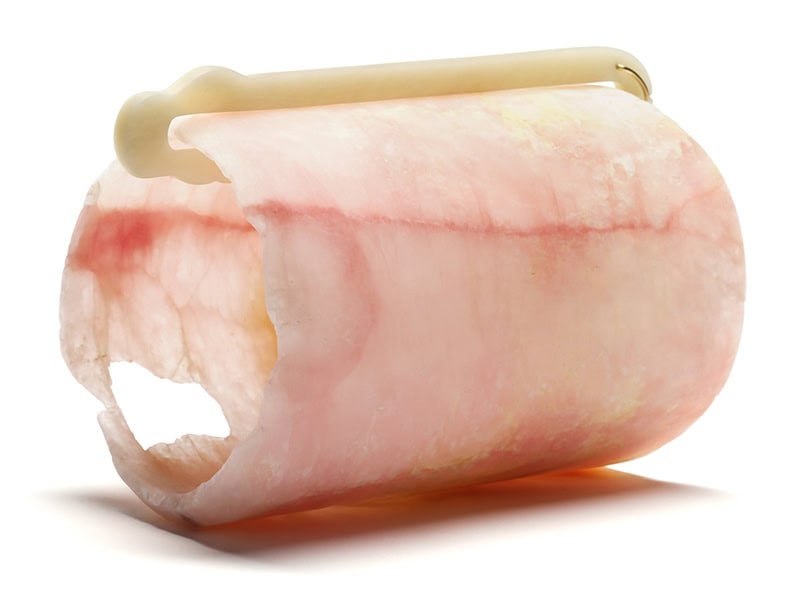
Aiza Mahmood: At first, Idar-Oberstein felt isolating, a place where I didn’t quite belong. A professor advised me to stop forcing my work and instead connect with my surroundings. I began creating small interventions in everyday spaces—sinks, doorways, even scattering my name on paper around town—as a way of claiming presence and finding my voice.
Over time, Idar-Oberstein became a safe space for experimentation. Its quiet encouraged reflection, while access to the German and European jewelry scene offered valuable exposure. Encounters with artists like Gerd Rothmann deepened my understanding of jewelry’s cultural dimensions. Surrounded by gemstone facilities, historic companies like Jakob Bengel, and traces of mining history, I was inspired by a town literally built on stones—where tradition and contemporary practice coexisted.
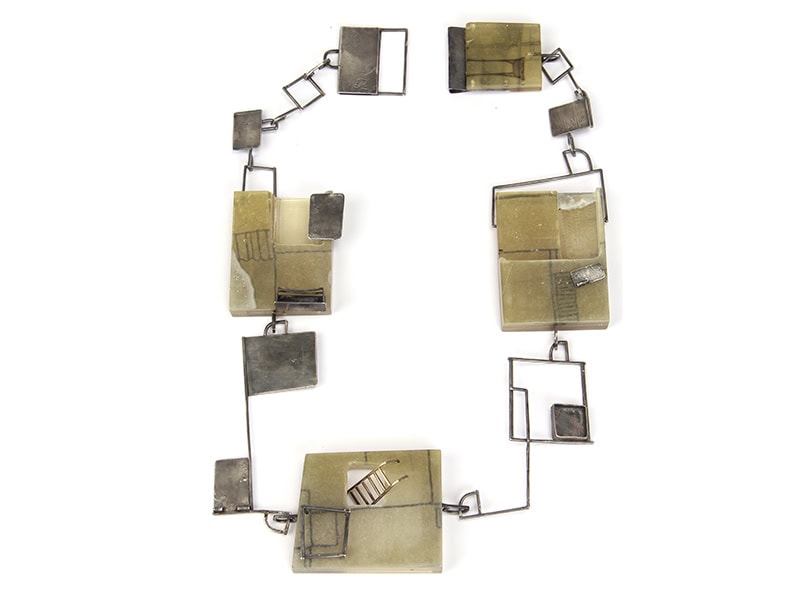
Mahvash Salim: My time in Idar-Oberstein was transformative, though not in the expected way. While the town is famed for its gemstone traditions, my focus was on resin. Working with it allowed me to layer, embed, and preserve imagery—methods that resonated with my interest in memory and narrative. I often visited local stone shops, and though I didn’t work directly with gemstones, being immersed in that culture of materiality deepened my understanding of how materials hold meaning. Exchanges with students from diverse backgrounds further shaped my view of jewelry as storytelling rooted in cultural context. Beyond Idar-Oberstein, engaging with the wider German and European jewelry scene broadened my perspective on the field’s contemporary expressions and possibilities.
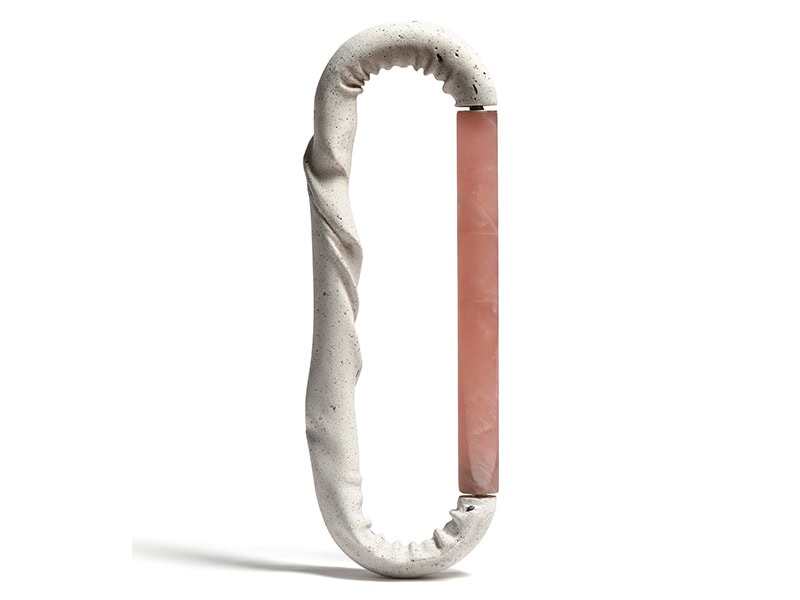
Dua Fatima Baig: Living in Germany and studying in Idar-Oberstein was both challenging and transformative. Immersed in a culture so unlike my own, I was pushed beyond familiar frameworks and began to see my background with new clarity—[I was] distant enough to notice patterns once invisible at home. At times, it felt as if I were viewing the issues addressed in my work from behind a window—detached, yet deeply observant. The town’s stillness offered solitude that evolved into reflection. Being apart from home allowed me to rethink my ideas with fresh perspective. This period deeply shaped my practice: the works I created then embody a quietness and sensitivity to absence and presence that arose directly from those experiences.
How have you continued your practice since graduation? What support have you received in Pakistan after you returned? What challenges have you faced?
Aiza Mahmood: After graduating in 2015, I practiced briefly, exhibiting at Galerie Marzee’s Graduate Show, the Beijing International Art Jewelry Exhibition, Talente 2016, and more recently in Astana and Almaty, Kazakhstan (2025), alongside commissioned work. Gradually, I shifted toward education, introducing jewelry courses to bridge the gap between academia and industry in Pakistan. With only a few institutions offering such programs, I felt compelled to support emerging students.
Pakistan’s beautiful chaos became both inspiration and challenge. Its culture and craft traditions are rich, yet materials and facilities are limited, mostly concentrated in major cities. Contemporary jewelry—my area of training—was often misunderstood or undervalued. Opportunities largely came from abroad, while local recognition required compromise. Creating work that pleased audiences but muted my voice was difficult, yet it taught me how deeply context and community shape artistic practice.
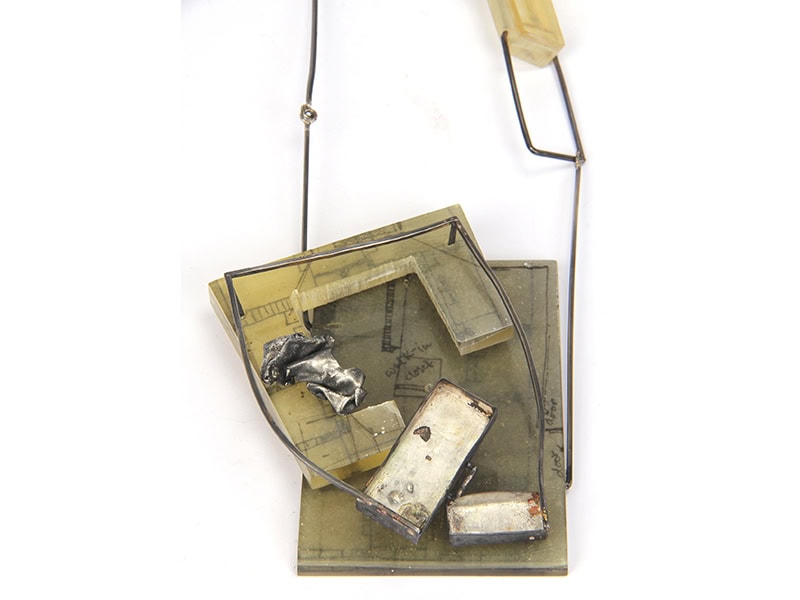
Mahvash Salim: After graduating in 2016, my work was shown in the Galerie Marzee Graduate Show; Sieraad, in Amsterdam; Neuer Schmuck aus Idar-Oberstein, in Valencia (among others); and most recently at Alhamra (Lahore Arts Council). Since returning to Pakistan, I have been teaching jewelry-making at Beaconhouse University and working as an educator in the Visual Arts program at International Baccalaureate Diploma Programme.
I also founded my own brand, Atelier Mahvash. The jewelry market here favors traditional and mass-produced designs, making it challenging for contemporary work to find an audience. Access to quality materials and skilled collaborators is limited, yet I continue creating small-batch, handmade pieces rooted in storytelling and raw gemstones. With support from family and a growing circle that values narrative-driven craftsmanship, I’ve been able to sustain and evolve my practice despite these challenges.
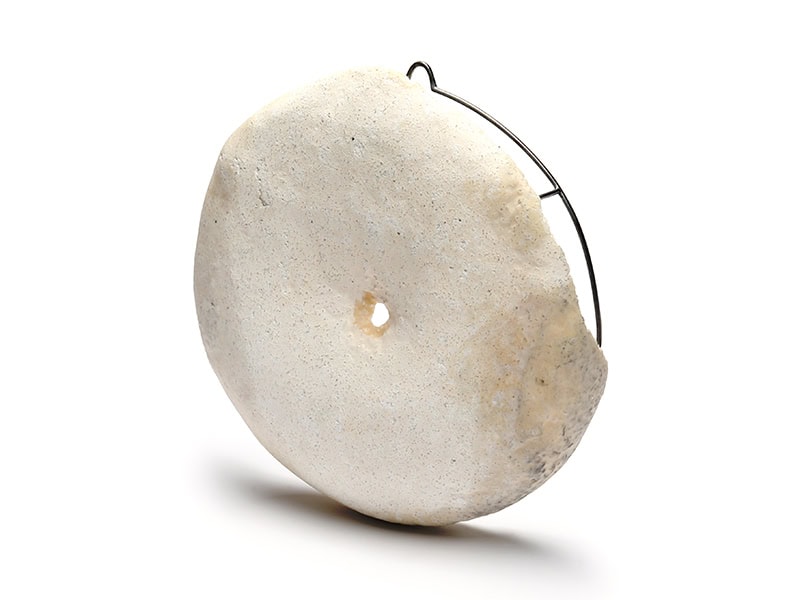
Dua Fatima Baig: I’m based in Idar-Oberstein, Germany. My practice balances industrial experience with artistic exploration. Working at a local company provides discipline and insight beyond the studio, while trade fairs and exhibitions—including Inhorgenta Munich, Talente, Marzee’s Graduate Show, and Legnica SILVER—have expanded the visibility and fostered dialogue around my evolving work.
What are your future plans?
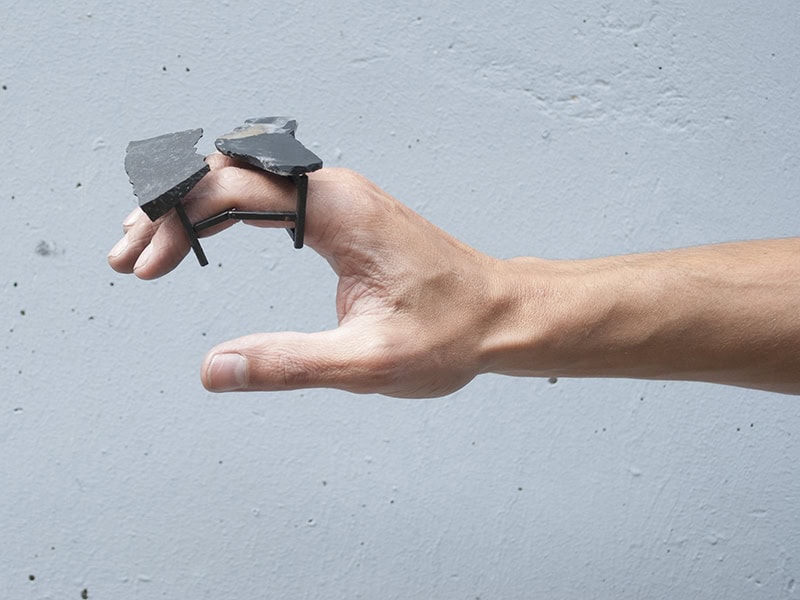
Aiza Mahmood: I recently moved to Australia to begin a new chapter and establish my own jewelry studio. I aim to create a space for producing my work and showcasing other contemporary jewelers, fostering community and collaboration. This studio will support connections locally and internationally, including Pakistan and Germany, my previous homes, while allowing me to explore how this new environment shapes and develops my practice.
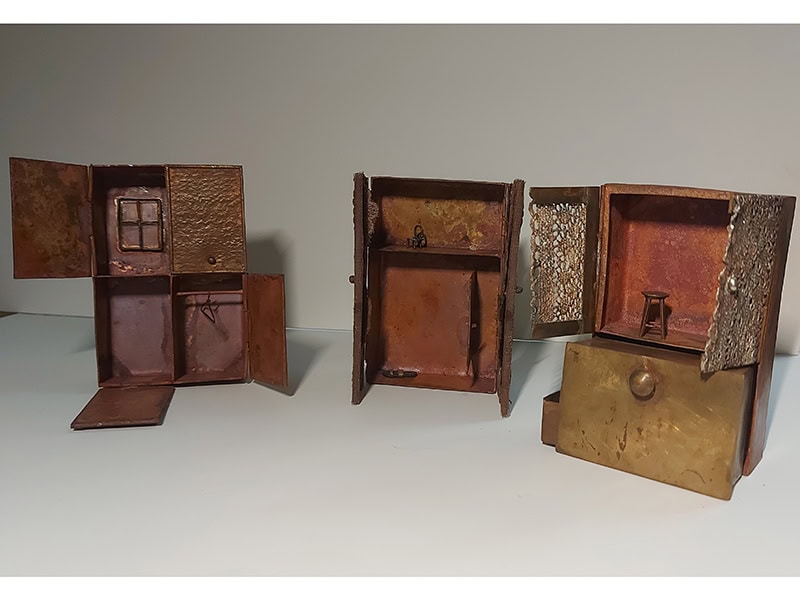
Mahvash Salim: I aim to deepen the conceptual side of my work while growing Atelier Mahvash as a brand bridging art jewelry and wearable design. I am committed to advancing jewelry education in Pakistan through courses and workshops that encourage contemporary practices, critical thinking, and material exploration. My practice evolves in two directions: personal artistic exploration and making contemporary jewelry accessible. Ultimately, I hope to create a space that unites making, teaching, and exhibiting jewelry as both art and adornment.
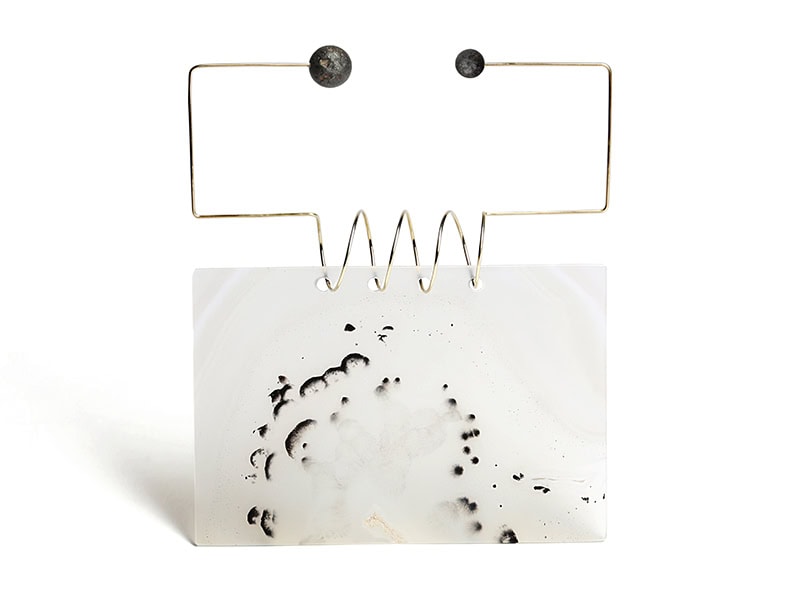
Dua Fatima Baig: I aim to continue expanding my practice. Experiences in Europe have allowed me to experiment and reflect, fostering artistic and professional growth. With contemporary jewelry under-recognized in Pakistan, I hope to bridge local and global practices, promoting collaboration, cross-cultural exchange, and the development of emerging jewelry communities.

The opinions stated here do not necessarily express those of AJF.
We welcome your comments on our publishing, and we will publish letters that engage with our articles in a thoughtful and polite manner. Please submit letters to the editor electronically; do so here. The page on which we publish Letters to the Editor is here.
© 2025 Art Jewelry Forum. All rights reserved. Content may not be reproduced in whole or in part without permission. For reprint permission, contact info (at) artjewelryforum (dot) org