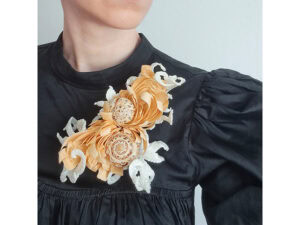
In recent years, the “open call” has become almost unavoidable within contemporary jewelry. Jewelry exhibitions, competitions, residencies, and festival weeks rely on the format as a democratic way of discovering new artists and creating visibility. However, voices critical of the open call have begun to emerge. Why? Behind the rhetoric of openness often lies a structure in which artists carry an increasing share of the administrative labor, financial risk, and emotional investment.
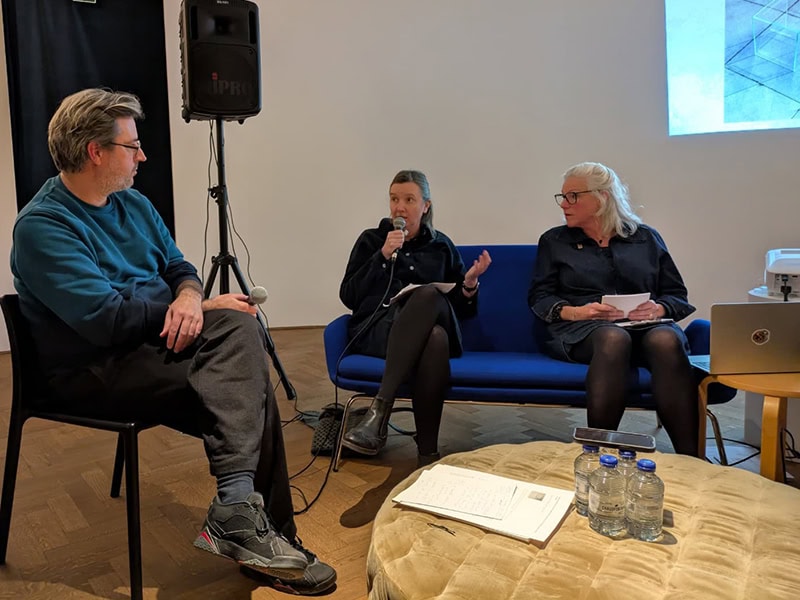
This article grows out of the roundtable discussion Open Calls and Contemporary Jewelry, held on November 22, 2025, at the DIVA museum, in Antwerp, during the Obsessed! festival. Moderated by art historian Saskia van Es, the panel brought together artists Into Niilo and Liesbet Bussche, freelance curator Ebba Van der Taelen, and myself, Tom Iriks, curator at DIVA. One thing quickly became clear: organizers and applicants often understand open calls in very different ways.
Rejection as Part of Professional Life
Van Es opened the discussion by showing slides of the work Open Calls, by Ana Escobar Saavedra, inspired by Rachel Mason’s essay Artist as Applicant.[1] Mason describes a cultural system in which the labor of the artist gradually shifts from making work to submitting applications.
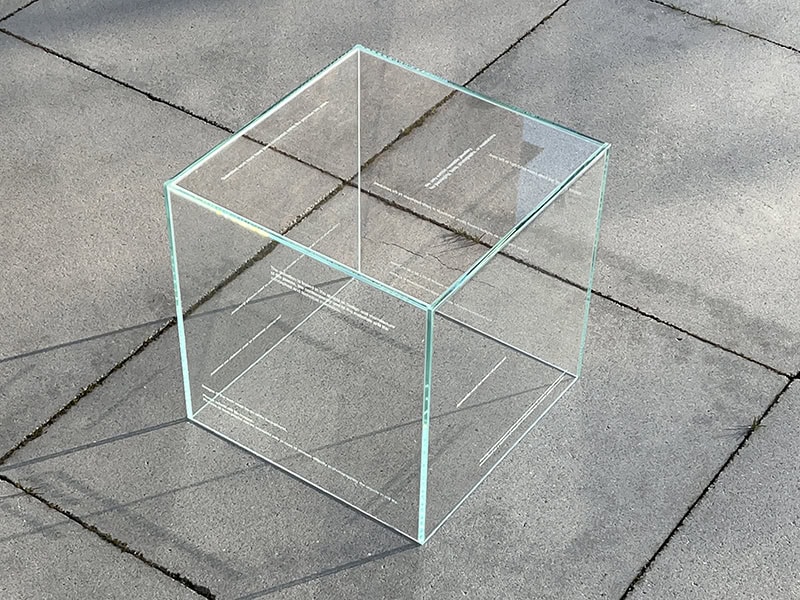
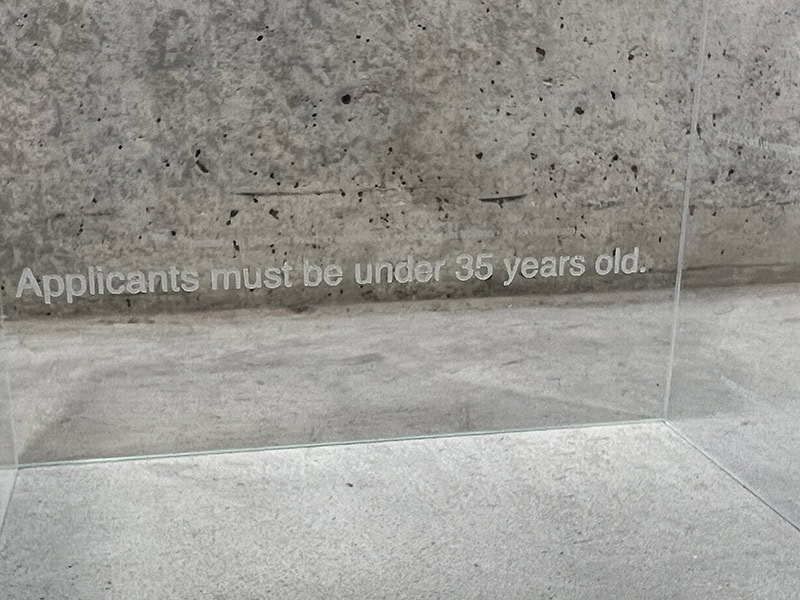
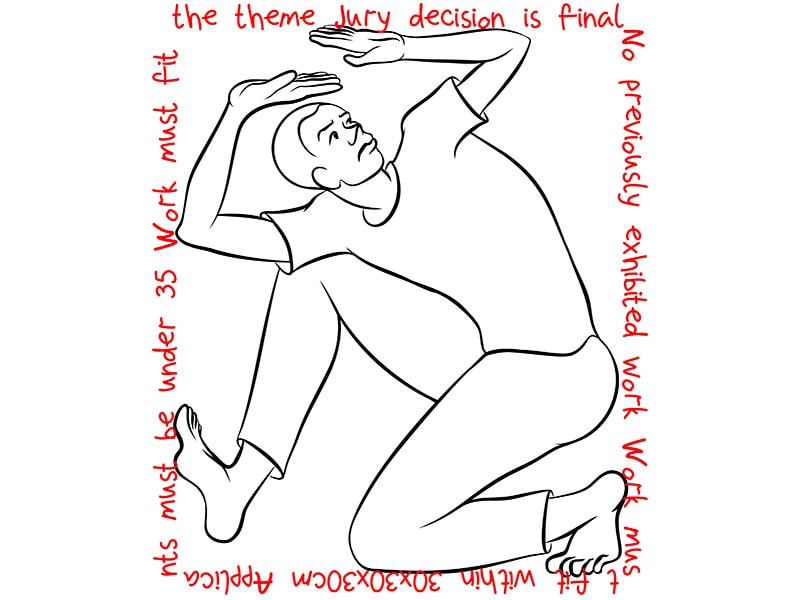
Escobar’s installation consists of a glass cube engraved with phrases taken from open calls. We read statements such as “Work must fit in 30 x 30 x 30 centimetres,” “We only exhibit wearable jewelry,” and the familiar “Applicants must be under 35.” The work functions as an almost perfect metaphor for the open-call system itself. The words are trapped inside the glass cube, with barely enough room to breathe.
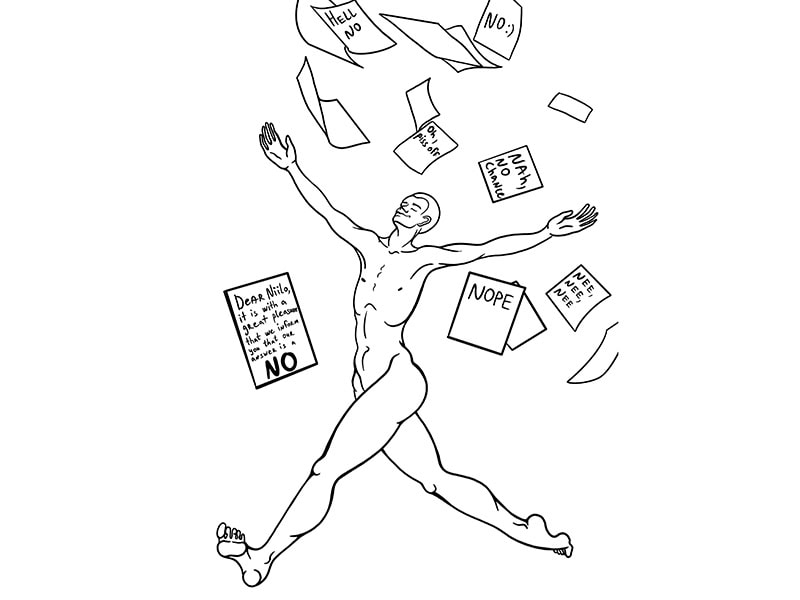
The second part of Escobar’s installation, Maybe Next March, reproduces the standard rejection email sent for years by the organizers of Schmuck, in Munich: “Dear Artist, we are sorry to inform you that your work was not selected for Schmuck [fill in the year],” followed by a polite invitation to nevertheless travel to Munich. Rejection becomes routine: an automated form of politeness that suggests proximity while producing distance.
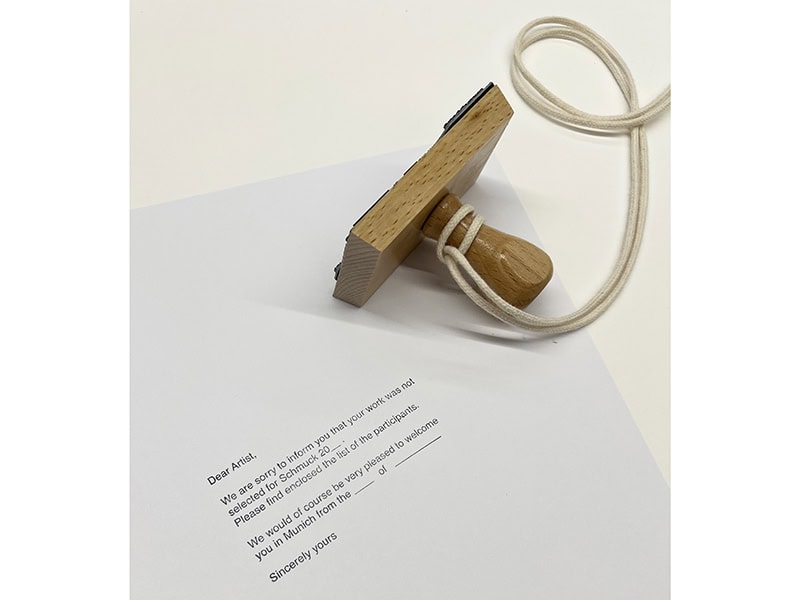
A bitter laugh moved through the audience during this part of the conversation. Most artists have learned to accept rejection as part of professional life.[2] The arbitrariness of certain selection criteria became painfully clear when the discussion turned to age limits. Artists who do not follow a traditional career path can find themselves excluded before they have had the chance to build a career in the field.
Age limits are often defended as support for “emerging artists.” Yet this assumes that emerging automatically means young. In reality, many artists begin later in life, change careers, or only gain access to education and resources much later. What is intended as a form of support can easily become a form of exclusion.
Open Call Fan Club
Open calls reveal much about how contemporary jewelry understands and organizes itself. During the discussion, the term seemed to refer to many different things at once: a democratic opportunity, a practical selection tool, a curatorial method, a business model, or a networking platform.
From my own position as curator and public mediator at DIVA, I mainly see the open call as a pragmatic instrument. Scouting artists takes time, whereas an open call brings unfamiliar work to my attention. At the same time, I also find myself wanting to rescue the format from its worst manifestations. Listening back to the recording of our roundtable discussion, I hear myself saying, “I’m quite a fan of the open call format, if it’s done well.” That nuance remains important.
The problem does not necessarily lie in the existence of open calls themselves, but in the way they increasingly function today. Too often they are deployed as a default solution for structural shortages of time, resources, and even creativity.
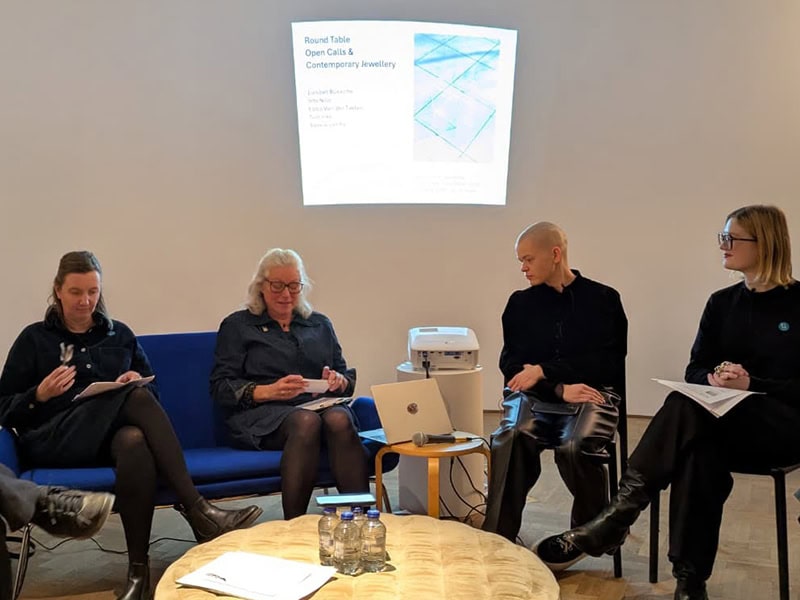
For panelist Ebba Van der Taelen, founder of Unpolished, a platform for emerging Belgian jewelry artists, the open call played a different role. Because the platform wanted to create space for unfamiliar voices, an open call seemed like the natural starting point. For an exhibition focused on identity and transformation, she invited artists to submit work. The resulting selection functioned not only as a presentation, but equally as the platform’s first curatorial statement.
Yet even here, the idea of openness quickly met practical limits. The call was launched just before the summer holidays, when academies and institutions were closed. Promotion depended on Instagram advertisements and online circulation. Long before a selection was made, visibility itself was already shaping the outcome. Artists first had to encounter the call, meet the criteria, and have enough time and resources to prepare a portfolio during the summer months. The platform seeks to remain open and accessible yet remains dependent on the algorithms and calendars that organize visibility itself.

Open Call Season
Opposed to the organizer’s perspective stands the voice of the applicant. Artist Into Niilo described the application processes as a marathon concentrated around October and November—“open call season,” as Niilo jokingly called it, also comparing the process to gambling. This metaphor evokes an image of artists throwing bottles into the ocean in the hope that someone might respond. Yet Niilo’s description also makes clear that this “gambling” reflects a real situation.

Artists often pay application fees, transport costs, and insurance. Some must also cover travel and accommodation expenses once selected because they are expected to be present. All of this comes on top of the unpaid labor involved in preparing portfolios, statements, photographs, and application forms.
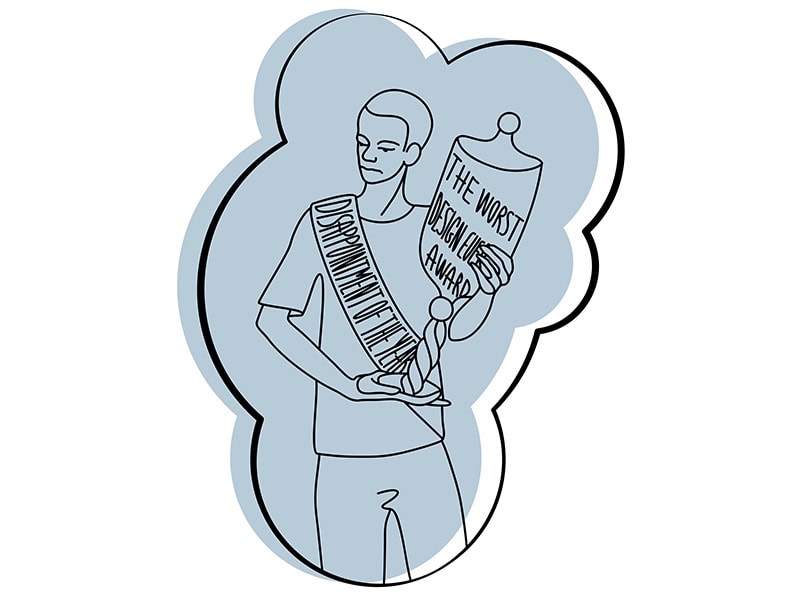
As a result, much of the risk shifts from the organizer to the artist. For institutions, the open call offers an efficient method of gathering large numbers of submissions with limited means. For artists, participation becomes an investment without any guarantee of visibility, sales, or remuneration.
Curatorial Poverty
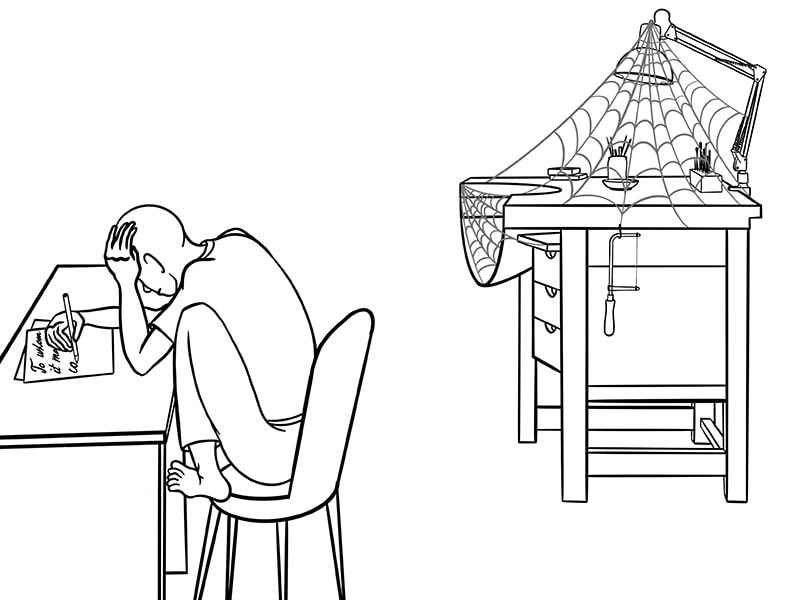
Panelist Liesbet Bussche remains deeply hesitant about participating in open calls. Her criticism is aimed not only at open calls themselves, but also at what they replace. She misses “well-curated exhibitions” with clear themes, substantive criteria, and long-term engagement with artists.
According to Bussche, open calls too often result in “one-piece shows”—exhibitions that accept only one work per artist—in which work can never be presented as intended and where little room remains for context, let alone narrative. Jewelry is reduced to a single object expected to represent an entire practice while competing for attention among dozens of other submissions.
In such exhibitions, jewelry risks becoming detached from the stories and ideas behind it. During the discussion, I described this as a form of narrative theft. Jewelry concerns stories, yet the exhibition presents the object stripped of its narrative. The open call risks becoming a distribution mechanism for isolated objects rather than a genuine curatorial proposition. It produces little more than an accumulation, not an argument.
Bussche also argues that schools should equip students to critically assess open calls, as they so often detach ideas from their context, treating the artwork less as part of a practice and more as a singular image circulating within a competitive economy of visibility.
Transparency and Responsibility
One of the most revealing moments in the discussion came when we compared two calls from respected organizations: a themed exhibition organized by the WearHouse, in Amsterdam, and the Italian Montebello Award. Gradually it became clear that these represented two distinct models. One functioned as a curated group exhibition, while the other operated as a competitive prize.
This distinction matters because the term open call is now used for many different systems. Under the same label we find exhibitions, prizes, residencies, festivals, and networking platforms, each carrying its own expectations, relations, and economic models.
Again and again, the discussion returned to the question of responsibility. What does “openness” actually mean when criteria remain vague, when organizers provide little background, or when artists themselves must bear the costs of production, transport, and participation? Openness without clarity does not produce accessibility but confusion.
In this essay I therefore argue for a shift from “openness as marketing” toward “openness as responsibility.” I advocate for a practice in which transparency, context, fair compensation, and shared care become central again.
If contemporary jewelry continues to insist upon its relationship to the body and to value intimacy, touch, stories, and the social life of objects, then the question inevitably arises as to which infrastructures genuinely sustain those values.
The reflections gathered during the roundtable discussion also resulted in a set of practical recommendations for organizers and applicants. Included as an appendix to this article, the checklist translates many of the concerns raised during the conversation into concrete questions around transparency, compensation, selection procedures, and curatorial responsibility. (Click here to access it.) It is not intended as a rigid framework, but as a tool to support more open, accountable, and sustainable open-call practices.
Ana Escobar’s glass cube remains a fitting symbol: a transparent structure that simultaneously encloses. The question is no longer how the glass might be made more attractive, but who is still able to breathe inside it.
With thanks to the WearHouse, Amsterdam, and the Montebello|Bergesio Award, Italy, for letting us close read their open calls with the audience.
Also, a big thanks to the panel: Into Niilo, Liesbet Bussche, and Ebba Van der Taelen. Special thanks to Saskia van Es for moderating the discussion.
[1] Rachel Mason, “Artist as Applicant,” Huffington Post, January 19, 2013, https://www.huffpost.com/entry/artist-as-applicant_b_2506113.
[2] So much so that NOD even devoted an entire issue to rejection. See Next Time, Maybe—The Reject Edition, NOD magazine 5, https://www.notonlydecoration.org/product-page/reject-edition-volume-5.
The opinions stated here do not necessarily express those of AJF.
We welcome your comments on our publishing, and will publish letters that engage with our articles in a thoughtful and polite manner. Please submit letters to the editor electronically; do so here. The page on which we publish Letters to the Editor is here.
© 2026 Art Jewelry Forum. All rights reserved. Content may not be reproduced in whole or in part without permission. For reprint permission, contact info (at) artjewelryforum (dot) org